
Gavin Newsom halts $1 billion in homeless funding, calling local approaches ‘unacceptable’
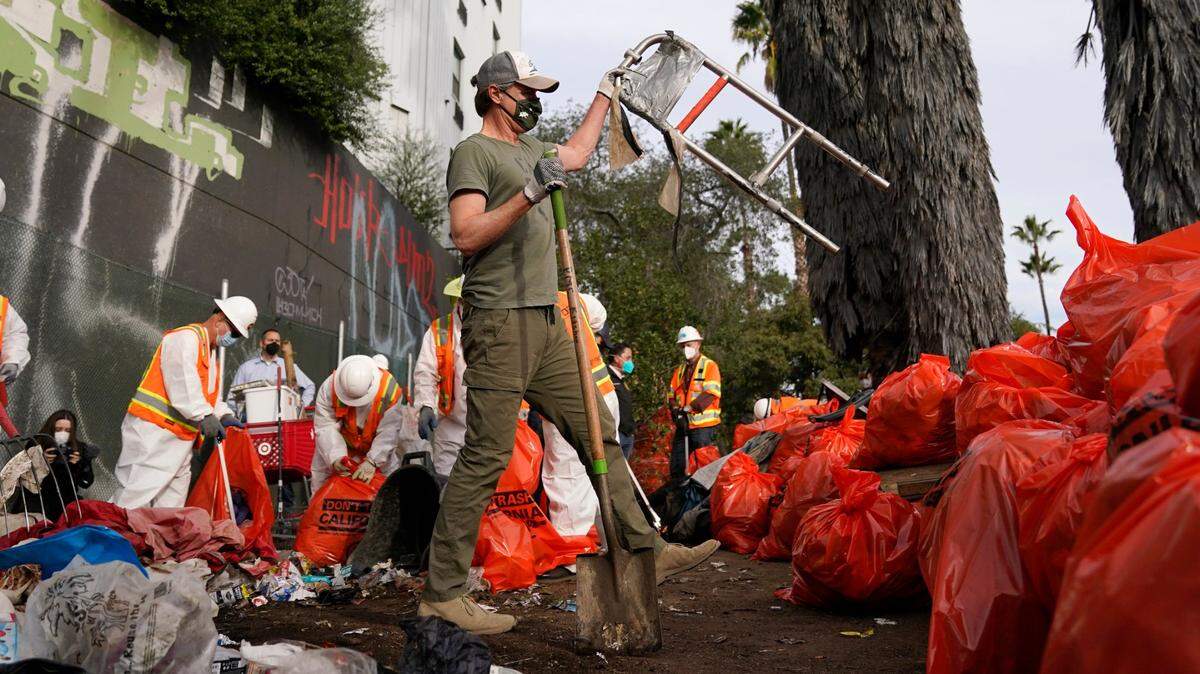
Frustrated by the state of California’s mounting homeless crisis, Gov. Gavin Newsom announced Thursday that he was withholding $1 billion in state funding for cities and counties until local leaders can prove they have aggressive plans for getting people off of the streets and into homes.
“Californians demand accountability and results, not settling for the status quo,” Newsom said in a statement. “As a state, we are failing to meet the urgency of this moment.”
The governor called for a meeting later this month with local leaders to coordinate a statewide approach to delivering more substantial results before agreeing to hand out any more cash. Sacramento Mayor Darrell Steinberg confirmed through his spokesperson that he will be there.
But with many city and county budgets strapped with rising pension and public safety costs, local officials argue that cutting off expected state funding would severely hamper their ability to open shelters to get people off the streets.
Since 2019, the state has set aside more than $2 billion for flexible homeless spending by local agencies. But for the first time this year, cities and counties were required, by the end of June, to submit action plans as a condition of receiving funding through the Homeless Housing, Assistance and Prevention Program, also known as HHAP.
The plans were meant to provide the state with a means to measure the progress of localities and the steps planned to reduce homelessness in their areas.
While the governor commended some local leaders taking aggressive action to combat homelessness, he noted that plans submitted by other local officials reflected alarming, double-digit increases in homelessness over four years.
According to the governor’s office, the plans submitted to the state would collectively reduce homelessness on California streets from the baseline of 2019 to 2024 by just 2% — an outcome that Newsom called “unacceptable.”
“At this pace, it would take decades to significantly curb homelessness in California,” he said in the release.
In response to Newsom’s elevated demand for better strategies from local leaders, some pushed back, arguing that more direction and resources were needed from the state.
Graham Knaus, executive director of the California State Association of Counties, called on Newsom to developed a detailed statewide strategy and find a source of ongoing funding.
Although Newsom earmarked $15 billion over two years for homelessness, the state has no plans for a permanent funding to address the problem. That means shelters may need to close and programs may come to an abrupt end in the future if localities don’t find the funding to sustain them.
“The rate of people experiencing homelessness in California exponentially outpaces our efforts and will continue to do so as long as we continue to act in silos with uncertain funding,” Knaus said in a statement.
What this means for Sacramento homeless shelters
In the latest installment of HHAP grants, the state allocated $7.8 million for Sacramento County, which planned to use it to pay the salaries of social workers, support emergency shelter beds and provide financial assistance to prevent people from being displaced. The city of Sacramento was set to receive another $16.6 million, which it planned to use to keep open its large shelters on X Street, in Meadowview and in the River District, as well as its five motel shelters and other programs.
The city had already received $3.3 million but is still waiting to get the remaining $13.3 million, which it expected to receive last month, city spokesman Tim Swanson said. It’s unclear how long the city can keep open its 1,100 shelter beds and spaces without the money, which covers about half the cost to keep them open.
“Our HHAP funds go directly into funding shelter operations,” Steinberg said in a statement. “We need the resources to maintain the beds we have built.”
In June, the city and county of Sacramento submitted a 28-page homeless action plan to the state that outlined strategies to increase shelter bed capacity, boost funding for prevention programs and increase coordination among various agencies.
But when asked for a goal in reducing the number of people experiencing unsheltered homelessness on a daily basis, Sacramento leaders indicated that they expected the number to be 60% greater in 2024 than in 2019, an explosion from 3,900 unsheltered residents to 6,240. The action plan stated the estimate was based on the “local housing market, economic conditions, and diminishing emergency rental assistance and other eviction safeguards.”
The state used the 2019 homeless census numbers instead of the more recent 2022 numbers — a decision Sacramento County spokesperson Kim Nava criticized.
Sacramento County’s homeless population nearly doubled from 2019, when it had about 5,700 unhoused residents, to 2022, when it reported about 9,300 unhoused individuals.
“While we welcome any recommendations from the state and other partners, we are disappointed that funding to support critical homeless programs is being held hostage during a time of such intense need,” Nava said in an email.
The county currently has $62 million in unallocated federal money on hand it could spend on homeless shelters and housing, but officials say it will be allocated in the coming months. The city has allocated all of the funding it has received for homelessness, including its state allotment. City Manager Howard Chan has said even with the new HHAP money, the city does not have enough money to open additional shelters.
California’s homeless population continues to grow
Thursday’s announcement comes less than a week before Election Day, with Newsom’s name on the ballot for the third time in four years. Although the Democratic governor is projected to win his re-election bid by a landslide, the state’s homeless crisis remains one of his biggest challenges. And as speculation brews about his future political ambitions, his record on addressing this complex issue is likely to become an issue for possible opponents.
Despite a 2018 campaign promise to eliminate chronic homelessness if elected governor, the number of Californians living on streets, in shelters or in cars has grown from about 130,000 in 2018 to more than nearly 174,000 last year, according to federal data and a recent analysis by CalMatters.
Looking ahead to a second term in office, Newsom has said that he will be laser-focused on holding local jurisdictions accountable for results.
During his May budget revise, he threatened action like this, making sure to emphasize that before the state “put more money up, I want to see the plans.”
“We are committed to providing ongoing support, but we need to see more in terms of the accountability,” he said at that time.
Until Thursday, the state had provided more than $1.5 billion in flexible funding through the Homeless Emergency Aid Program and the first two rounds of HHAP funding. The third round of HHAP grants, which Newsom has halted, set aside another $1 billion for homeless initiatives.
The governor’s office on Thursday didn’t call out any specific cities or counties for putting forward weak plans but he hasn’t previously shied away from publicly ridiculing local leaders for failing to appropriately address the homeless and affordable housing crises.
Earlier this year, his administration threatened to take back millions of dollars from the city of Oakland for what they saw as a failure to clear a large homeless encampment. The state also launched a first-of-its-kind review of San Francisco’s notoriously complicated development process.
This story was originally published November 3, 2022 at 10:25 AM with the headline "Gavin Newsom halts $1 billion in homeless funding, calling local approaches ‘unacceptable’."