Should logging halt over endangered California animal? Here’s what appeals court says
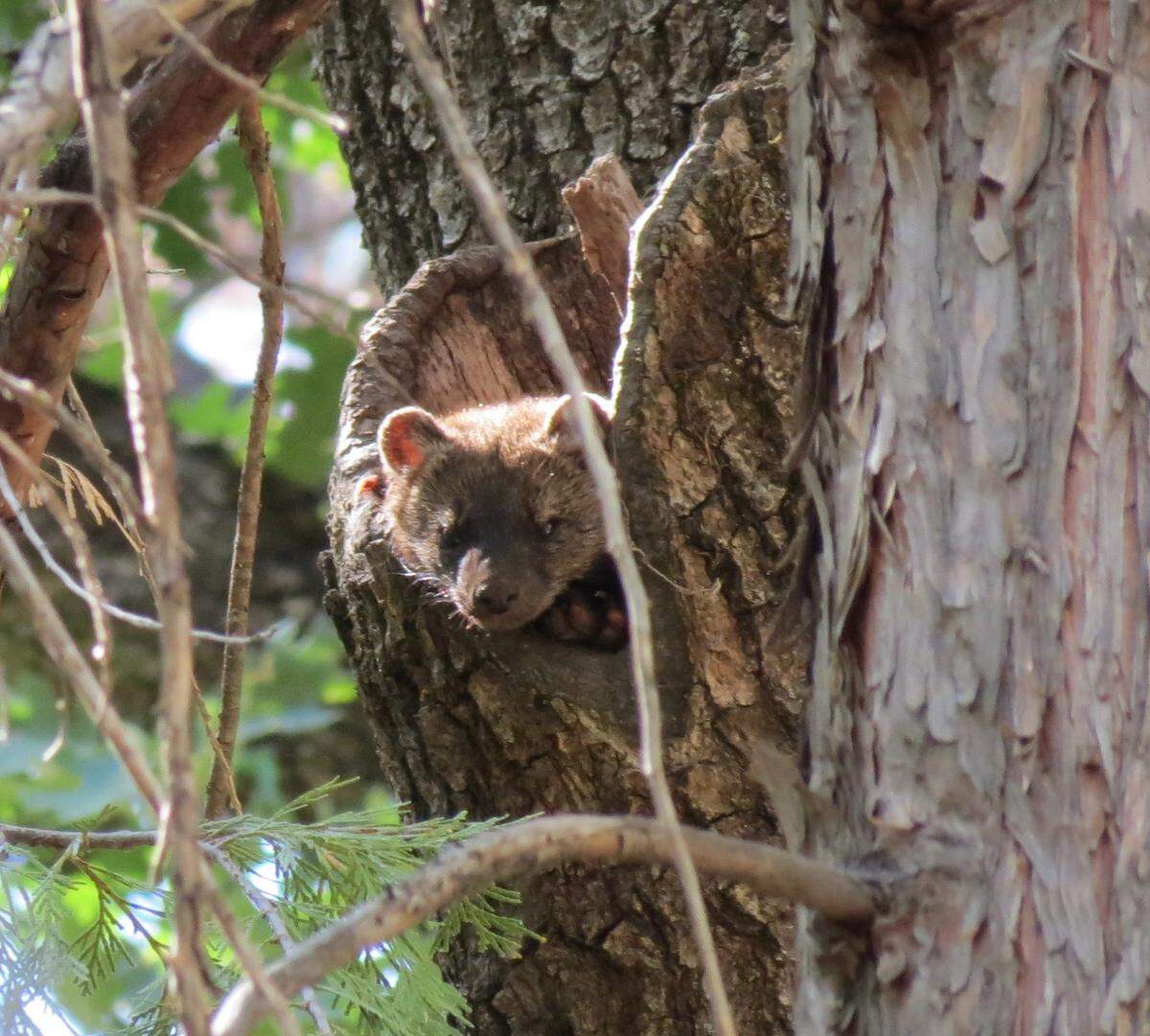
California conservation groups won a partial victory this month in their quest to protect the federally endangered Southern Sierra Nevada population of Pacific fisher, an elusive tree-dwelling mammal in the weasel family.
A federal judge in Fresno was “premature” in denying a request for a preliminary injunction last year that would have temporarily halted many logging projects in Sierra, Sequoia and Stanislaus national forests while a lawsuit is being decided against federal land management agencies, the U.S. Court of Appeals for the 9th Circuit said in a decision issued Tuesday.
The appeals court headquartered in San Francisco largely sided with plaintiffs Unite the Parks, Sequoia Forestkeeper and Earth Island Institute in their lawsuit against the U.S. Forest Service and U.S. Fish and Wildlife Service, and sent the case back to U.S. District Court for further review.
The appellate judges noted the plaintiffs’ claims that federal land managers violated the Endangered Species Act “by not using raw post-2020-wildfire vegetation data to estimate the current Sierra Nevada fisher population before issuing a biological opinion.”
This Endangered Species Act issue may affect whether a preliminary injunction should be issued under the National Environmental Policy Act (NEPA), the appeals court decision states.
The judges wrote that “an agency must take a ‘hard look’ at the environmental impact of projects when circumstances change or new information materializes.”
However, the judges added, “nor could we at this time conclude that the data requires injunctive relief” that would temporarily halt some logging.
Another part of the district court’s decision to deny the preliminary injunction, related to a fire science study, was upheld.
Conservation groups talk about Pacific fisher case
“We are happy to have made progress, and we hope this means we can save the fisher and forest from future logging and the increased wildfire risk that goes along with it,” said Deanna Wulff, director of Unite the Parks. “While this isn’t a complete victory, the fact that the appeals court reversed the lower court’s decision shows the strength of our case.”
The original complaint was filed March 26. A request for a preliminary injunction followed in April – and was denied in late May – that would have temporarily halted 31 logging projects in the Sierra covering tens of thousands of acres until the case is decided.
The Southern Sierra Nevada distinct population of Pacific fisher became a federally endangered species a few months before the massive 2020 Creek Fire ignited in eastern Fresno County and burned more of the fishers’ dwindling habitat.
“The last fisher population estimate predates the beetle-kill, the drought and the fires,” Wulff said. “Since the last population estimate, 55% of its habitat has been lost or greatly altered.”
At that time, scientists estimated there were only 100 to 500 fishers left in the Southern Sierra, with 256 as the most precise estimate, Wulff said.
“That’s barely a viable population,” she added, “and that’s before all of these big changes.”
Federal land managers then issued a “take permit,” Wulff continued, allowing the Forest Service to take or kill 12 fishers during logging projects in the animal’s remaining territory.
“We have sued the agencies (USFS and USFWS) for failure to use the best available science in issuing that permit and allowing these logging projects to go forward, without using the most up-to-date information on the fisher and considering the cumulative impacts of these logging projects on the fisher,” Wulff said. “The appeals court has agreed with us in that regard.”
The court didn’t agree with another aspect, pertaining to a fire science study.
Chad Hanson, director of the John Muir Project, part of Earth Island Institute, described that decision this way: “The Ninth Circuit didn’t say that the Forest Service’s assessment on fire science was fine. The one thing they denied – it was very, very narrow – was with regard to a single study. ... And the question there was, ‘Did they (USFS and USFWS) consider it? And we didn’t think they considered it. And the court said, ‘Well, they did consider it ... ”
A Forest Service spokesperson said it isn’t appropriate for the agency to comment on the case at this time. A Fish and Wildlife Service spokesperson said its agency doesn’t comment on litigation.
The Court of Appeals decision comes at a key time for forest management efforts. The Forest Service recently said it plans to treat four times the amount of land than it does now with an influx of federal dollars aimed at reducing wildfire risks.
Hanson is an author of what he called the largest published scientific study that shows how forests with the most logging typically burn in the hottest fires. One of his more recent studies, about the Creek Fire, found that “pre-fire snag density was not correlated with burn severity, but fuel-reduction logging was associated with higher fire severity.”
Instead of logging in the wilderness, Hanson thinks taxpayer dollars should go toward creating defensible space within 100 feet of homes and home hardening.
What’s next for this lawsuit in California?
A new court date for this case hadn’t been set as of earlier last week.
“My guess is there will be another round of quicker briefing before the trial court on some of these issues,” said attorney Deborah Sivas, director of the Stanford Environmental Law Clinic representing Unite the Parks, “and maybe a hearing a little later in the spring, but we will definitely be asking the court to address these issues before the logging season starts. Because we will be renewing our request for a preliminary injunction.”
Sivas said some of the logging projects are believed to resume in May or June. The plaintiffs have the option of adding any new projects into a new preliminary injunction request.
If denied, the plaintiffs can send it back to the appeals court again based on new analysis. Both sides have new material regarding this case since it was first filed last year.
The appeals court last week also denied a request to review documents from the Forest Service and Fish and Wildlife Service that weren’t presented during the district court hearing. The matter was sent back to the district court. Judges said the plaintiffs “should have an opportunity to develop the significance of these documents and respond to them.”
This story was originally published January 31, 2022 at 5:00 AM with the headline "Should logging halt over endangered California animal? Here’s what appeals court says."