Killer algae? California officials retesting river water after family found dead in Sierra
Toxic algae in Sierra National Forest, now being considered in the mysterious deaths of a family this week, was being retested on Thursday by the California State Water Resources Control Board and Mariposa County.
The state agency said it received the report of fatalities near the south fork of the Merced River, about 2.6 miles above the main stem, on Wednesday. Mariposa residents John Gerrish, Ellen Chung, their daughter, Miju, and family dog, Oski, were found dead in this area on Tuesday after not returning from a day hike in the Hites Cove area of Devil’s Gulch, between Mariposa and Yosemite National Park.
The family may have been exposed to cyanobacterial toxins, the water board said, which can form in algal blooms.
“Water Boards recommends a CAUTION due to suspected fatality. Sample results are pending,” a listing on the water board’s online map of harmful algal blooms said.
On Thursday afternoon, following inquiries from The Bee, the listing was updated, replacing the words “suspected fatality” with “illness report.”
“While there has been speculation that the cause of the deaths may be tied to harmful algal blooms (HABs) in a remote river or lake, we are not aware of any such evidence at this time,” Blair Robertson, a State Water Board spokesperson, said Thursday. “Our staff is conducting testing of the waterways near where the bodies were located and will make the lab results available to the public as soon as we get them. Autopsies were to be conducted earlier today and we await those findings. Our sincerest condolences to the family and friends of the deceased.”
Robertson said his agency hopes to get lab tests from water at the south fork of the Merced River before the weekend.
The state map listing for the location north of Jerseydale, around where the family was found dead this week, warns people to “stay away from algae and scum in the water.”
“Do NOT let pets go in the water, drink the water, or eat scum on the shore,” the warning continues. “Keep children away from algae. Do not eat shellfish from this waterbody.”
The California Department of Public Health reported that while animals have been poisoned from algae, “no known human fatalities have been documented from recreational or drinking water exposure to cyanobacterial toxins.”
Mariposa health, sheriff officials working with state
Mariposa County Sheriff Jeremy Briese said Wednesday that toxic algae is one hazard being considered by investigators working to determine how the family died.
Some people have also questioned whether the family was killed by lightning, noting some lightning was present in the area on Saturday.
In response, Kristie Mitchell, Mariposa County sheriff spokesperson, said the family didn’t leave for their hike until mid-morning Sunday, but added that detectives “are looking at all possibilities.”
Her office didn’t have any new updates on Thursday afternoon about the investigation or autopsies.
Lizz Darcy, spokesperson for the Mariposa County Health & Human Services Agency, confirmed her agency was working to help the State Water Board test water Thursday around where the family was found dead. She said she wasn’t aware of other currently toxic algae blooms in Mariposa County.
Another location in Mariposa County was recorded this year on the State Water Board’s harmful algal blooms map, on the north fork of the Merced River below Bean Creek on June 23. No new observations have been made on it for 30 days, so the bloom “may still be present or may have subsided.”
There are dozens of harmful algal blooms recorded on the State Water Board map for locations throughout the central San Joaquin Valley and California.
The State Water Board issued a news release on Thursday warning about the dangers of one of these blooms, at Crowley Lake in Mono County in the Eastern Sierra.
Sierra National Forest warning about toxic algae bloom
The State Water Board said Sierra National Forest posted a toxic algae alert sign in June at a trailhead in the area where the Mariposa family was found dead this week.
Sierra National Forest also warned of a toxic algae bloom in this Hites Cove area in a Facebook post July 13.
On Thursday, Sierra National Forest spokesperson Alex Olow said, “I am not aware of the forest doing any testing or requested testing of the water in the river. To my knowledge this is all done through the state water board.”
Sierra National Forest officials didn’t respond to questions Thursday about whether other harmful algae blooms are present in the forest, or the size of the affected area at Hites Cove.
What is dangerous about toxic algae blooms?
The State Water Board map of harmful algae reported in 2021 shows many locations in the central San Joaquin Valley and surrounding Sierra, including Hensley and Eastman lakes; Nelder, Beasore, Willow, Nobe Young and South creeks; Kern River; and San Luis Reservoir.
The map only shows algal blooms that have been “voluntarily reported,” the State Water Board said. Fresno County locations aren’t listed.
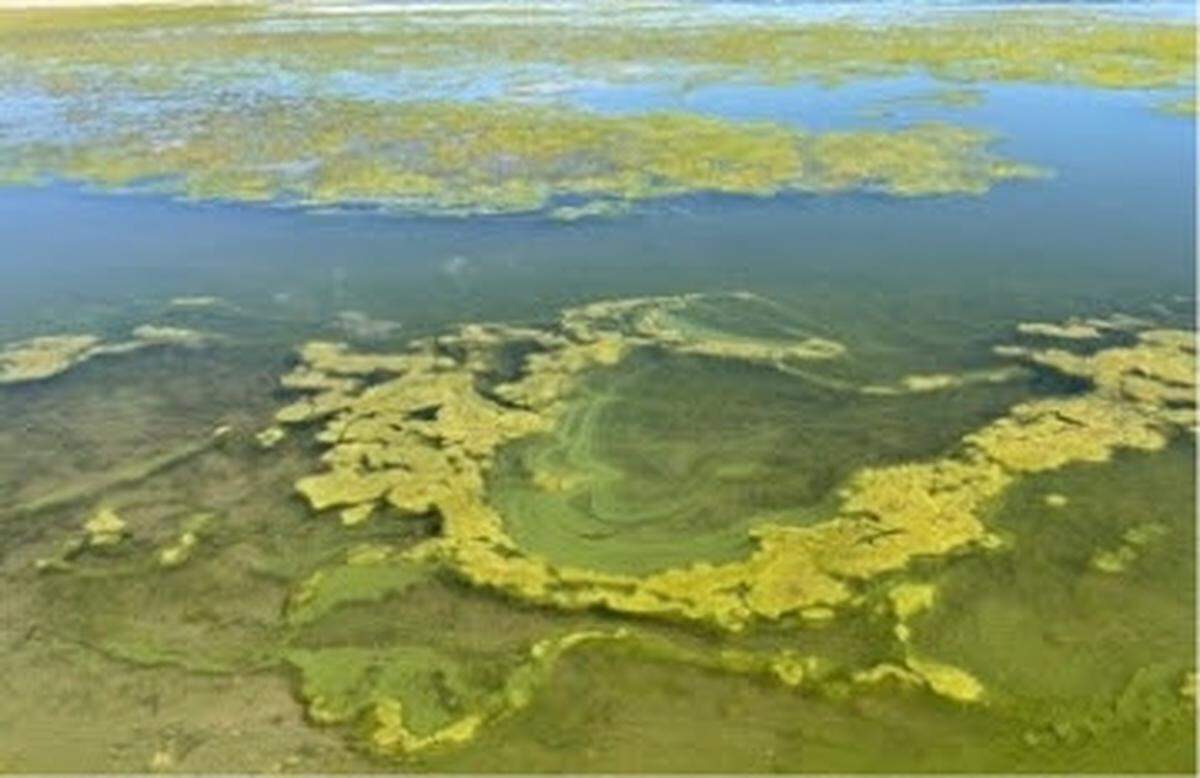
The State Water Board described harmful algal blooms as producing cyanobacteria and dermatoxins that can cause skin inflammation, itchy skin and rashes, along with gastrointestinal distress if swallowed while swimming.
“The bloom may concentrate and form a film or scum on the water surface,” the board said in a news release Thursday about a worrisome algae bloom in Crowley Lake in the Eastern Sierra. “The color of the water may also appear discolored as bright or dark green.”
The California Department of Public Health said harmful algae can also cause diarrhea, vomiting, and “harm to the liver, kidneys, or nervous system if the toxin levels are very high.”
The state health department said it also found “some evidence that dried algal mats can produce measurable toxin in the air.”
Other names for harmful algal blooms include cyanobacteria, blue-green algae, golden algae, or simply, algae. They can be reported to the state at mywaterquality.ca.gov.
The state health department shared some signs of a potentially harmful algal bloom:
- There is a bright green, blue, brown, or red color to the water. It may appear as though paint is floating on the water.
- Cloudy water. However, toxins may persist for days even after the cells have died and the water appear clear.
- A very bad odor, similar to the smell of a sewer or rotten eggs.
- Dead plants and/or fish.
The U.S. Environmental Protection Agency called harmful algal blooms a “major environmental problem” in all 50 states. They need sunlight, slow-moving water, and nutrients – nitrogen and phosphorus – to grow.
Andy Stahl, executive director of Forest Service Employees for Environmental Ethics, noted that aerial fire retardant (which contains some of those nutrients) is known to trigger algae blooms, and that retardant was used to fight the 2018 Ferguson Fire that burned in the area where the Mariposa family was recently found dead.
The EPA said some primary sources of excess nitrogen and phosphorous include agriculture, storm water, wastewater, fossil fuels, and home uses, such as fertilizers, yard and pet waste, and certain soaps and detergents.
This story was originally published August 19, 2021 at 5:04 PM with the headline "Killer algae? California officials retesting river water after family found dead in Sierra."