
California farmworkers face risks from heat, smoke. Regulations offer little protection
This story is part of the Central Valley News Collaborative — a bilingual, community journalism project funded by the Central Valley Community Foundation and with technology and training support from Microsoft Corp. The collaboration includes The Fresno Bee, Valley Public Radio, Vida en el Valle, Radio Bilingüe and the Institute for Media & Public Trust at Fresno State.
Another surge of hot weather is hitting Fresno and the surrounding area this week, as smoke from nearby wildfires continues to engulf the region. These extreme conditions are leaving hundreds of thousands of farmworkers at especially high risk for heat-related illness and death, according to a recent study from UC Davis.
The danger heat illness poses to farmworkers has been a major concern for decades, but increasingly higher temperatures, a deepening drought and a longer fire season due to climate change have worsened outdoor working conditions in recent years, said Dr. Marc Schenker, founding director of the UC Davis Western Center for Agriculture Health and Safety and coauthor of the study. Farm labor is often strenuous work, which can also greatly accelerate the rate at which a person develops a heat-related illness, he added.
“Agricultural workers are the most vulnerable to heat stress,” Schenker said. “Over the past two decades, the rate of occupational heat stress fatalities has increased coincident with the rising ambient temperature. And if you’re doing heavy work, you’re increasing your risk of heat stress substantially.”
The UC Davis researchers monitored the core body temperature and work rate of 587 Latino farmworkers on 30 farms throughout the Central and Imperial valleys during the summers of 2014 and 2015. With the use of thermistors, accelerometers and weather stations, they tracked how the environmental temperature over work shifts contributed to the likelihood of heat illness.
The researchers found that workers’ risk for heat-related illness was exacerbated by work rate and environmental temperature, even when farms followed regulations mandated by the California Division of Occupational Safety and Health, also known as Cal-OSHA.
The researchers suggested that future revisions of the state’s regulations include more robust protections for farmworkers, including limiting the type of tasks farmworkers perform on exceptionally hot days, adjusting work rates, hydration recommendations and rest breaks according to the weather and requiring heat illness training “tailored to the cultural and behavioral needs of the workforce.” They said it is critical that supervisors also model these behaviors.
The study was published in June in the Journal of Occupational and Environmental Medicine.
Though the study was conducted several years ago, Schenker said it’s even more relevant now, due to the shift in weather patterns that have not only caused severe outdoor temperatures, but also a prolonged drought.
Just last month, Fresno hit an all-time high during a record-shattering heatwave, becoming the hottest midsummer month in history. Twenty seven of July’s 31 days saw triple-digit highs, with the highest temperature in Fresno reaching 114 degrees on July 11, breaking the previous record of 110 degrees set in 1961.
August has brought little relief.
Temperatures in Fresno this week are expected to hover around 95 degrees through Friday, according to the National Weather Service. Highs are forecast to reach 100 degrees, while lows are expected to be near the mid-60s.
The peak harvest season, which involves arduous outdoor labor for long hours at a time, coincides with the hot summer, creating “serious occupational health risks” for the outdoor workforce, the study shows.
California has about 800,000 employed farmworkers across the state, according to a separate UC Berkeley study. The state’s agricultural industry produces about $50 billion in revenue each year. Amid the pandemic, frontline agricultural workers have faced unprecedented hot weather, a surge of COVID-19 infections and unsafe exposure to wildfire smoke.
Farmworkers more likely to die from heat illness
According to the study, heat illnesses such as heat exhaustion and heat stroke occur when an individual’s body temperature rises too quickly due to environmental exposure to heat.
Prolonged exposure to heat can produce a range of symptoms including “headaches, dizziness, cramps, fainting, rapid heartbeat, disorientation,” and in more severe cases, shock and death, it said.
California is one of four states that has existing safety standards for those working in extreme heat. The state set a precedent in 2005 when it became the first to establish a standard to protect outdoor workers from heat exposure. When temperatures exceed 80 degrees, Cal-OSHA requires employers to provide shade structures, while cool water stations and sufficient rest breaks from the sun are required at all times. In addition, employers are required to take immediate action, such as offering onsite first aid or emergency medical services, if a worker is displaying signs of heat illness.
Ian LeMay, president of the California Fresh Fruit Association, an alliance of farmers, said employers make it a “top priority” to work with Cal-OSHA, workers’ compensation agencies and allied associations to regularly provide safety trainings on heat illness and smoke exposure. Shade and water stations are provided throughout the season, while work days are “often cut short in observance of the potential for heat exposure,” he said in an email to The Bee.
“California’s bountiful harvest cannot make it to America’s table without a safe, healthy and vibrant agriculture employee community,” he added. “As employers, we take that responsibility seriously and have worked with the State of California for many years to create the safest work environment possible.”
Still, no federal standards exist. And while the UC Davis researchers found California’s safety measures alone don’t protect farmworkers from heat illness and death, the state’s regulations have helped lower the fatality rate among its farmworkers. Meanwhile, in other states where no protections exist, farmworkers are subject to die at much higher rates.
On average, the researchers found that crop workers are 20 times more likely to die from heat illness than a civilian worker.
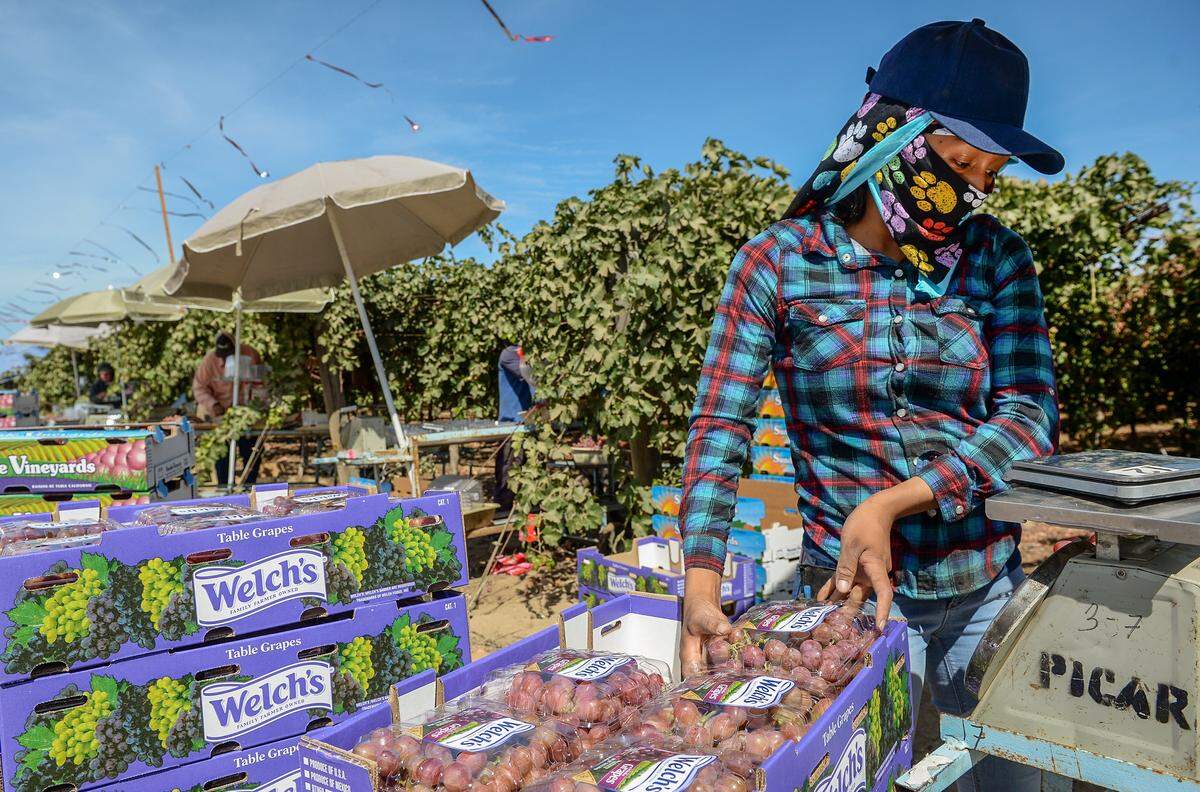
Tracking the number of farmworkers who get sick or die from heat-related illness is difficult to measure because these occurrences are not systematically recorded in workplace settings, the researchers found. But the lack of federal rules also make it challenging to quantify, they said. Farms with fewer than 11 employees are not required by the federal government to report heat illness, for example, while the U.S. Bureau of Labor Statistics “only counts incidences of heat illness when there has been at least one day’s work lost.”
Cal-OSHA confirmed 17 deaths and 193 injuries of agricultural workers due to heat illnesses between 2005 and 2020, according to agency data. The agency is still investigating suspected cases of heat-related deaths this year, according to agency spokesperson Frank Polizzi.
Immigrant farmworkers, many of whom are also undocumented, regularly fear retaliation from their employers if they report feeling ill on the job, the study found. The researchers also examined surveys of farmworkers in other states. About 40% of farmworkers in North Carolina, 31% in Washington and 84% in Florida said they experienced symptoms related to heat illness.
Schenker said it’s “frustrating” federal protections haven’t been mandated, despite conditions growing more dangerous.
“Only four states have a standard — none are perfect, but that’s only a fraction of the U.S. farmworker population,” he said. “Absolutely there should be a federal standard… but the reality is that federal OSHA is just not very effective.”
Smoke from California wildfires threaten workers’ health
But protecting agricultural workers from heat illness could require more than safety regulations.
Leydy Rangel, UFW Foundation’s national communications manager, said the pay structure on some farms also affects how susceptible farmworkers are to heat illness.
Some workers are paid by the hour, while others are paid by how much they produce over the course of a shift. She said the workers who get paid “piece-by-rate” wages are often encouraged to push themselves past their limits to receive a higher payment, rather than focusing on their health and well-being.
“Piece-by-rate wages really create an incentive for workers to not slow down, to not take breaks, to not adequately hydrate and to really push their bodies beyond what it’s meant to endure so that they can earn a little bit more money at the end of the day,” she said. “That’s also why it’s important that employers are communicating to their workers what they need to do to protect themselves.”
The researchers agreed, noting that the “power structure dynamics” on farms, especially piece-rate pay, “make self-care decisions difficult and expensive for farmworkers.”
Farmworkers also face greater risk to their health due to exposure from wildfire smoke.
A thick layer of haze from nearby wildfire smoke has created hazardous air quality conditions across the entire San Joaquin Valley, according to the San Joaquin Valley Air Pollution Control District. The agency this week issued a health caution for the region until the fires are extinguished and the air quality improves.
Valley air officials warn poor air quality can cause asthma attacks, aggravate chronic bronchitis and increase the risk of heart attack and stroke among vulnerable groups. Individuals with heart or lung disease and those with respiratory conditions like COVID-19 are especially susceptible to experiencing complications and difficulty breathing in the heat and smoke.
Farmworkers, who were already disproportionately affected by COVID-19, are at even more risk of developing chronic conditions due to wildfire smoke, Rangel of the UFW Foundation said. That’s why it’s important employers provide farmworkers with N95 masks and enforce their use, she said.
“It’s so vital that they wear these masks and it’s important that they protect themselves,” she said. “There are many farmworkers who have a shorter average life expectancy and it’s because of all of these different elements of the hazardous working conditions that they have to labor under.”
This story was originally published August 19, 2021 at 5:00 AM with the headline "California farmworkers face risks from heat, smoke. Regulations offer little protection."