
California prison population shrinks, but spending keeps going up — to $112,000 per inmate
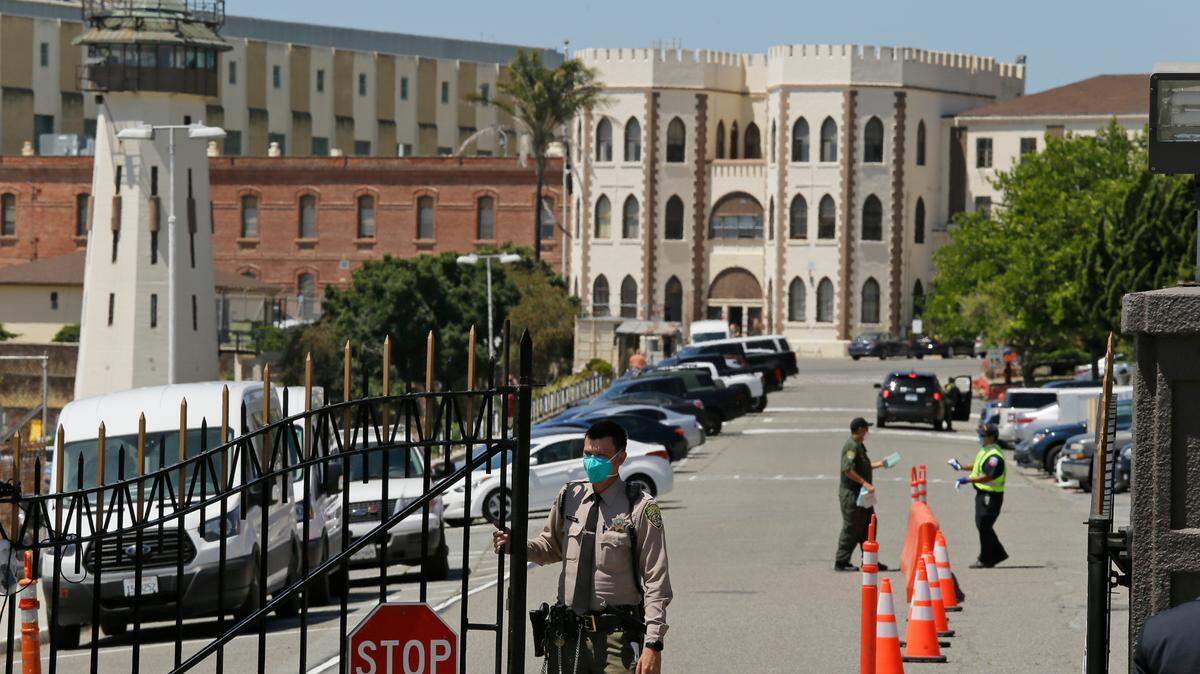
It now costs more than $100,000 per year on average to imprison one person in California, according to Finance Department figures.
Gov. Gavin Newsom’s budget proposal projects the California Department of Corrections and Rehabilitation will spend an average $102,736 on each inmate for the fiscal year that ends June 30. The figure is projected to rise to $112,691 per inmate next fiscal year.
The record-high costs emphasize a counterintuitive trend: prison spending keeps going up even as the inmate population shrinks.
The coronavirus pandemic has exaggerated the trend. California’s prison population has dropped by 26,000 since February 2020, propelled by early releases of low-level offenders. Yet the corrections department will spend about $1.2 billion more in the next fiscal year under Gov. Gavin Newsom’s latest budget proposal.
The latest budget figures, while affected by emergency pandemic spending, fall in line with years-long trends. California’s per-inmate spending captured headlines when it cleared $75,000 in 2017, prompting comparisons to a year’s tuition at Harvard and Stanford universities.
California’s 35 state-run prisons held about 130,000 inmates then. Now they hold about 97,200. The corrections department’s budget was $11.4 billion then. Now, in Newsom’s proposal for the fiscal year starting July 1, the state would spend $13.5 billion.
The fundamental cost drivers remain the same, according to the Legislative Analyst’s Office: employee salaries and benefits, compliance with federal court orders and some lingering deferrals from the Great Recession.
Pandemic-related health care costs are contributing to recent increases, said Finance Department spokesman H.D. Palmer.
The corrections department’s spending on health care, driven also by an aging population, is rising 49% next fiscal year compared to the year before last, an increase of $407 million, according to a five-year Finance Department spending chart.
And the state is spending more on rehabilitation programs — such as education and career training — that are aimed at reducing recidivism, which could help reduce long-term spending by keeping people from returning to prisons, Palmer said in an email.
And even as overall costs continue to rise, the state is reducing spending in some areas within the corrections budget, Palmer said, such as by closing state-run prisons and ending contracts with other facilities.
Closing prisons
Newsom has taken the unprecedented step of starting to close prisons. He has announced plans to close Deuel Vocational Institution in Tracy in September and California Correctional Center in Susanville in June 2022. Together, the two closures are expected to save about $272 million per year.
In a rare turn, employee compensation dropped in the present fiscal year, and — according to projections — will remain next year below last year’s levels. The decrease is driven by pay cuts Newsom and the Legislature imposed on state workers, along with a projected reduction of about 2,400 employees, bringing the corrections department’s workforce to about 56,000 employees.
Yet even with the reductions, employee compensation accounts for the biggest chunk of the corrections department’s increase in spending over the last five years, according to the Finance Department chart. By the end of next fiscal year, employees’ pay and benefits will have increased by $1.63 billion from five years ago, reaching roughly $8.7 billion, according to projections.
“A lot of it is employee comp-related costs, because it takes a lot of people to run a prison,” said Caitlin O’Neal, a legislative analyst who focuses on prisons.
In calendar year 2020, base pay for about 25,500 rank-and-file correctional officers averaged $87,782 — among the highest in the nation. Each officer earned an additional $15,000 on average in overtime pay, according to figures from the Legislative Analyst’s Office. The figures don’t include sergeants, lieutenants or other high-ranking officers and administrators.
And for each dollar the state pays peace officers, it will have to contribute 33 cents toward their pensions next year, according to CalPERS projections. The state must also contribute each year to employees’ retirement health insurance.
Staffing ratios show inmates are so far leaving the prisons at a faster rate than correctional officers. In the 2019-2020 fiscal year, there were 2.11 inmates for each officer. Next year there will be 1.62 inmates for each officer, according to the Finance Department projections.
The officers are represented by the California Correctional Peace Officers Association, the state’s second-largest union. The union’s president said his members’ compensation is well deserved.
“Correctional officers are essential to the functioning of this state,” union president Glen Stailey said in an emailed statement. “During the pandemic, we weren’t on Zoom calls — we showed up in person for our shifts in the toughest conditions, day after day. We are worth every penny.”
Sentencing reforms
Employee compensation is projected to increase roughly $2.5 billion by 2025, according to a Legislative Analyst’s Office report.
The analyst’s office has called for closing three more prisons in the next five years, for a total of five, which would save $1.5 billion, partially offsetting the expected rise in compensation, according to the office’s projections.
Assemblywoman Cristina Garcia, D-Bell Gardens, the chairwoman of a subcommittee that oversees prison spending, said she supports the five-prisons proposal but wants to see investments to help the local economies in communities affected by the closures
Additionally, Garcia said the state should improve its long-term planning by avoiding new investments, such as billions in long-delayed repairs, for prisons it will end up closing.
Garcia said that to truly address costs, the state needs to make more fundamental reforms.
“We need to be doing sentencing reform,” she said. “It’s our goal to help people rehabilitate and get back into their communities.”
Californians for a Responsible Budget, a collection of advocacy organizations focused on shrinking the prison system, has called on the state to close 10 prisons, reform sentencing and reinvest savings in rehabilitation programs.
“We’re asking the state not to look at it just through a labor or economic lens but look at the harm we’ve done through incarceration in California and focus on correcting that,” executive director Amber-Rose Howard said.
This story was originally published June 3, 2021 at 5:25 AM with the headline "California prison population shrinks, but spending keeps going up — to $112,000 per inmate."