
California union freezes assets of its largest chapter after embezzlement allegation
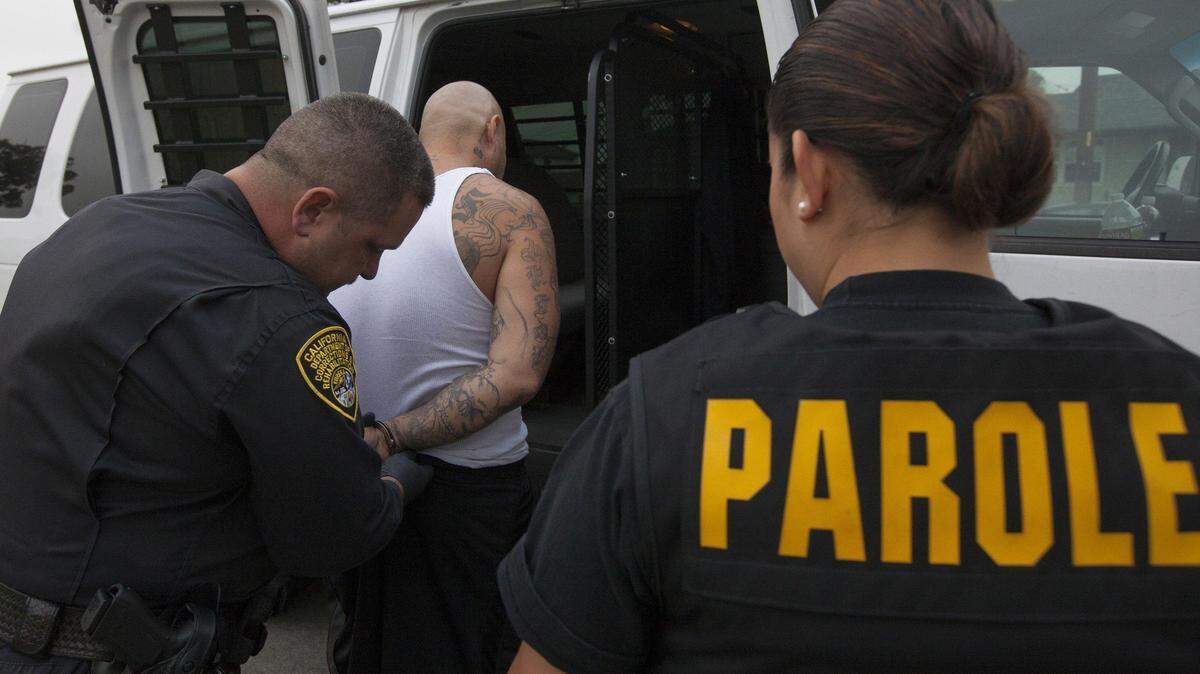
California’s powerful state correctional officers union froze the assets of its largest chapter two months ago, stripping authority from a woman who has accused union officers of embezzling money, according to documents obtained by The Sacramento Bee.
The seizure is the latest escalation in an internal dispute that is playing out in court, on social media and in a Department of Justice investigation.
At the center of the stir is Maribel Hinojosa, the outspoken president of the Parole Agents Association of California. The chapter, representing about 1,400 state parole agents, is the largest subdivision of the 28,000-member California Correctional Peace Officers Association.
The CCPOA is an influential union that collects roughly $30 million per year in membership dues. It bargains over pay and working conditions for some of the nation’s best-paid correctional officers and spends millions each year seeking to shape criminal justice policy through contributions to lawmakers and ballot measures.
While campaigning for her December 2019 election, Hinojosa accused then-president Jorge Robles in emails and Facebook posts of sloppy bookkeeping and spending union money inappropriately to benefit himself. Those accusations now are the focus of a defamation lawsuit Robles and an ally filed against her.
She has continued to press her claims as president, including in IRS forms related to the chapter’s tax-exempt status. Form 990s posted to the chapter’s web page, prepared by Pasadena-based accounting firm Lucas, Horsfall, Murphy & Pindroh LLP, show $53,000 is unaccounted for from 2019, Robles’ last year as president.
The chapter is arguing with Robles and former treasurer Meshal Kashifalghita over whether the chapter’s money was used for personal credit cards and for entertainment and meals, according to the Form 990s, which don’t provide further details.
Artin Sodaify, an attorney representing Robles and Kashifalghita in a defamation lawsuit they filed against Hinojosa, said his clients “wholly refute” Hinojosa’s claims they misspent union money. The men declined interview requests through Sodaify.
Hinojosa, who has been a state parole agent for 21 years, declined an interview for this story and didn’t respond to emailed questions. She has insisted publicly that evidence will come to light that will prove her claims.
Union executives placed the parole agents chapter into trusteeship on Dec. 4, taking away Hinojosa’s spending authority and other leadership powers.
In a notice of trusteeship, CCPOA President Glen Stailey suggested Hinojosa might have misspent union money on “personal legal expenses” in the lawsuit filed by Robles and Kashifalghita.
The notice didn’t identify Hinojosa by name, nor did it name either of the men, but it named the law firm Hinojosa has retained to defend herself in the defamation lawsuit.
Stailey’s notice also cited social media posts that “may be harmful to CCPOA and its members.”
The union didn’t respond to emailed questions, including whether it is investigating Hinojosa’s embezzlement allegations.
Stailey hung up when asked about the situation at the parole agents chapter by phone last week.
Missing money
In October 2019, two months before the election, Hinojosa accused Robles in Facebook posts of “spending money excessively on food and alcohol,” “spending money on hotel suites,” and of failing to provide financial documents she had requested, including nonprofit tax filings.
Posting on a Parole Agents Association of California (PAAC) Facebook page, Hinojosa wrote, “I believe he is embezzling PAAC Chapter monies.”
She offered no evidence to support the claim beyond her account that he had withheld documents.
Robles and Kashifalghita sued her in Los Angeles County Superior Court in May 2020, saying the allegations Hinojosa made in Facebook posts, emails and a meeting were false and damaged their reputations.
A Justice Department special agent emailed Hinojosa in June saying he was investigating possible embezzlement by chapter board members. The email, which was shared with others at CCPOA, did not identify the subjects of the investigation.
The Department of Justice press office didn’t provide any more information.
On. Nov. 21, Hinojosa posted the 2019 tax forms to a chapter Facebook page.
Officers may reimburse themselves for union-related spending, but the former officers provided “incomplete records” that don’t enable auditors to tell whether the spending was appropriate, according to the tax documents Hinojosa shared on Facebook.
In the same post, she disclosed the Department of Justice was investigating.
Two weeks later, CCPOA executives placed the chapter into trusteeship. The trusteeship strips Hinojosa of authority to call meetings and appoint officers, and it puts the the chapter’s finances under the control of three men designated by the union’s executive council.
CCPOA members pay $97 per month in dues. The parole agents’ chapter, which has more independence than the union’s 42 other chapters under its 1981 affiliation agreement, receives $4 from each dues payment.
Under union rules, CCPOA executives must set an end date for a trusteeship within six months of imposing it.
Sued for defamation
Robles was appointed president in February 2018. When he ran for election in 2019, he faced at least two other challengers along with Hinojosa.
In their lawsuit, Robles and Kashifalghita identified several instances in addition to Hinojosa’s social media posts in which she allegedly made claims against them without evidence. They are seeking money to make up for the damage and to punish Hinojosa, according to the complaint filed in the lawsuit.
Hinojosa accused them in a July 2019 email to union officials of misusing union funds. In the email, which is included in the lawsuit, she recounted her unsuccessful efforts to get tax filings from Robles. She cited “countless circulating rumors” to support her claims of misuse.
Robles said in a legal declaration that it wasn’t his responsibility to provide tax documents; that responsibility lies with the treasurer, he said.
She called the two men “thieves” and “liars” without evidence at a February 2020 board meeting, according to the suit.
Details of her allegations, including timelines for when the union leaders filed tax documents, were inaccurate, according to the suit.
Hinojosa asked a judge to dismiss the lawsuit under a law meant to minimize frivolous lawsuits aimed at chilling public speech. Her attorney argued her accusations were protected since they were made in the context of an election.
Los Angeles County Superior Court Judge Yolanda Orozco said in a written decision on Oct. 16 that Robles and Kashifalghita’s claims appeared to have enough merit, based on her preliminary analysis, to support advancing the lawsuit toward a jury trial.
Robles communicated with CCPOA leaders about chapter bank accounts and provided cashiers checks for the accounts when he left, Orozco noted in the decision.
Orozco wrote that Robles and Kashifalghita hadn’t provided evidence that Hinojosa’s claims were false. That remains a “triable issue,” she said in her decision.
A trial is scheduled for Jan. 3, 2022. Orozco advised the parties to try mediation before then.
This story was originally published February 3, 2021 at 5:00 AM with the headline "California union freezes assets of its largest chapter after embezzlement allegation."