Why does it cost so much to build homes in SLO? Here’s what local experts and builders say
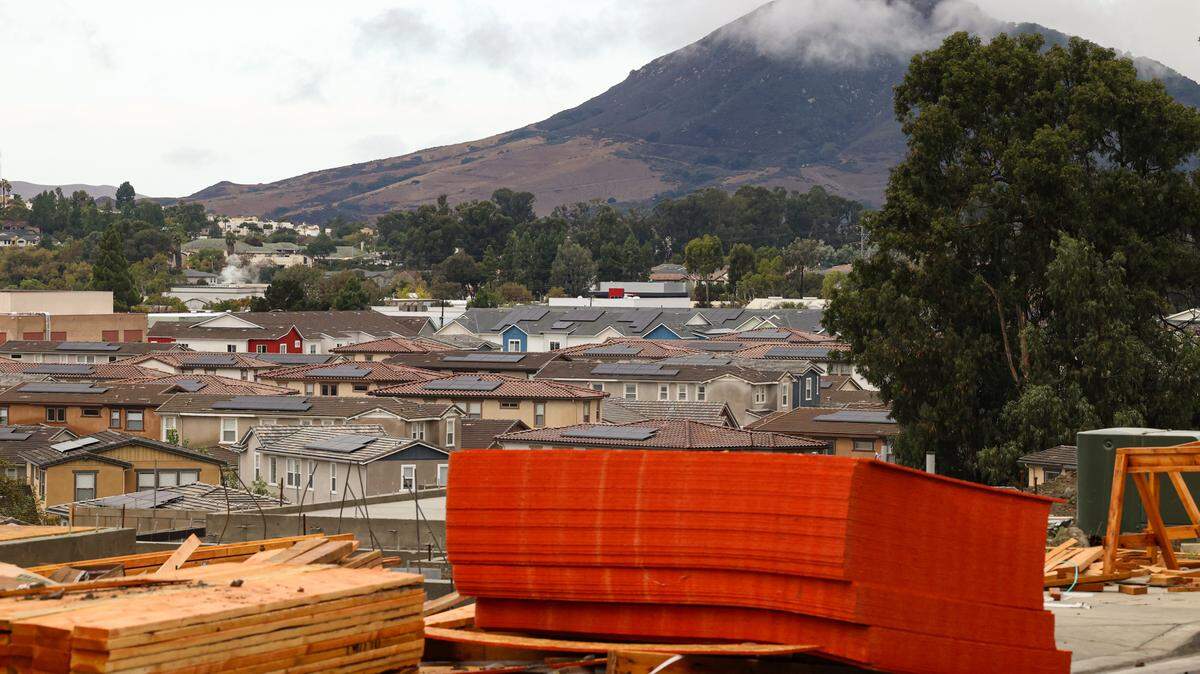
Building housing of any kind is expensive in San Luis Obispo County — but local experts say there’s no single reason why home construction is so pricey.
“California is the No. 1 state in the country” in terms of housing market volatility, said Lindy Hatcher, executive director of the Home Builders Association of the Central Coast, meaning the prices are so high that even slight increases can prevent potential buyers from qualifying for a loan.
That’s especially evident on the Central Coast, where bidding wars can drive up prices well above asking. When you add in higher prices due to the inflated cost of materials, that only compounds the challenge.
In California, “If you increase the price of the house by just $1,000, you price out the highest amount of people,” Hatcher said. “That’s a statistic that we don’t want to be No. 1 in,” she said.
Hatcher said maintaining balance in building costs has grown more difficult in the years following the peak of the COVID-19 pandemic.
Supply chain issues take a toll on home builders
Continued delays in the supply chain and rising prices for building goods are some of the most acute problems facing builders, Hatcher said, adding that one key issue is the production and distribution of lumber.
Hatcher said it’s a “basic supply-and-demand” issue, stemming from the earliest coronavirus-related lockdowns.
“At the onset of COVID, the lumber mills cut their production, which was really unfortunate,” Hatcher said. “They weren’t sure if housing (construction) was going to stop or if it was going to keep building, and until we got everyone classified as essential employees, they cut their production.”
Mills also cut their third shifts, Hatcher said, and, in many cases, never reinstated those shifts, which put a permanent dent in the production of lumber.
“As the prices started going up, (the mills were) making bank,” she said. “Why would they start their shift back and pay those employees when they’re already making bank off the lumber?”
Local lumber and home building suppliers such as Hayward Lumber in San Luis Obispo have had to strike a balance between keeping enough products in stock for buyers’ projects and setting aside stock to cover potential supply chain disruptions, Hayward regional manager Rudi Lokkart said.
“When COVID first broke, most of our industry looked at that and said, ‘Oh, we’re going into another (economic) downturn,’ “ Lokkart said. “Everybody ... said, ‘Let’s back off, because we don’t want to build a lot of inventory and (then) get stuck with it.’ ”
“Our industry didn’t slow down,” he said. “In fact, we sped up.”
This year, Lokkart said, suppliers and developers have seen a six-month run of high prices and delays in distribution.
It can take eight to nine months for lumber or windows to arrive at a worksite, Lokkart said, adding that the time between placing an order and materials being delivered is three times longer than it used to be before the pandemic.
Greg Nester, owner of Greg Nester Construction and Development in San Luis Obispo, said supply chain issues can affect every aspect of building a home, from more common components such as appliances — which he said can take up to 14 months to be delivered — to more specialized or premium components, such as the type of wood that goes into an upscale home.
“All of the inventory ... got exhausted by the pandemic and the lack of production,” Nester said. “They are physically making products for you as you’re ordering it, rather than pulling from inventory and shipping it out as soon as available.”
Some wood and glass products, such as doors, windows and cabinets, were placed on individual buyer allocations, as suppliers could not afford to produce any surplus, Lokkart said.
“Even though we had the opportunity to sell more products, we couldn’t get the materials to do it because we were on an allocation,” Lokkart said.
That adds to the time and money needed to build a home.
According to data from the National Association of Home Builders, volatility in lumber production means that the price to build a single-family home has increased by more than $14,000 during the spike in lumber costs.
Nester said current construction prices are “the highest I’ve ever seen by far” in his 39 years in the field, which raises the level of risk his company has to take on when tackling new developments.
Demand for building materials is cooling nationwide, which will likely alleviate some of the deficiencies in supply, Lokkart said.
However, the future of pricing is still uncertain, he said.
The cost of getting “a piece of wood out of the forest, through a mill, onto a truck, into a lumber yard and delivered to a job site .... has gone up in the last two years,” he said, “and those costs have not disappeared just because the demand has lightened up a little bit.”
Nester agreed.
“Supply and demand drove the price up in a huge way, and it’s never came back down,” he said.
“It’s going to take some sort of a recessionary correction to bring supply and demand back to where it’s more palatable,” Nester said, in keeping with economic cycles.
Builders: Fees, regulations increase delays in production
While “everyone wants a silver bullet” to fix SLO County’s housing cost problems, Hatcher said, one of the most direct ways to lower the cost to build homes is to reduce the fees that developers pay on new developments.
“You tax what you want less of,” she explained. “You would tax cigarettes because you don’t want people to smoke. You would tax gas when you want to promote less greenhouse gas, less emissions, less people driving ... but you would never go to a grocery store and tax them, because they provide food and people are hungry.”
While affordable housing developments are generally exempt from most development fees, Hatcher said, for-profit developers are still subject to fees and taxes.
These fees can raise the price of building a home by around 25% before a single square foot of foundation has been laid, she said, keeping growth down.
Hatcher pointed to Grover Beach’s recently adopted site zoning practices, which allow for higher and denser building, as another way to save money on building and buying homes.
For-profit builders are “not the problem,” Hatcher said. “We are providing housing that’s also needed.”
This story was originally published September 21, 2022 at 5:30 AM.