SLO County cardroom threatened by ‘draconian’ new blackjack regulations
California cardrooms offering legal gambling are facing financial pressure under new state regulations that roll back some of their most profitable games, including at least one establishment in San Luis Obispo County.
The regulations “threaten the survival” of locally owned cardrooms like Outlaws Card Parlor in Atascadero, owner Jacob Wrona told The Tribune in an email.
The California Department of Justice’s new rules, approved by the Office of Administrative Law on Feb. 6, effectively ban multiple blackjack-style games that make up a “significant portion” of Outlaws’ gaming revenue, Wrona said.
California law already forbids cardrooms from operating “banked” games, like traditional blackjack and baccarat, where the house is pit against players, except on tribal land.
For years, cardrooms have instead used “player-dealers,” who are employed by third parties, and played “California Blackjack” or “Blackjack 21.5” — versions virtually indistinguishable from the original game. Operators of tribal casinos have complained consistently that the games are workarounds and should be outlawed.
The new regulations do just that: rolling back allowed games and putting stricter limits on the player-dealer game style. The rule change proposed by Attorney General Rob Bonta and the Bureau of Gambling Control go into effect on April 1, giving cardrooms like Outlaws 60 days from that date to bring their games into compliance.
But Wrona said doing so will cause his business to take a potentially lethal hit.
“These regulations threaten the survival of locally owned cardrooms like Outlaws,” he said. “We’re a family-owned business with a small team of dedicated employees who depend on these jobs to support themselves and their families.”
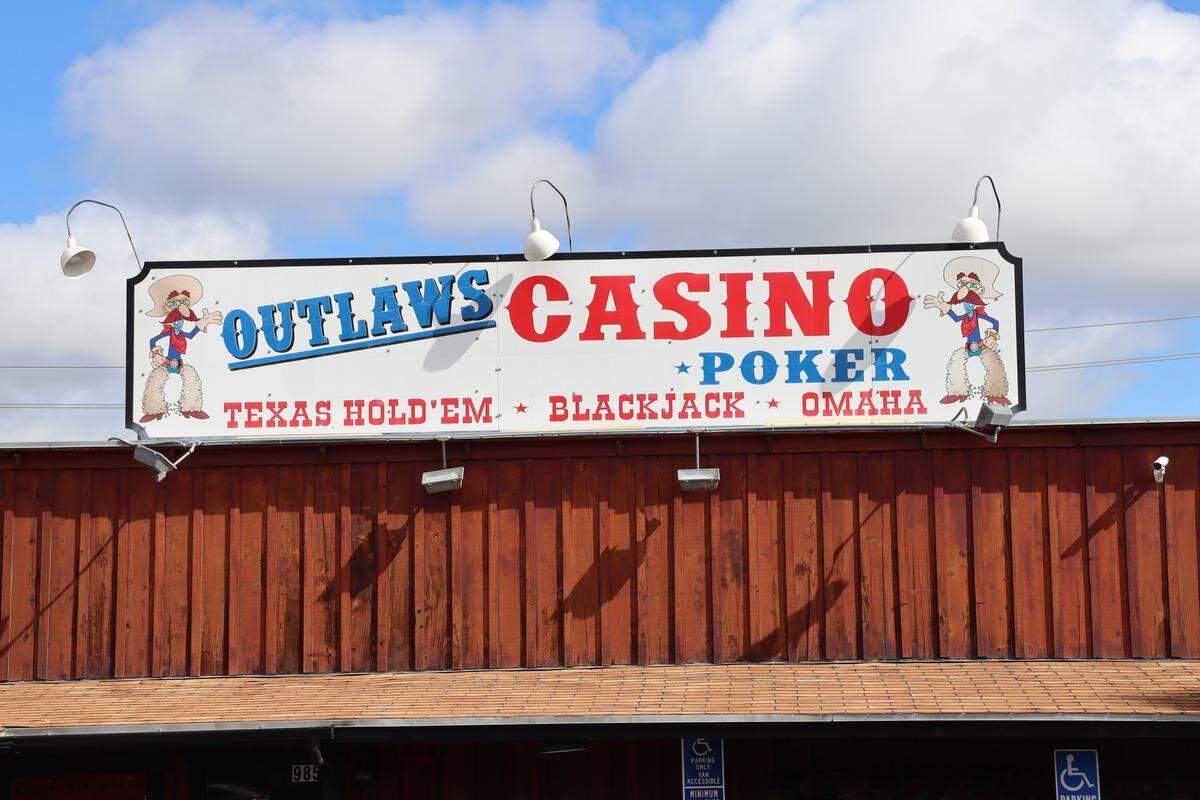
Wrona said Outlaws is in full compliance with California law and only offers state approved peer-to-peer games in which players compete against one another, not the house, and the cardroom does not participate in or profit from the outcome of any hand.
Outlaws currently offers two games that would be impacted by the new law, Wrona said. But they are some of the cardroom’s most popular games.
“We built our operations around rules set and overseen by the state,” Wrona said. “Changing those rules now, in a way that undermines the core games our customers rely on, creates serious uncertainty for our future.”
The local business owner did not specify how much of Outlaws’ revenue depends on these games being offered as they are, but said “it is substantial enough that changes to these games directly affect our ability to sustain operations, maintain staffing levels, and support our local community.”
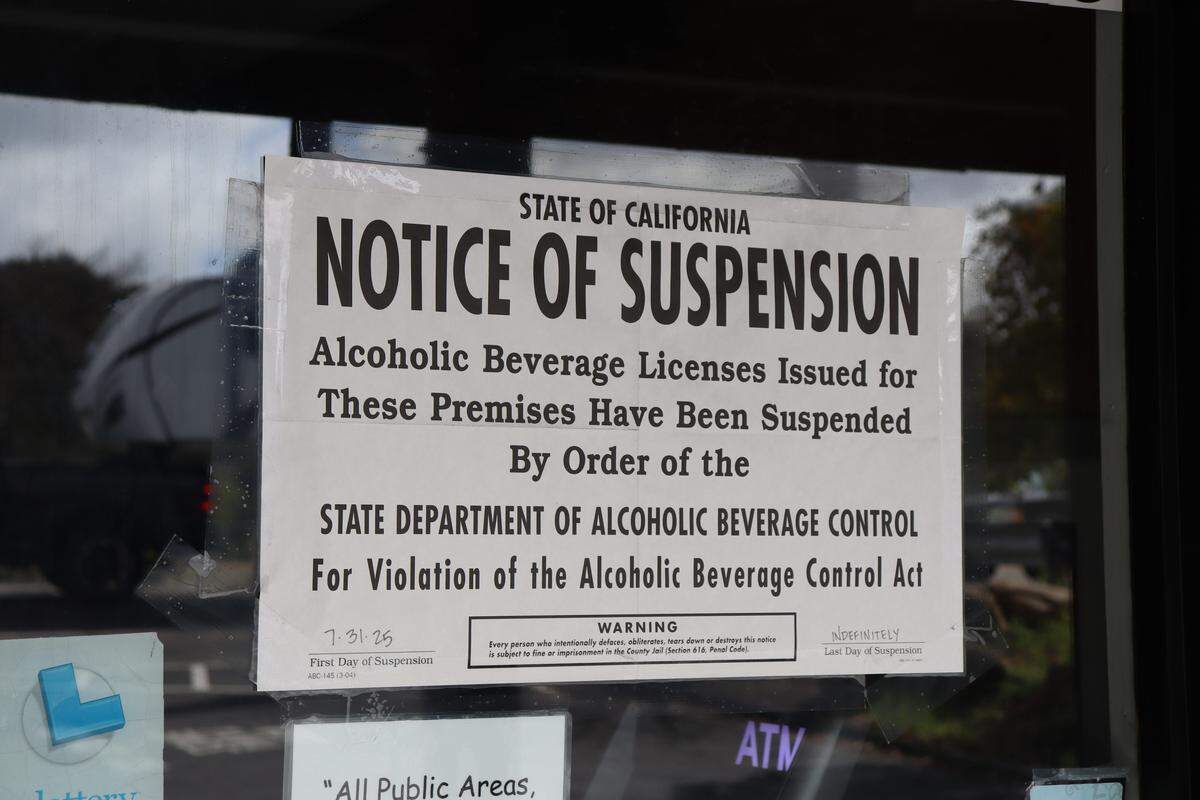
Outlaws’ liquor license was indefinitely suspected in July, according to a sign on the building, potentially causing compounding profit losses for the business.
The Central Coast Casino in Grover Beach, the only other licensed and active cardroom in SLO County according to the California Gambling Control Commission, did not respond to The Tribune’s multiple requests for comment about the regulations.
While the rule changes do not outright ban blackjack, they put barriers in place that make them essentially “unplayable for guests,” California Gaming Association President Kyle Kirkland told The Tribune.
He called the new measures “draconian” and compared them to asking cardrooms to make cocktails with kerosene — customers will simply stop playing, Kirkland said.
“It’s such a hard pivot from past interpretations and past approvals where games have been played for decades, and the impact on both the cardrooms, employees and cities, frankly — a number of cities in Southern California are really upended by this — that we’re pushing back,” Kirkland said.
Blackjack games account for a quarter of profits across California cardrooms, and the other player‑dealer games being targeted account for about 40%, Kirkland said. The most optimistic analysis projects half of cardroom jobs to be eliminated.
Wrona’s priority is protecting his employees and avoiding layoffs, he said. He is working with the California Gaming Association to explore legal options.
However, hindered by the new rules, Wrona said there is no way already-struggling local cardrooms like his own will ever be able to compete with tribal casinos.
“Tribal casinos operate under a different legal framework and are permitted to offer banked card games and slot machines, while cardrooms are limited to player-to-player card games,” he said. “We’re a family-owned business employing local residents, not part of a multi-billion-dollar gaming enterprise.”
Both Kirkland and the small business owner took issue with the way the regulations were passed as well, claiming that public comments submitted by stakeholders went ignored.
“Restricting games that have been lawfully offered for years, without any public complaint, effectively pushes customers away from community cardrooms and toward tribal casinos, giving them an even greater competitive advantage and threatening the viability of local businesses like ours,” Wrona said.
Meanwhile, Kirkland said the Gaming Association will do everything in its power to continue to challenge the provisions and protect California cardrooms.
“There’s no new perceived harm, nothing to justify this,” he said.
This story was originally published March 9, 2026 at 9:00 AM.