
How SLO County is becoming a hub for tech innovation in the middle of California
When Ty and Trudie Safreno founded their design and manufacturing company Trust Automation over 30 years ago, most of their customers across the country had never heard of San Luis Obispo.
“They think of it as grapes, tourism or a cool place to go in the summer,” Ty Safreno said. “They don’t think of it as a technology hub that’s growing rapidly.”
The Safrenos launched Trust out of Cal Poly and have stayed in SLO ever since, never seriously considering relocating to California’s larger tech hubs like San Francisco or Los Angeles.
“Being located in a different area, we’re also not compared to others,” Trudie Safreno said. “We got to grow as ourselves to become the company we are today.”
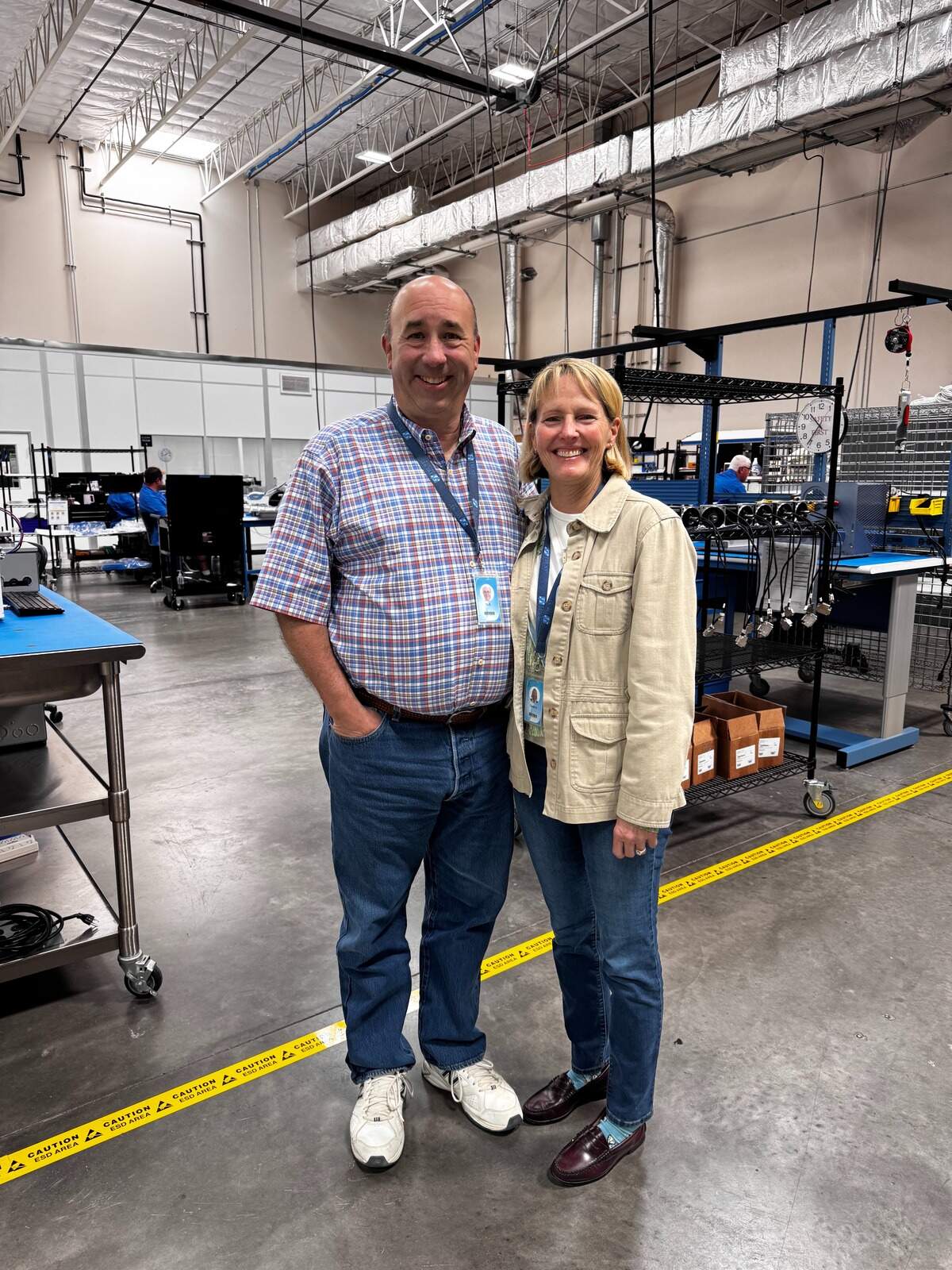
Trust Automation is one of dozens of engineering companies that have put down roots in SLO County.
In a region historically known for agriculture and tourism, technology innovation and advanced manufacturing have quietly flourished.
Tech’s potential for growth on the Central Coast
Over the last five years, Karen Tillman, economic development adviser to Cal Poly’s president and interim executive director of the Cal Poly Center for Innovation & Entrepreneurship, has observed highly skilled and advanced manufacturing grow across the county.
“There’s this real drive to create this higher level of innovation and entrepreneurship economy,” Tillman said. “Obviously our strengths are in tourism and agriculture, but how do we diversify our economy around the clean energy transition, tech entrepreneurship and innovation?”

Along those lines, the SLO Chamber of Commerce has identified specialized manufacturing as one of its five key industries.
“There’s this underground of precision manufacturing companies here in town that are doing amazing things that I imagine most people don’t know exist,” Chamber president and CEO Jim Dantona told the Tribune.
A 2024 study by regional economic group REACH projected that aerospace and precision manufacturing, clean tech, renewable energy and technology will add more than 6,000 jobs locally by 2027.
“We’re still a small cluster, but there are dozens of companies in SLO County that have contracts with NASA, Space Force or Department of Defense,” said Sally Buffalo Taylor, senior director of communications at REACH.
REACH found that many of the companies build specialized components that go into larger projects, which helps the companies remain relatively unknown.
However, an increasing number of launchs and activity at Vandenberg Space Force Base in Santa Barbara County has started to draw more attention to the region’s tech innovators.
One such company is Inspired Flight, a leading manufacturer of advanced American drone systems, which recently secured $12 million in Series A funding.
“That density is unusual,” said Mantis Composites CEO and co-founder Ryan Dunn, whose company Mantis specializes in 3-D printing of carbon fiber that primarily go into defense or satellite systems. “It doesn’t matter whether you go to a tech hub or not, that density means there is clearly a confluence of factors here that are able to support that.”
Similar expansion efforts in the aerospace industry are taking root in Paso Robles.
Paso’s economic development manager Paul Sloan explained how Paso is also looking to diversify its economy to improve economic stability and to increase opportunities for higher-paying jobs that can keep up with the increasing cost of living.
At the 1,300-acre Paso Robles Municipal Airport, the city is looking to obtain a license from the FAA for horizontal launch, Sloan said.
Although the city will likely not obtain its spaceport license before 2027, Paso is focused on building up the tech companies based there.
“It’ll be an educational spaceport, focusing on developing the next generation of workforce,” Sloan said. “The universities that focus on that are underserved because the limited access to space is mostly used up on commercial interest, so by us having the academic side and the natural talent pipeline brings in the commercial side.”
What makes SLO County unique?
For many tech founders, lifestyle is part of the draw for operating on the Central Coast.
“It definitely is easier in L.A. or San Francisco to find resources, people, but you also trade off traffic and the natural habitat that is around us,” Dantona said.
The work-life balance is something that many business owners feel they would not be able to find elsewhere.
“The quality of life in SLO keeps everybody here,” Dantona said. “It isn’t the fact that you’re going to grow your business into a 1,000-employee corporation.”
Despite its smaller size, SLO County still carries California’s entrepreneurial spirit, CEO Adam Stagner of the ag tech company Tric Robotics told the Tribune.
Tric started on the East Coast until Stagner decided to move the company to California’s Central Coast to take advantage of the region’s agriculture focus and to be closer to his customer base.
Tric builds and deploys tractor-scale robots that use ultraviolet light in place of chemical pesticides on crops, particularly strawberries.
He has found investors to be really accessible in SLO County’s smaller market.
“One of the benefits of being in SLO is that with a lot of people on the angel investor side, you can just grab a coffee with them,” Stagner added. “You can build a person-to-person relationship.”
One of the main ways companies gain funding is through those types of investors — high-net-worth individuals who invest and mentor new entrepreneurs.
With many retirees relocating to the area, SLO County has a healthy supply of those kinds of people.
“There’s a lot of people who were really successful and, SLO’s a paradise, so they end up moving here,” Stagner added.
Dunn and his co-founders launched Mantis while they were students at Cal Poly, and by the time the founders graduated, their business was settled in SLO.
While they did consider relocating early on, the hardware they use is difficult to move so they did not see that relocating was worth the expense, Dunn said.
Meanwhile, Dunn has found that there is enough talent around SLO that enables Mantis to continue growing.
“We have the sources we need here,” he said.
How Cal Poly impacts the start-up culture
Cal Poly plays a central role in SLO County’s startup culture.
More than 25% of Cal Poly students study engineering in some form, and many secure jobs at local tech companies or choose to launch their own.
Many companies, including Trust, remained in SLO in part because of the Cal Poly student pipeline.
“We have Cal Poly in our backyard, which is helpful with potential interns and positions in engineering and accounting,” Trudie Safreno said.
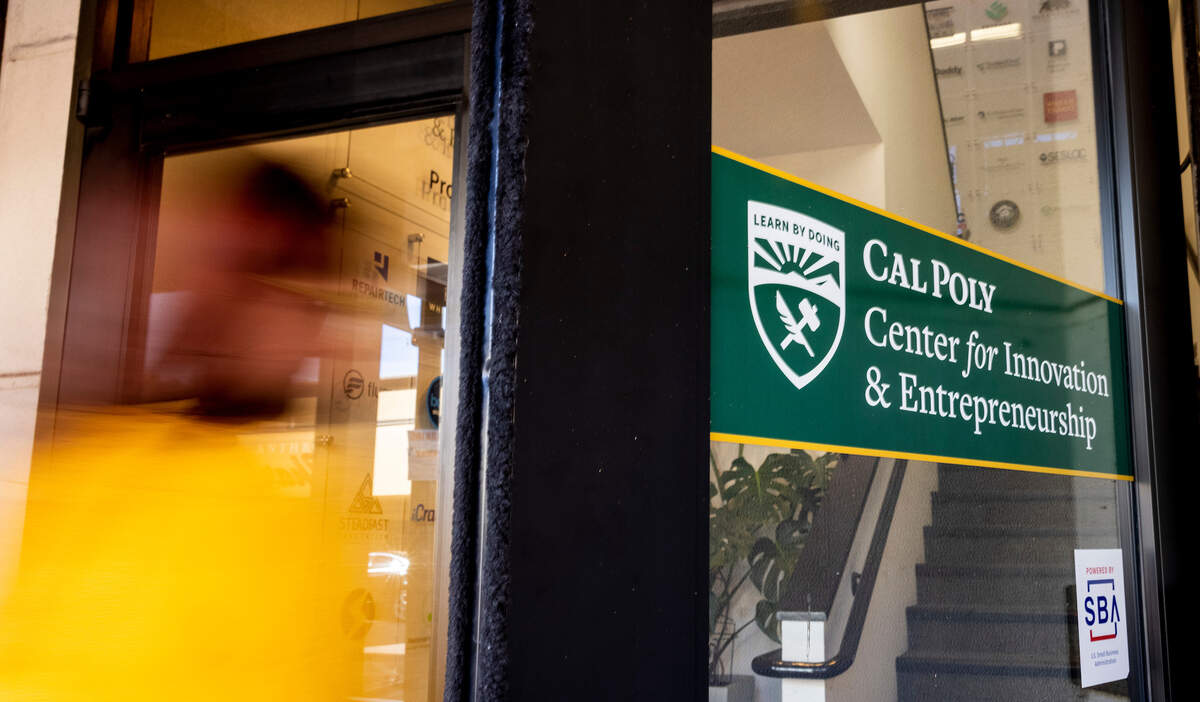
The university has cultivated entrepreneurship through the Center for Innovation and Entrepreneurship, which helps students and community members acquire the skills needed to launch a business, through programs such as the two-year incubator, the Summer Accelerator and the HotHouse coworking space in downtown SLO.
Stagner participated in CIE’s incubator, using Cal Poly’s network to help Tric grow.
“Because we’re in agriculture, it’s amazing to have that funnel close by,” Stagner said.
Dunn and his Mantis co-founders also took advantage of CIE while they were first-year students at Cal Poly. They participated in the Summer Accelerator, a 13-week program that helps participants gain the tools to launch a company.
Both Mantis Composites and Tric Robotics were also part of the CIE HotHouse, a community workspace on Higuera Street where entrepreneurs can work and find support to learn how to succeed.

“There’s a lot of engineers coming in who have no idea how to run a business, and there’s a lot of business people who have no idea how to do engineering,” Dunn said. “Programs like the HotHouse are really good at filling that gap.” As a group of engineers launching Mantis, Dunn knew they could have figured out the business side of things eventually, but it would have taken much longer and been much more expensive with more mistakes.
“The HotHouse is perfect for us because we were just getting started, and it was a good place for a startup to build a network and meet people in town,” Stagner said.
Travel and housing can be challenges for SLO County tech businesses
Despite its many benefits, the Central Coast also does present some challenges for new businesses.
Because SLO County only has a population of around 280,000 people, the area does not have a lot of people power for companies looking to grow, Dantona said.
“You are limited because you are on an island here,” Dantona added.
Likewise, that also makes it difficult for companies to recruit talent to the area.
Trudie Safreno has found that some people are hesitant to relocate because they simply don’t know what it’s like to live in SLO.
“The tragedy of someone located here is the number of jobs here in the tech world is growing extremely rapidly, but people don’t know it,” Ty Safreno said.
Although SLO’s small airport has grown, it can still cause headaches for business-related travel because of the less frequent flights and extra travel time it takes to reach the region.
Still, the airport is expanding, adding flights to many hubs across the western U.S., as far as Dallas and Denver.
Mantis spends a lot of time visiting customers in Washington, D.C., and other parts of the country, along with having to coordinate travel for their customers when they come to SLO.
“I spend probably 30 to 40 days a year traveling that I wouldn’t otherwise because we are based out of SLO,” Dunn said.
One of the biggest concerns for people looking to move to SLO is a concern that every business located here faces: housing.
Limited housing stock makes it difficult to fill the workforce gap of middle management positions moreso than in other parts of the state.
“It is a major limiting factor trying to hire people from afar, and it is not that they can’t afford the housing, it is that they can’t find the housing,” Dunn said.
The industry is also looking to fill the gap by creating high-paying jobs that do not require a four-year degree. Trust Automation is working with the San Luis Coastal Unified School District to provide technical training to students to gain the skills that would help them work at advanced manufacturing companies.
However, the business owners agree that the lifestyle of staying in SLO County outweighs any difficulties.
“People come here, fall in love with the area and have to figure out a way to stay,” Tillman said.