
Art meets nature in the coastal city of Zadar, Croatia
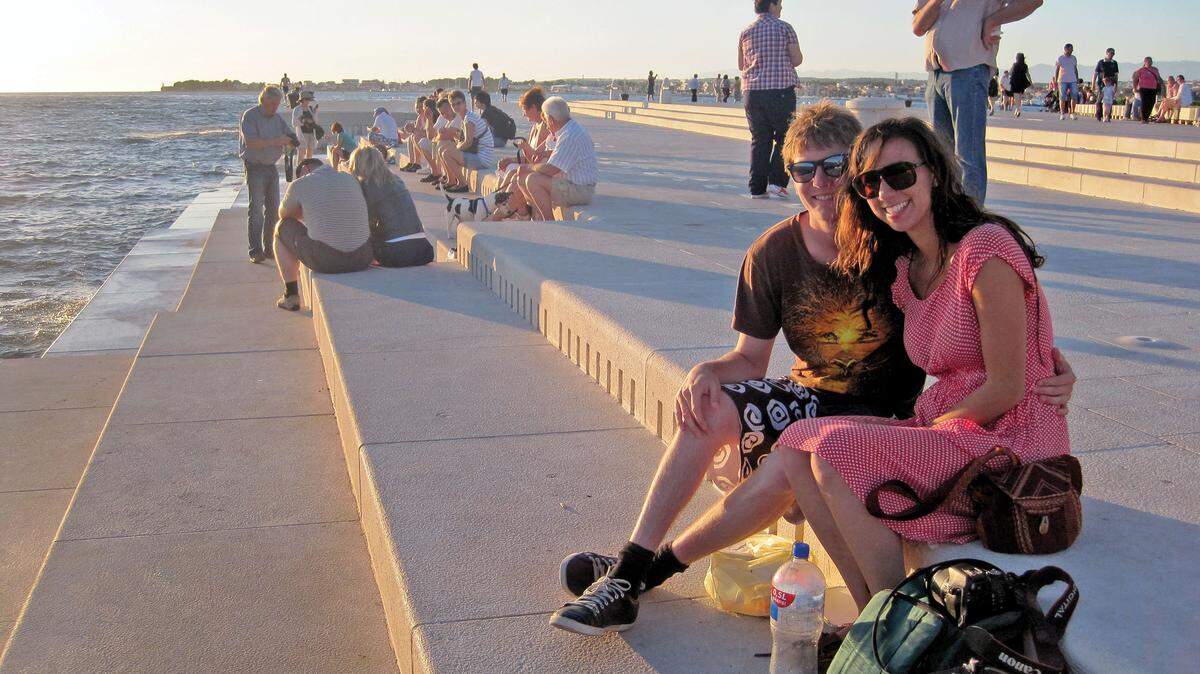
Zadar, a bustling seaside town on the central coast of Croatia, should be on any traveler’s must-see list. About 180 miles southwest of Zagreb, it’s known for the Plitvice Lakes, a series of lakes connected by varying waterfalls as they cascade through lush green forests.
Zadar is also known for its public art, where organ pipes allow for the waves to make music as they crash against the shore, or where tiny solar panels light up the ground in a dance similar to the smooth moves of the ocean below.
My girlfriend, a friend and I took the bus there from Mostar in southern Bosnia — a four-hour trip that found us winding through the lush, green mountains up the Dalmatian Coast.
Zadar, with a population of about 75,000, is the fifth largest city in Croatia. Most of its draw is its tourist scenes of the ancient Romaninspired promenade and its use as a base camp to explore Plitvice Lakes.
We instantly felt at home as we entered a makeshift hotel where we were staying the weekend. It was the house of alocal family whose extra rooms were remodeled for tourists on a budget. We were able to find such lodging through Hostelworld.com .
The next day we found ourselves walking down the Roman-inspired marble promenades of downtown Zadar, which were miraculously perched within ancient fortress walls.
As we walked through, we passed by a host of Italian and Mediterranean restaurants all boasting fresh fish from the Adriatic Sea. We even walked by an imitation In-N-Out Burger, which squeaked by any trademark infringements with a slight name change to “In-&-Out Burger.”
What drew us, and many tourists, through the small town was the lure of astrangely melancholic music coming from the distant marble pier. As we got closer, we knew we had found the global allure of Zadar — the Sea Organ, an elaborate music project. Waves crashing against the pier create the most disorganized, yet most beautiful music, by pushing air through selectively created “wind pipes.”
As if the sea creating its own orchestral soundtrack wasn’t enough, the sun began to set — triggering the Sun Salutation, a second art project by the same architect who designed the Sea Organ.
It involved a large, almost 50-foot-wide depression in a walkway that houses hundreds of small solar panels. These panels collect the sun’s energy during the day, and when night rolls around, the calm rolling of the sea triggers an incredible light show from these solar panels that moves along with the sea.
So, while the main reason we visited Zadar was to see the famous Plitvice Lakes, we instead found beautiful art forms being created by the most massive natural occurrence on our planet — the vast water body that is the ocean.
This story was originally published April 1, 2013 at 7:18 AM with the headline "Art meets nature in the coastal city of Zadar, Croatia."