
At World Cup ticket prices, even Messi can't fill a stadium
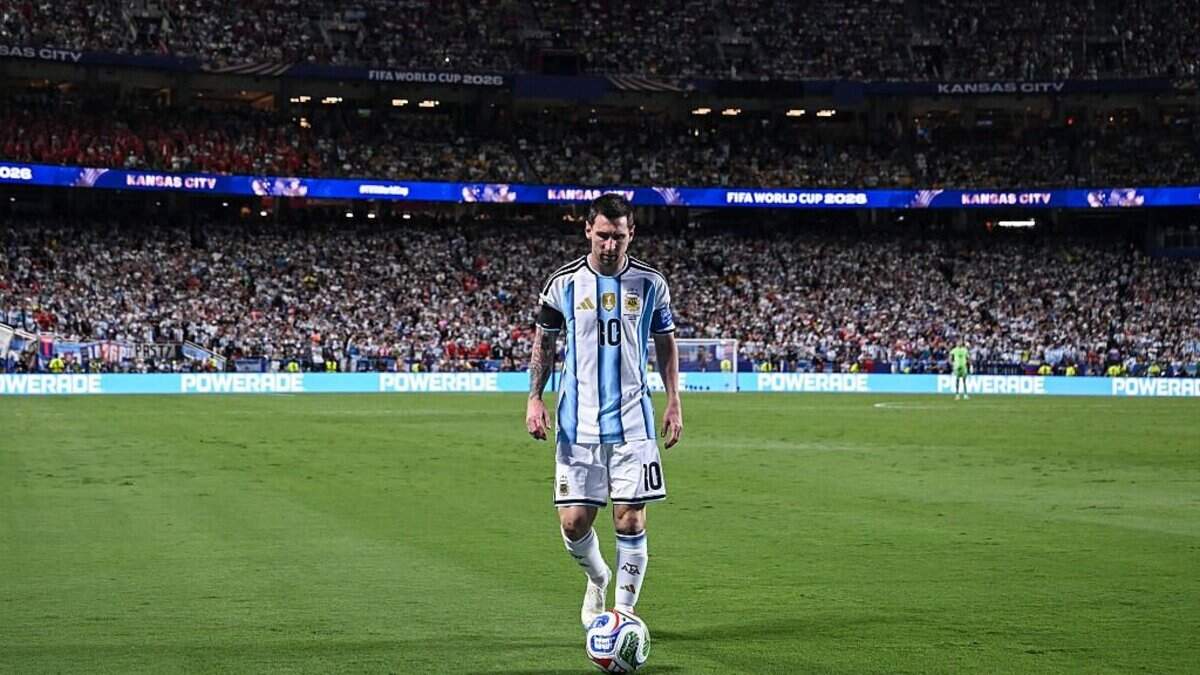
KANSAS CITY, Mo. -- Lionel Messi is perhaps the biggest draw in all of sports right now. With him playing in what is almost certainly his final World Cup, each game could be the last on the most vaunted of stages for the 39-year-old Argentine captain.
But in Argentina’s quarterfinal victory over Switzerland on Saturday at Arrowhead Stadium in Kansas City, big areas of seats were empty.
Though the reason for the vacant seats at a stadium that can accommodate 69,000 fans was not immediately clear, it’s possible that high ticket prices kept some fans away. Seats at this year’s World Cup have been the most expensive in the tournament’s history, costing at least three times more than those at the 2022 World Cup in Qatar, which to that point had been the costliest ever.
On Saturday night, expensive yellow seats in the middle of the second tier at Arrowhead were empty, and higher up in the third tier, many seats were filled by FIFA volunteers distinguishable by their lime green jackets. Ticket prices on resale sites, including FIFA’s own, generally hovered between $1,500 and $4,000.
FIFA did not respond to questions about the empty seats. An announcement after the game said that tickets for the tournament’s semifinal games were still available on FIFA’s sales platform, which gives the soccer body a 30% cut of each ticket resold.
Before the tournament began last month, FIFA’s president, Gianni Infantino, said that pricing at the games in North America reflected domestic market conditions, mainly in the United States, where most of the matches were played.
FIFA also initiated a pricing strategy similar to one used by the hotel and airline industry, in which prices fluctuate with demand. Yet prices for the least popular games did not see the type of significant reduction on FIFA’s sales platforms as they did on third-party websites. FIFA was forced to issue refunds at a tournament last year, the Club World Cup, also held in the United States, when fans who had paid original prices complained about the steep discounts.
At this World Cup, FIFA has sometimes announced capacity crowds, or close to them, even at games where many seats were visibly empty.
The empty seats in Kansas City represent more of a surprise because of the region’s appetite for soccer, and particularly for the World Cup. Through the first 92 matches of the tournament, Kansas City led all U.S. markets in Fox’s World Cup ratings with an 18 share, which means 18% of all local televisions on at the time of a World Cup game were tuned in to the event.
Fans and politicians have accused FIFA of profiteering and taking advantage of its monopoly over the biggest event in global sports. Even with some unsold tickets, the tournament -- the biggest ever with 48 teams playing 104 games, many in cavernous NFL stadiums -- has already broken attendance records. FIFA is expecting to generate more than $3 billion in ticket sales this tournament, more than double its previous record.
Argentina’s games have proved to be some of the most expensive, largely because of Messi, whose name has been on the back of almost every replica jersey worn by Argentina fans at the World Cup. On the eve of the quarterfinal game in Kansas City, some fans resorted to fundraising, setting up stands at the city’s Mill Creek Park to sell Argentine-style steak sandwiches known as choripán, beer and even bootleg versions of the team’s official merchandise.
Charly Botto, from the Paternal neighborhood of Buenos Aires, was doing a brisk business selling hats, flags and jerseys along with his son Lionel, an architecture student. (The 23-year-old was not named for Messi, Botto said.) He estimated that he had made $2,500 selling knockoff jerseys imported from China.
“It obviously helps cover our costs,” Botto said. With at least two games to go for Argentina, their stocks were running low. The younger Botto said they had just four or five jerseys left.
This article originally appeared in The New York Times.
Copyright 2026 The New York Times Company