Owner of DAOU Vineyards is downsizing. What does it mean for the SLO County winery?

The owner of famed San Luis Obispo County winery DAOU Vineyards announced widespread downsizing this month, but good news for fans, DAOU isn’t going anywhere.
On June 4, Treasury Wine Estates, an Australian corporation with a wine portfolio that also includes some top Napa Valley brands, announced its intentions to reduce its California holdings amid an evolving wine scene.
“TWE will become a simpler and more focused luxury wine business, investing in fewer, stronger brands, while increasing its emphasis on lighter styles and no- and low-alcohol wines,” its news release said.
According to the release, the company owns 76 holdings throughout the world with plans to dramatically cut that list down to fewer than 30 through winery exits and consolidations within the next several years.
But fortunately for Paso Robles’ DAOU Vineyards, it’s safe after Treasury deemed it one of the company’s three “power brands,” along with Penfolds and Matua, which the company said “will receive increased investment and support to accelerate growth across multiple markets.”
“DAOU has reshaped luxury cabernet for a new generation of consumers,” the company said, in standing behind the esteemed San Luis Obispo County winery that was purchased by TWE for nearly $1 billion in 2023.
The sale included the wine label alongside the 600-acre DAOU Mountain estate, four wineries and 400 acres of vineyards in Paso Robles, plus the DAOU Ocean property in Cambria and the historic downtown Bank of America building in Paso Robles.
Treasury Wine Estates consolidates in SLO County
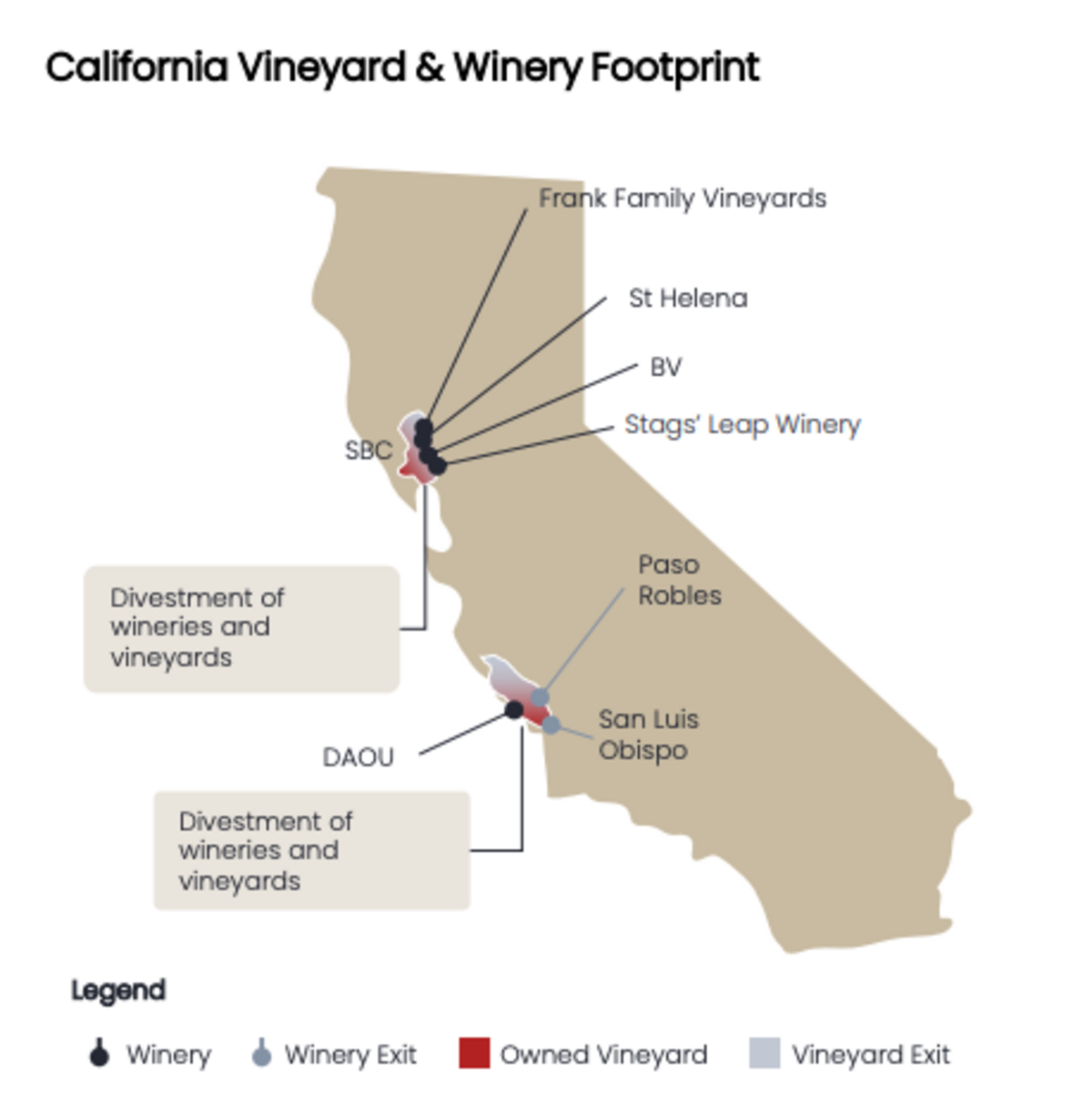
Even though TWE will keep the DAOU label, the company is downsizing in SLO County — as it is elsewhere in California — by selling at least one of its production facilities here.
According to materials shared with TWE investors, key transformations planned for the Central Coast included divesting properties in both San Luis Obispo and Paso Robles.
While Treasury provided few local specifics, it also described the reduction as including a “divestment and exit of leases in Napa Valley, Sonoma and the Central Coast, representing a substantial reduction in planted hectares.”
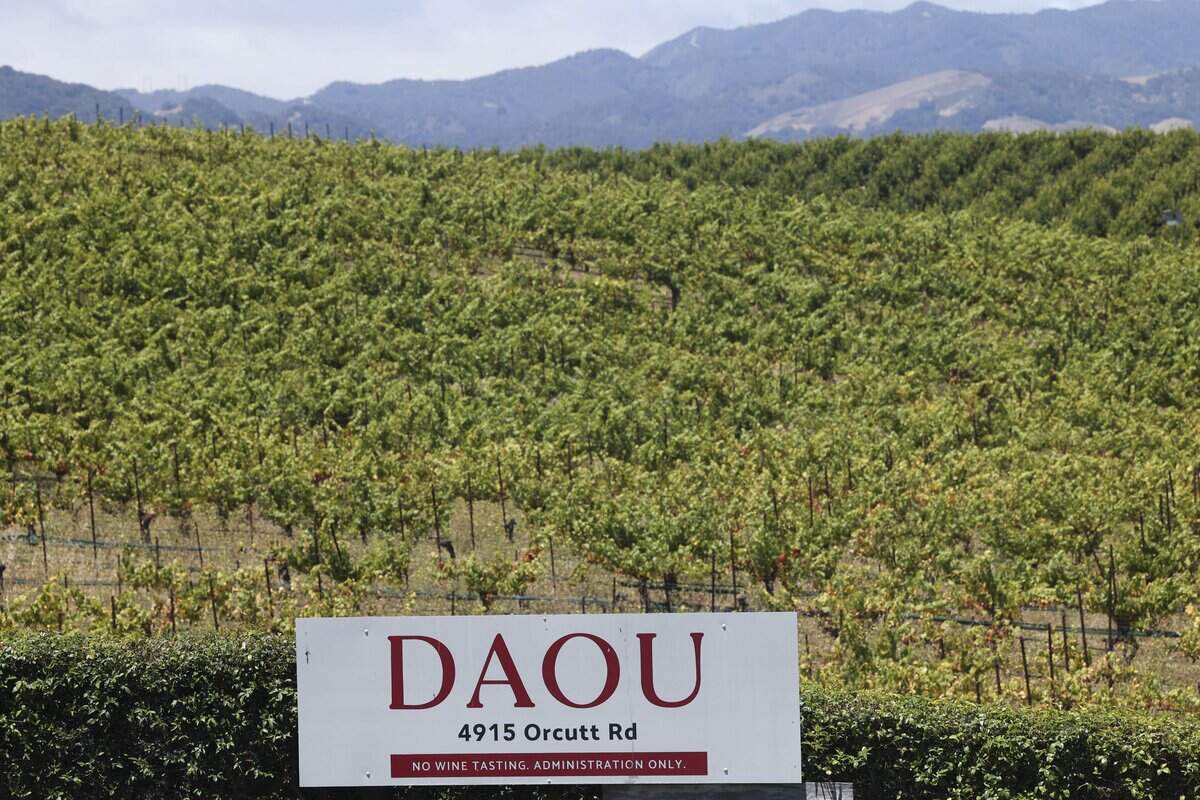
The Tribune was able to confirm one of these properties as 4915 Orcutt Road in SLO, a 48-acre lot with a 43,218-square-foot production facility that is priced at $15 million.
According to Vineyard Professional Real Estate, a boutique brokerage that specializes in sales of excess vineyard land, there are also multiple vineyard properties for sale in Paso Robles.
Whether any of them are TWE-owned is unconfirmed after the company declined to comment further on any of its consolidation plans.
DAOU itself did not respond to multiple Tribune requests for comment.
Treasury works to adapt to a changing wine scene
Treasury’s downsizing is a response to a societal shift around consuming wine — one that has forced numerous companies to evolve their marketing strategies and product offerings to appeal to generations that aren’t drinking as much.
For example, this May the Paso Robles wine industry worked to combine retail promotions, hospitality partnerships, travel experiences and digital outreach with its vineyards for Wine Month.
The collaborations are an attempt to appeal more to Millennial and Gen Z consumers after studies showed that younger people are increasingly drawn to casual, experience-driven hospitality rather than more traditional wine marketing approaches.
While Treasury is boosting its presence in the casual space with expansion into lighter wines, it’s also focusing on the high end at the same time.
According to its news release, it found that consumers are choosing to “drink less but better.”
“We’re reshaping Treasury Wine Estates to where we see the strongest long-term demand and growth opportunities in luxury red, luxury white, and more contemporary wine experiences,” TWE Chief Executive Officer Sam Fischer said.
“At the same time, we’re also seeing strong growth in lighter styles, more relaxed social occasions and moderation trends, particularly among younger consumers,” he said.
By downsizing its holdings, the release said this would allow the company to focus on quality, not quantity.
In addition to the so-called “power brands,” the company will also emphasize “regional heroes,” such as Frank Family Vineyards, Stags’ Leap WInery and Beaulieu Vineyard, it said, along with Wynns, Squealing Pig, Pepperjack and Coldstream Hills from Australia and New Zealand.
All together, that makes for a collection of 10 key labels that will be Treasury’s focus going forward, though it did note that other brands like Beringer, 19 Crimes and Cali by Snoop “will continue to play an important role in meeting specific consumer needs, particularly in the U.S.”
TWE Chief Supply & Sustainability Officer Kerrin Petty summed up the moves by emphasizing a goal “to protect the quality, flexibility and reliability our customers expect.”
“The transformation of our supply chain directly supports our investment in the brands and opportunities where we see the strongest long-term growth potential, while supporting a healthy balance between supply and demand in the industry over time,” Petty said.
Some of Treasury’s past strategies in the fast-evolving wine industry haven’t gone without criticism, including from former Chief Operating Officer Robert Foye, who left the company in 2019.
In April, Foye told the San Francisco Chronicle that Treasury had an “accelerated sense of urgency” to navigate the current market challenges.
He also said he felt Treasury was focused on “volume chasing and order taking, rather than building the business and really trying to focus on building the brands,” and that he believed the company overpaid “by $600 million” for Daou, the Chronicle reported, after shares dropped below $4 in April, the same level when Foye joined Treasury in 2014.
For his part, Treasury CEO Fischer sounded an optimistic note about the future of the company and the wine industry in general.
“We have some of the world’s most recognized wine brands, outstanding vineyards and winemaking assets, deep expertise from grape to glass, and strong customer relationships across global markets,” Fischer said in the release.
“Wine continues to play an important role in consumers’ lives, but consumer preferences and market dynamics are changing,” he added. “The future belongs to wine businesses that are more focused, agile and closely aligned to where consumers and customers are heading.”
This story was originally published June 18, 2026 at 11:57 AM.