
From the back to center stage: Latinos take starring role in Lodi wine scene
The Lodi wine scene is defined by old-money families, some with roots stretching back to California’s founding as a state, such as sixth-generation superstar Michael David Winery. Gerardo Espinosa belongs to a wine family too, but its story is a little different.
It started in 1944. Espinosa’s maternal grandfather Victor Anaya came from the Mexican state Michoacán at age 15 to work in vineyards as part of the United States’ Bracero Program, which allowed 4.5 million temporary workers into the country from 1942 to 1964. In the next generation, Anaya’s four sons got degrees in agricultural engineering and saved enough to buy a vineyard in nearby Clements Hills, which has expanded to 180 acres over the last 32 years.
Espinosa, though, completed the family’s grape-to-glass journey. As owner of Lodi Crush, he makes wine for a dozen Northern California wineries such as Grace Vineyards in Galt, Miner’s Leap in Clarksburg and Kursed Wines in Lodi. He’s also borrowed the family name for his own label, Anaya Vineyards, which often uses grapes from his uncles’ Clements Hills vineyard.
After decades of powering California’s wine scene from behind the scenes, Latinos — particularly Mexican Americans — are sliding into seats at the head of the table. Latino winery owners, winemakers and vineyard owners are slowly becoming more prevalent around the greater Sacramento wine scene.
“It’s our generation,” Espinosa said. “From my parents to my grandparents, they were the back stage, the farm laborers. ... It’s this new generation that’s not being timid, that doesn’t need to be in the background ... that’s trying to put its stamp on the industry.”
History in Sacramento
A few Latino-owned wineries are in other areas of greater Sacramento — Borjon Winery in Plymouth, for example, and E16 in Somerset. But Lodi stands out for its role in the wine world as well as its population base: 39.1% of the city identifies as Hispanic, according to the 2019 American Community Survey.
California’s wine industry was built on the backs of Latino laborers, particularly Mexican migrant workers starting with the Bracero Program of the 1940s-60s. While Mexico isn’t known as a wine hot spot, generations of farming crops such as limes, avocados and beans instilled workers with grafting, pruning and budding skills easily transferable to vineyards, as shown in Bernardo Ruiz’s 2018 wine documentary “Harvest Season.”
Paskett Vineyards & Winery owner Lorraine Paskett’s mother immigrated at 19 from the Mexican state Jalisco to Los Angeles, where she met Paskett’s father. The two relocated to Stockton, then Lodi shortly thereafter, and Paskett’s father quit his immigration law practice after purchasing 20 acres in the mid-1960s.
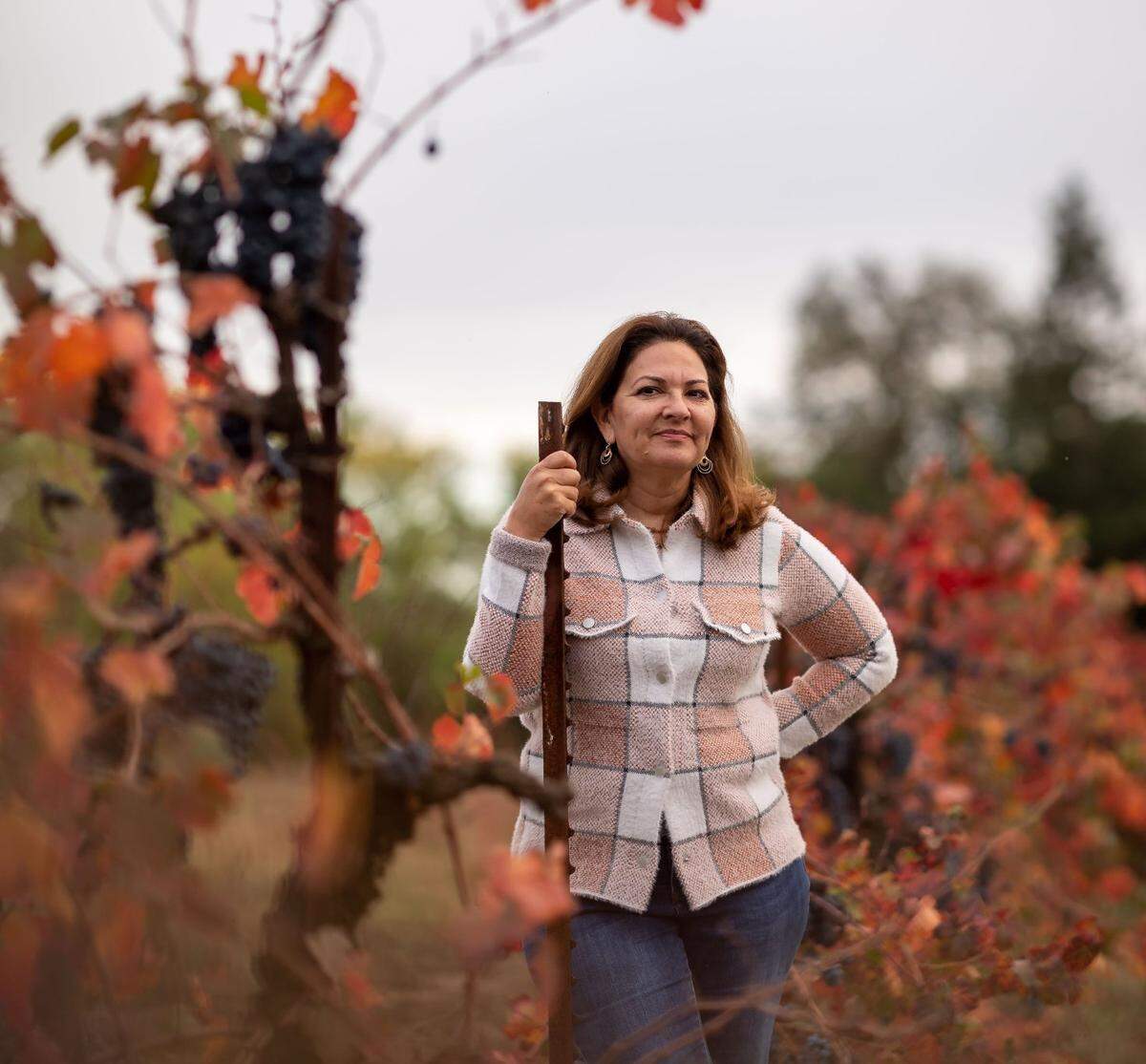
Despite being better-off and owning their vineyard, Paskett’s parents felt a kinship with immigrant farmworkers picking cabernet sauvignon grapes, Lorraine said. And sooner or later, they often needed her father’s advice.
“They had a friendship and a connection with a lot of the farm-working community and provided support to them, including free legal advice at the kitchen table,” Paskett said. “Literally, (farmworkers) would pay my dad with tortillas they made, which was fine with him.”
Becoming winery owners would have cost more. The fermentation tanks, the barrels, the destemmers, the bottling equipment — all those start-up costs add up. A 2019 survey conducted by SevenFifty Daily and Wine Opinions market research company found 84% of U.S. alcoholic beverage professionals are white, with just 8% identifying as Hispanic or Latino.
The farther families get from field labor, the more their generational wealth builds. Espinosa had the opportunity to pursue a career in architectural design, as he did for 18 years, before picking up winemaking as a hobby with far more in savings than his grandparents had.
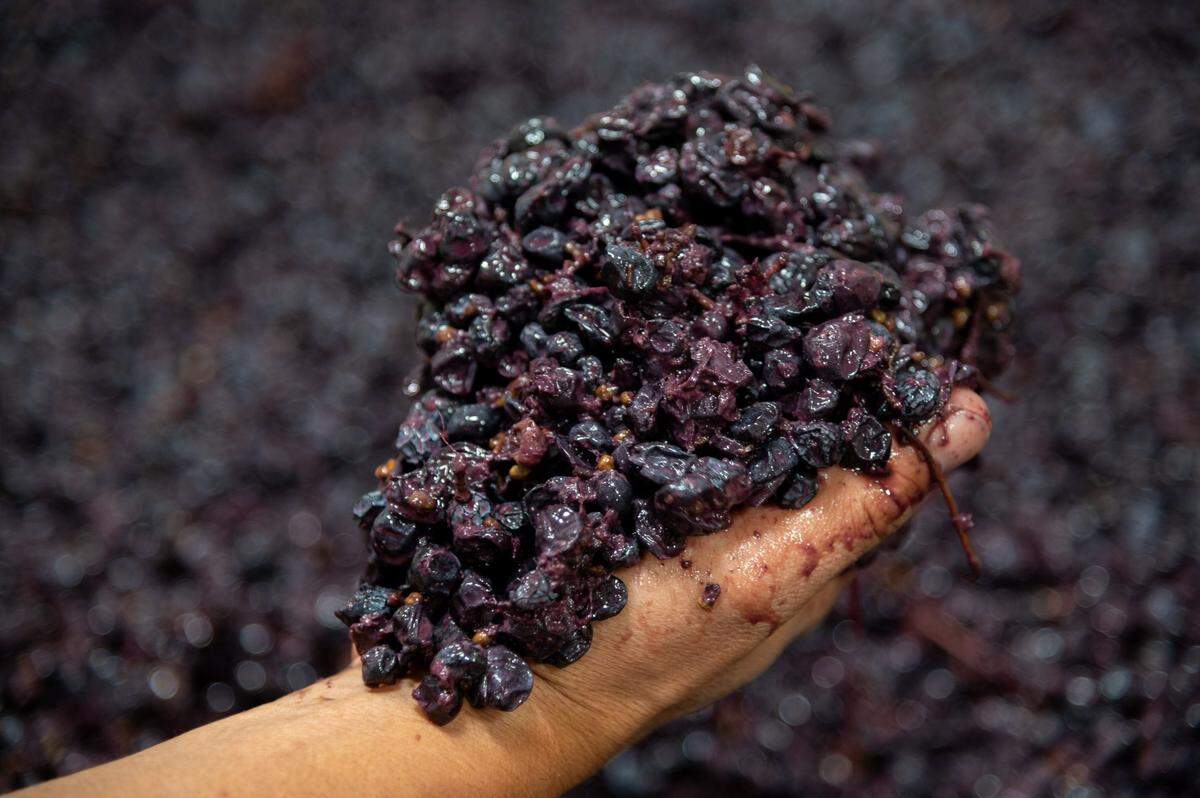
“It’s expensive to start a winery, and it could (have) taken so long because of the economic gap,” Paskett said. “As we see the next generation of families here achieving more success and having more opportunities, they’re choosing to own wineries.”
If one doesn’t have generational wealth, it helps to be close to those who do.
Klinker Brick Winery belongs to one of those deep-rooted Lodi families. The Feltens have been growing grapes for six generations and the winery is 21 years old. Yet Belize-born winemaker Joseph Smith is an anomaly, as is assistant winemaker Chris Rivera, whose parents immigrated from Michoacán before settling in Modesto as almond farmers.
With the Feltens’ blessing, Rivera uses Klinker Brick’s equipment to make his label, Seis Soles Wine Co., as well. The sun-worshiping Aztecs believed the world they inhabited was actually the fifth in a cycle of creation and destruction. Seis Soles refers to the sun of the new sixth world. Without access to Klinker Brink’s instruments, though, it wouldn’t have gotten off the ground so quickly.
“I wanted to be making something that’s celebrating Mexicans without being a caricature and cartoonish about it,” Rivera said. “That relationship with Klinker Brink and their growers allowed me to start something that otherwise would have been really daunting to start.”
Tasting notes
Prior to starting an entry-level cellar job at E&J Gallo’s mammoth facility in Livingston, Rivera’s wine experience was Two Buck Chuck and the occasional party-heavy wine tasting. California Latinos tend to shy away from wine in favor of beer or liquor, he said.
Part of that is cultural norms, but a feeling of unwelcomeness in the wine establishment can contribute as well. If Rivera goes to a tasting room and doesn’t mention being a winemaker himself, he gets an “icy reception,” he said.
“They’d treat me different than other people in the tasting room at the same time,” Rivera said. “If I’m experiencing this as a winemaker, I’m sure other people are experiencing it and are less likely to bring their family and friends in and say ‘I had a great time.’ The majority of us don’t drink wine (often), and it seems like wine companies don’t think we’re going to. But I felt that wasn’t the case.”
When Rivera’s friends and family did drink wine, it was normally something like Stella Rosa, a semi-sweet that retails for around $10 a bottle. As of a result, many of Seis Soles’ reds are on the sweeter side, eschewing tannins and dryness to make them more approachable. Whites are crisp but not too acid-forward — “introductory wines” to bring new drinkers into the fold, Rivera said.
Espinosa’s mother is quite a cook, he said, the driving force behind big communal meals the family enjoys together every holiday. As a result, his wines are meant to be enjoyed with food — particularly Mexican food. The 2010 Don Victor red blend from Espinosa’s initial winery Viñedos Aurora (Aurora was Espinosa’s maternal grandmother), for example, was released to wine club members with lamb chops in a birria-inspired sauce.
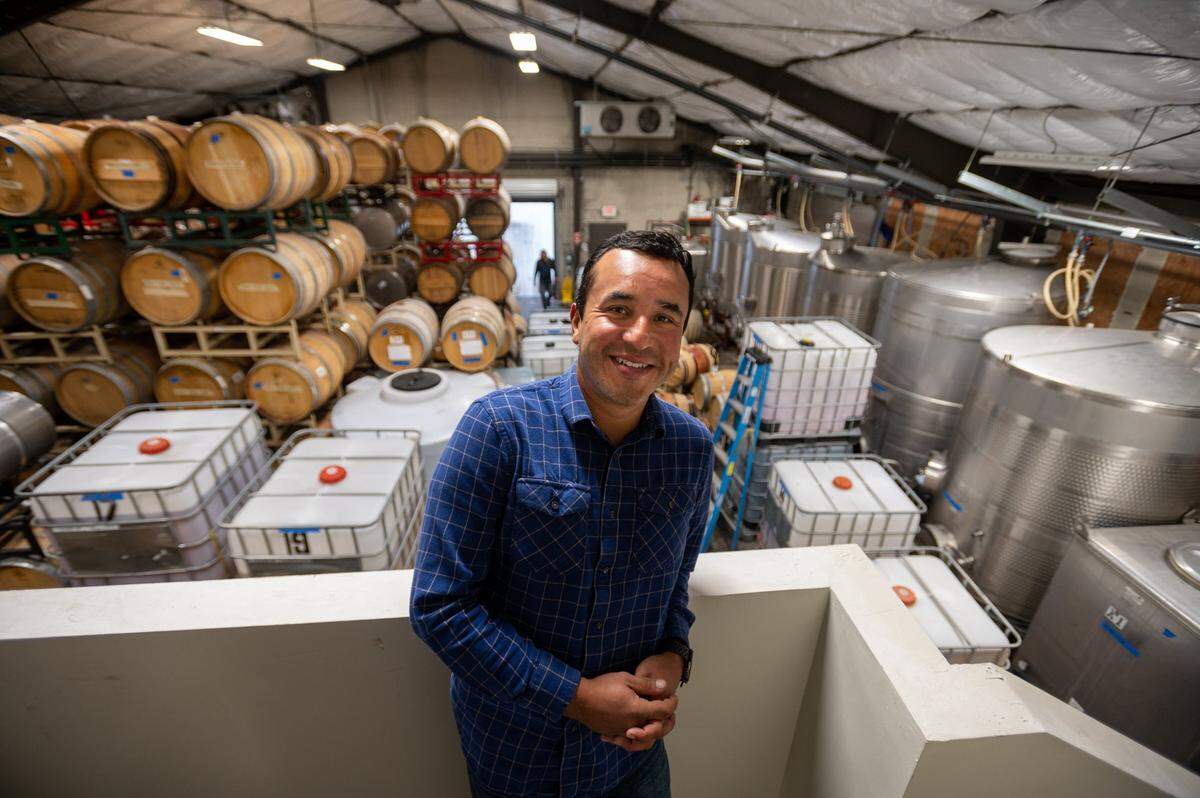
Espinosa tries to keep Anaya Vineyards’ wines balanced, letting the grapes speak through with minimal adulteration — the same way Paskett described her creations. Her own fiery mother’s memory inspired a $28 2018 viognier/chenin blanc hybrid, “Chingona,” as well as $36 2017 red blend cheekily titled “Cabrona.”
“Our goal is to make premium wines, exceptional wines, but wines that you can drink every day or bring to a celebration,” Paskett said. “We don’t go for the sort of high-alcohol, high-oak flavors. We just try to take high-quality fruit and let it shine through.”
Efforts to improve
Just as greater Sacramento cities such as Lodi and Clarksburg have graduated from growing grapes for other markets to producing some of the state’s best wines in-house, Latinos from farming families have begun to carve out spaces atop the production chain.
But there’s still more work to be done.
A burly, bald, bearded 64-year-old white man with a past career as a manufacturing executive, Rodney Tipton’s appearance doesn’t scream “social justice crusader.” Yet the managing partner of Acquiesce Winery in Acampo was moved to start the Lodi Appellation Inclusion Collective, or LAIC (pronounced “lace”), with his wife and winemaker, Sue, after the May 2020 murder of George Floyd and subsequent social justice protests.
The collective includes 10 wineries, vineyard management companies and other industry-adjacent businesses. Advised by The Roots Fund, Association of African American Vintners and Black Wine Professionals, LAIC hosted its first enrichment trip for five young wine professionals of color in June. Future plans include an international wine competition in 2022, judged by experts with backgrounds similar to the applicants’ backgrounds.
LAIC wants wine professionals from marginalized groups, particularly Black and LGBTQ people, to want to be in Lodi. Their pitch is simple enough: Lodi is the nation’s most prolific grape-growing region, affording new winemakers the opportunity to learn about their product from the roots up, and land is significantly cheaper than other California winemaking regions such as Napa, Sonoma or Paso Robles.
“We want to do more than just donate funds,” Rodney Tipton said. “I really want to have hands-on experiences for people of color who are really interested in the wine industry. We’re hoping to provide internships at wineries that need help and need folks, and with any luck they’ll end up in the Lodi wine industry (long-term) where we need them.”
Many Lodi wineries employ Latinos up to the point of being the winemaker’s right hand in the cellar, Rivera said. That’s a relatively prestigious job, but it’s hard to rise further without a formal education.
Fifty miles northwest lies UC Davis, home to one of the nation’s best viticulture and enology programs. About 5% of the department’s students were Latino in 2010, professor and department chair David Block said. By 2019, it was 25%.
How? Like LAIC, UC Davis invested in scholarships but looked deeper. The department’s Broadening Horizons diversity program broadened its reach after adding a full-time undergraduate advisor. Faculty and staff actively recruited at Napa and Sonoma counties high schools as well as junior colleges, knowing some students might not develop a passion for wine until they were older.

Some Latino parents had preconceived notions of what a career in agriculture inherently meant and pushed their kids to pursue other studies. Block, who grew up with non-drinkers and didn’t pursue a career in wine until he was 30, and others tried to show them a UC Davis degree could open doors to jobs such as winemaking and vineyard management.
“You can’t have someone get a scholarship in our program if they don’t know that they want to be a winemaker or a grape grower,” Block said. “And a lot people, whether it’s the Latino community or Black community or whatever, they just don’t know if it isn’t in their family’s culture.”
UC Davis’ approach attracted more students of color as well as transfers, such as Class of 2014 alumnus Miguel Luna, the 2020 Wine Enthusiast Viticulturalist of the Year and a Mexican native who had been working in Napa Valley vineyards since he was 13.
Luna continued mentoring UC Davis students after graduation, Block said, and recently joined the department’s executive leadership board alongside former NBA superstar/Napa winery owner Dwayne Wade and Black Wine Professionals founder Julia Coney.
Another 2014 alum: Rivera. He earned an undergraduate degree from University of the Pacific and planned on going to graduate school for physical therapy. But that first Gallo job hooked him, and he ended up attending UC Davis’ viticulture and enology grad program instead.
“I remember just seeing the mystery within my own community (about) wine when I started working there. It was like, ‘Oh, you’re working for the others, that’s crazy,’” Rivera said. “As Latinos, we enjoy experiencing food and family and flavors. And yeah, the majority of us enjoy beer and spirits instead of wine. But it’s not a genetic thing, it’s just a cultural thing in California.”
This story was originally published October 29, 2021 at 5:00 AM with the headline "From the back to center stage: Latinos take starring role in Lodi wine scene."