
California just legalized composting of human bodies: ‘Add me to the list’
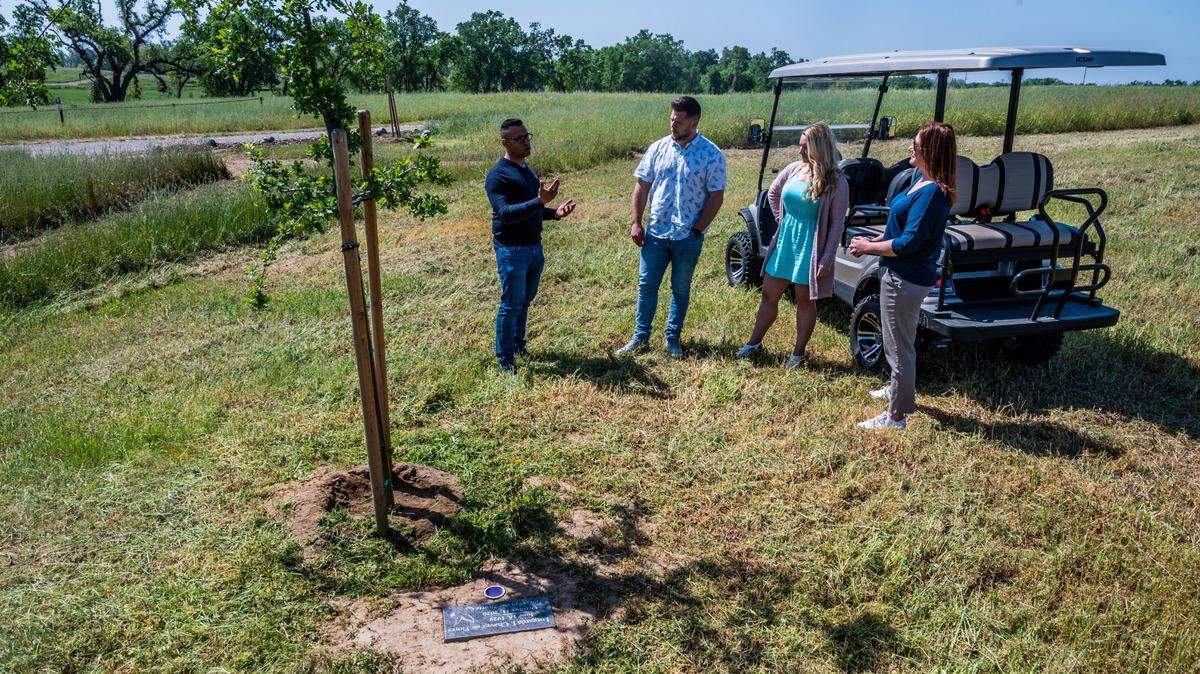
When Assembly Bill 351, the Cemetery and Funeral Act, becomes law in 2027, I’ll be among the first to add my name to the list.
Recently signed by Gov. Gavin Newsom, this bill sets the stage for human remains to be converted into compost in California, offering an alternative to burial or cremation.
The process, known as natural organic reduction (NOR), involves placing bodies in coffin-like vessels along with straw, wood chips and other natural materials and allowing them to break down into usable soil.
The end product can be added to a backyard or garden; donated to a park or scattered as traditional cremains.
Human composting is already legal in four states: Washington, Oregon, Colorado and Vermont.
I’ve long been concerned about the disposal of human bodies.
I first confronted the issue when my mother passed away in 2004.
The thought of cremating her body seemed horrific. But her wish was to be cremated and of course we complied.
Since then, I’ve learned more about current death care options and the toll they exact on the environment.
According to the Cremation Association of North America, more than half of all Americans opt for cremation, with that number expected to rise.
Yet cremating a single corpse releases 534.6 pounds of carbon dioxide into the atmosphere, the equivalent of a 500-mile car trip.
It’s estimated that U.S. cremations account for 360,000 metric tons of carbon dioxide emissions each year.
Traditional burial is equally polluting.
In the United States, roughly 20 million feet of wood, 4.3 million gallons of formaldehyde and other embalming fluids, 1.6 million tons of concrete, 17,000 tons of copper and bronze and 64,500 tons of steel are buried annually during as part of funeral proceedings, according to data compiled by the Green Burial Council.
And then there’s the land that cemeteries require.
Human composting, on the other hand, emits neither toxins nor harmful gasses. It frees up valuable real estate and creates a product that actually supports life on the planet.
Not everyone agrees with me.
The Catholic Church has already come out in opposition to natural organic reduction, claiming that it creates an “unfortunate spiritual, emotional, and psychological distancing from the deceased.”
My friends were equally disapproving of the method when we discussed it.
“Linda, go ahead and do it if you want,” one said. “But I never would.”
I have nothing but respect for the Catholic faith, and I value the opinions of my cohorts.
I attribute much of this resistance to a lack of familiarity.
Consider all the once-shunned inventions on which we now depend. In a few short years, I predict that human composting will be ho-hum.
I also know that many folks are unacquainted with the feel of fresh, healthy soil.
If you’ve ever dug through loam and seen the life-supporting organisms it supports, you’re less likely to be disgusted and instead view it as the true basis for life.
I don’t plan on dying soon.
I’m blessed with good health and loving family and friends. I look forward to living every day.
However, I know that someday I’ll depart my body. When I do, I look forward to returning to the earth.
This story was originally published October 17, 2022 at 5:35 AM.