
Mulling what to do with old family paintings when a younger generation takes a pass
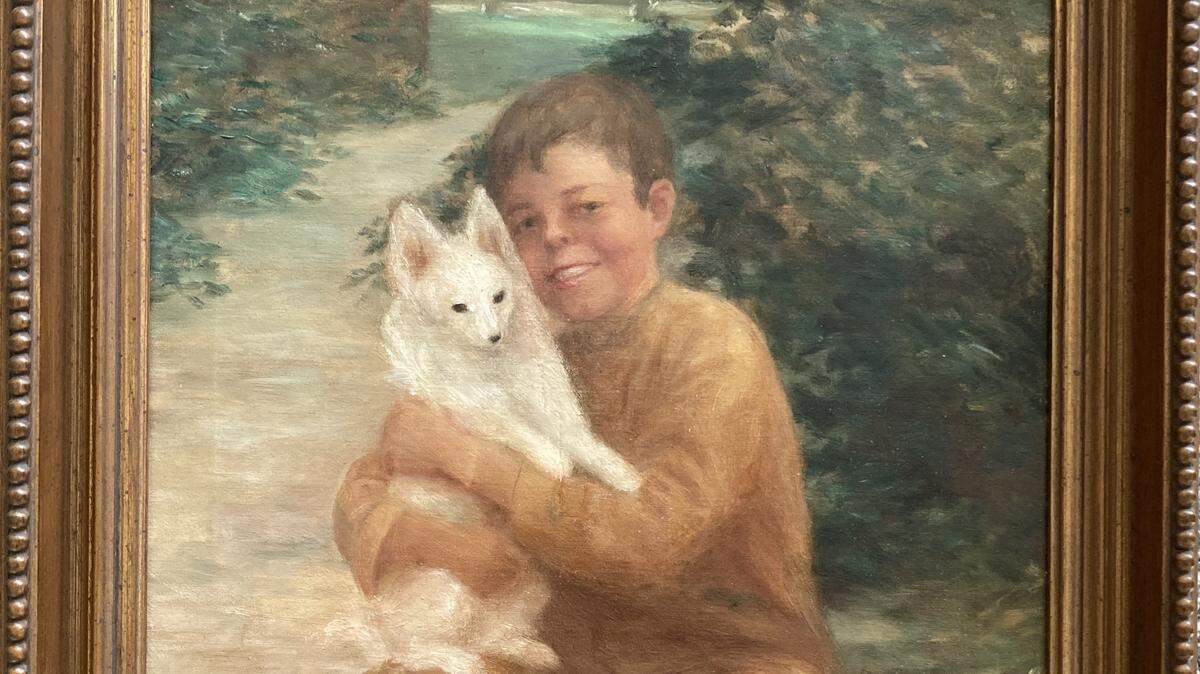
There’s a painting in my family of a young boy playing with a puppy. The child in the picture is my grandfather. The artist is his Aunt Hattie, my great-grandmother’s sister.
Aunt Hattie was a classically trained artist who painted members of our family at the turn of the last century. She single-handedly created a visual family tree, a literal Who’s Who of my Lewis ancestry.
I grew up surrounded by these paintings and hearing loving tales of their subjects. They sparked a lifelong interest in me for family history. A painting of my great-great grandmother, Sarah Jane Sykes Bradbury, currently hangs in my house. My siblings and cousins proudly display others on their walls.
But the fate of my grandfather’s painting — and all the rest of Aunt Hattie’s collection — is uncertain.
No one in the next generation wants them. Our sons and nephews never knew the people in the paintings. Family history is of minimal interest at this stage of their lives. Only two of them have their own houses and even then, their tastes are decidedly contemporary. Classic oil paintings rank low in their 20- and 30-something decorating schemes.
Meanwhile, the paintings’ current owners are aging. We’re well into our 60s and 70s. We’re eager to pass these treasures — and other valuable items like them — into responsible, caring hands. Yet, so far, those hands are closed. And time is running out.
I recognize that my dilemma is a product of privilege and excess.
Had my forebears been forced to flee famine, tyranny or war, they wouldn’t have had oil paintings to pass along. And if subsequent generations hadn’t been financially successful and found stable employment and housing, the paintings wouldn’t have survived another 120 years.
I’m truly blessed to be the recipient of this legacy. I’m humbled by what ancestors have accomplished before me.
I also don’t want to burden my children with unwanted hand-me-downs. Nor do I want them to feel guilty about not taking old things they don’t like. My wish is they practice Mari Condo-ism to the max and surround themselves with items that bring them joy.
Still, I feel caught in the middle, as if I owe something to previous generations to protect and share their treasures and lore. I willingly accepted the role of caretaker for their memorabilia when I was given it. I don’t want to let them down.
But then I wonder, is it my responsibility to speak for past generations? Am I grappling with an issue that should be long buried? Do I expect other, as-yet-unborn people, to be taking care of my stuff in 100 years?
I obviously don’t have the answer.
Perhaps it’s time to offer up the paintings, accept the next generation’s choices, and donate or dispose of the rest.
After all, the ultimate measure of their lives will come from their contributions to their communities and families, not what they hang on their walls.