
A heritage embraced
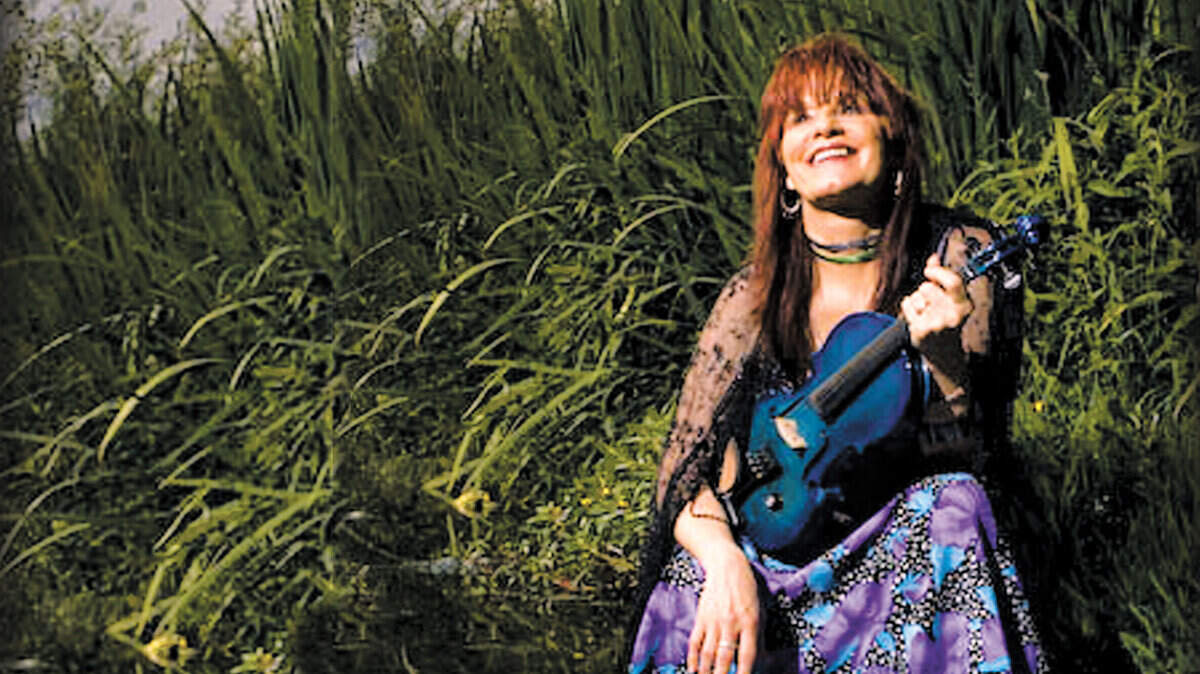
Lisa Haley has always shared her affinity for Louisiana. But just over a decade ago, as her mother lay sick, she and her younger brother discovered the Southern state had harbored a decades-old family secret.
“My mom almost died, and my dad took us aside and told us that we had a half-brother somewhere that my mom had to give up for adoption when she was 18,” Haley said. “Because in the South, if you grew up in polite society back then — 55, 60 years ago — you didn’t keep children born out of wedlock. You gave them up. So she was always real angry at God her whole life because she had to give her son up.”
Discovering that she had an older brother somewhere led Haley to write the song “Louisiana.” While that song is melancholy, suggesting ambiguity toward her roots, most of her songs are just the opposite — boot-stomping zydeco and Cajun songs that celebrate bayous, gumbo and informal swamp jams.
While that style of music is synonymous with Louisiana, once again, the state’s values and beliefs posed a problem, making it difficult for Haley to play the music at a young age.
“Back then, it was considered half-breed language, half-breed music,” said Haley, who will perform Cajun, zydeco and Americana tunes with her band, the Zydekats, in Arroyo Grande on Saturday. “And my mom, that’s why she had us learning classical music — because she didn’t want us to grow up playing what she considered to be half-breed, backwoods music.”
While her parents were from the South — her father a research scientist, her mother an aide to a senator — they raised their children in Southern California. Her mother — who also turned down a chance to have her children be Mouseketeers — hoped that viola lessons would advance her children socially. But the children were always exposed to their Southern roots.
Her mother would pack boiled shrimp into their lunches — leading to some heckling from other kids — and their father would play Louisiana records in the garage.
“And, of course, us kids wanted to go out there and hear what it was that we weren’t supposed to hear,” said Haley, who eventually switched to playing violin. “And then when I got to high school, I started playing music from Louisiana, Arkansas and Texas, and my parents were going, ‘What is this? Where is the Bach and Beethoven?’ ”
While Haley grew up in California, the family would spend summers in Louisiana every other year. And after high school, she lived in various southern states for five years. Haley attended four different colleges but dropped out to play music full-time, getting her education from a zydeco performer named Queen Ida. An accordion player and bayou native, Queen Ida mentored Haley and bought Haley and her band opera lessons to teach them the proper way to use their voices.
Soon Haley was an in-demand, Grammy-nominated zydeco artist, with a voice like Cher’s and a red-hot fiddle name Louie. And thanks to her lifelong connections in Los Angeles, she became the go-to musician whenever someone needed a session player to perform zydeco or Cajun music.
She has performed for several commercials and has appeared in films including “Forgetting Sarah Marshall,” “Red Dragon,” and “The Beverly Hillbillies.” She has also performed with musicians such as Randy Newman, Little Richard and Lyle Lovett.
The style of music — a little French, Irish, German and Haitian — features upbeat accordion and fiddle playing fused with occasional French lyrics and a whole lot of bayou visuals. It works in TV and film, Haley said, whenever a director needs feel-good music for a scene.
“They love the feel of it,” she said. “And they love what it does to people. It wakes people up, it gets people going.”
While that aspect of the South is uplifting, some of its traditions are not. For decades, her mother carried the pain of having to give up her son merely because she wasn’t married at the time of his birth.
“I remember at Christmastime, she would spend one little portion of time standing by the Christmas tree and crying,” Haley said. “And we would go, ‘Mom, what’s the matter — it’s Christmas — why are you crying?’ And she’d go, ‘Nothing.’ She kept the secret for 55 years.”
Once Haley found out she had an older brother, she said, she prayed that she would one day meet him. And, coincidentally, her half-brother in Dallas was trying to find his birth family.
“He had been adopted by a doctor and his wife, and he’d waited until they passed away,” Haley said. “And he started looking for us.”
Her brother was at a meeting for retired Marines when he asked for advice on finding his birth family. A retired Marine himself, he had a piece of paper saying where he was born, but the names of the parents were concealed.
An attorney in the room asked to see the paper.
“The 93-year-old, retired lawyer said, ‘I’ll help you — we’ll see what we can do,’” Haley said. “And he looked at the paper and said, ‘You know, this looks familiar.’ He went up in his attic and found the paperwork without the names removed. And he found us within three weeks.”
At the time, Haley said, her mother was still alive — and elated to finally meet her firstborn.
“My mom made peace with God after she found her son,” Haley said. “She definitely changed. She was so happy that he was alive, that he turned out all right, that he was a good person.”
Reach Patrick S. Pemberton at 781-7903.
This story was originally published April 7, 2011 at 6:29 AM with the headline "A heritage embraced."