
Central Coast Mystery Writers bring history to life with this anthology
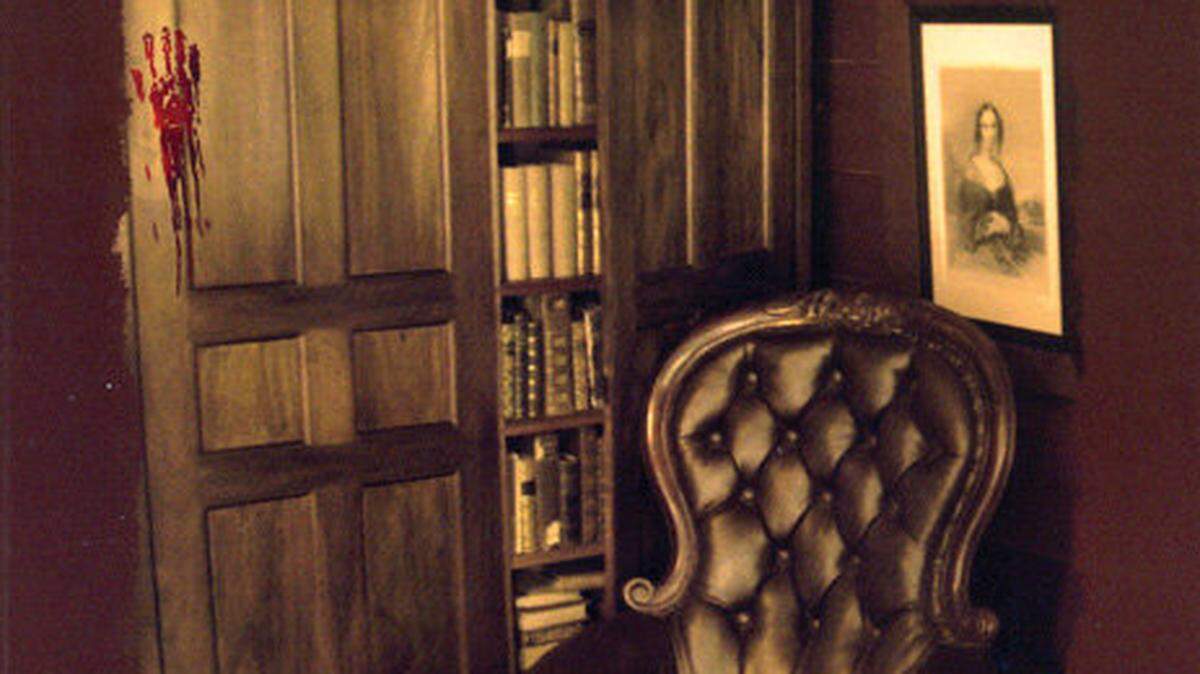
The past comes alive in “Somewhere in Crime,” the new anthology from Central Coast Mystery Writers. “History itself is often such a big mystery,” anthology editor Sue McGinty said. The anthology, which spans about 230 pages, focuses on historical mysteries that span the ages.
Selections range from Susan Tuttle’s “The SomeWhen Murder,” a time-travel tale set in the small California town of Gorman, to Margaret Searles’ “Dago Red,” a murder mystery rooted in World War II.
Anne Schroeder’s atmospheric story, “Captain of the Rags,” delves into the shattered psyche of a Vietnam War veteran. Meanwhile, Molly Rae Doust evokes the supernatural with “Raiatea,” about a sly mermaid.
“Writing (a mystery) is not a lot different from reading (one),” said Schroeder, whose work includes two memoirs, “Branches on the Conejo” and “Ordinary Aphrodite.” “When you turn the page, you don’t know what’s going to happen.” Take a sneak peak below at three of the 15 stories in the anthology: McGinty, of Los Osos, has a soft spot for San Luis Obispo County. “I love to write about the Central Coast,” said the author of “Murder in Los Lobos” and “Murder at Cuyamaca Beach.” “It’s such a beautiful area, and there are so many places to hide bodies.”
Her contribution to “Somewhere in Crime” showcases the windswept coast near San Simeon.
Set in 1939, “Uncertain Sanctuary” follows a 16-year-old Jewish immigrant who uncovers a sinister plot while working as a housekeeper at the Piedras Blancas Lighthouse.
When orphan girl Astrid discovers a corpse on the beach, she begins to wonder whether her employers have something to hide.
“Uncertain Sanctuary” mixes fictional characters such as Lars the surly Swiss lighthouse keeper with real-life figures such as movie star Marion Davis, longtime mistress of publishing magnate William Randolph Hearst.
“She’s the original gutsy dame,” McGinty said of Davis.
Davis’s real-life friend, “tough gal” actress Carole Lombard, also makes an appearance. “I’m fascinated with the characters who inhabited Hearst Castle,” said McGinty, who has toured the hilltop mansion “probably 15 times.”
Nipomo author Paul Alan Fahey explores a real-life mystery in “Passenger to Stamboul.”
As the story opens in fall 1928, mystery writer Agatha Christie is aboard a train bound for the Middle East. Frustrated by the direction of her next novel, a murdermystery set on the Orient Express, she starts to chat with an elderly Austrian man later revealed to be psychoanalyst Sigmund Freud.
Together, they retrace the events that led to Christie’s 11-day disappearance two years earlier.
According to Fahey, Christie’s mysterious “missing period” — which followed the death of her mother and the dissolution of her marriage — has long been the subject of fans’ speculation. It inspired the novel “Agatha,” later made into a movie starring Vanessa Redgrave.
“Many consider (it) her greatest mystery,” said Fahey, who gleaned clues from Christie’s autobiography and her more personal novels.
His fascination with Agatha Christie dates to childhood, when he and his hard-working single mother would discuss her books at the breakfast table. He developed an interest in Freud as a teenager.
Writing “Passenger to Stamboul,” he said, “I felt like I was eavesdropping, and hoped the reader would too.”
In “The Problem with Burlesque,” Los Osos author Victoria Heckman transports readers to a New York City theater in the early 1920s, when film and vaudeville were vying for pop culture dominance.
Violet Strange, a sophisticated debutante turned sleuth, has been hired to discover who’s behind a recent spate of ruined costumes, missing props and falling lights. Along the way, she befriends brassy burlesque dancer Miss Apples and takes her own turn onstage.
“I did have fun putting her in that situation and seeing if she could get out while still keeping her dignity (intact),” Heckman said of Violet, a character originally created by turn-of-thecentury mystery writer Anna Katharine Green.
To capture the era, Heckman consulted old newspaper articles and video clips of vaudeville routines. She also read a biography of vaudeville comedian Grace Allen written by her husband, George Burns.
Heckman, who is best known for two mystery novel series set in Hawaii, also wrote the mid-century crime story “Steamboat’s Suit.”
Her brother, D.K. Farris, contributed the story “A Sojourn at the Coast.” Presented as a series of letters from the smart, sarcastic narrator to his sister, it offers an irreverent look at Central Coast life in the 19th Century.
This story was originally published May 20, 2012 at 12:00 PM with the headline "Central Coast Mystery Writers bring history to life with this anthology."