
Cuesta College's book of the year: 'In the Neighborhood'
On the night of Feb. 29, 2000, a tragic incident rocked the quiet Rochester, N.Y., suburb of Brighton.
Physician Bob Wills shot and killed his bright, athletic wife, family physician Renan Wills, then turned his 12-gauge shotgun on himself.
Their deaths were shocking, senseless. But what really surprised journalist Peter Lovenheim, who lived just a few doors down, was his neighbors’ reaction.
“I expected the neighborhood to come together and have sort of a community conversation,” he recalled, but nothing happened. “(This family) had lived there for seven years (and) it was like they vanished overnight.”
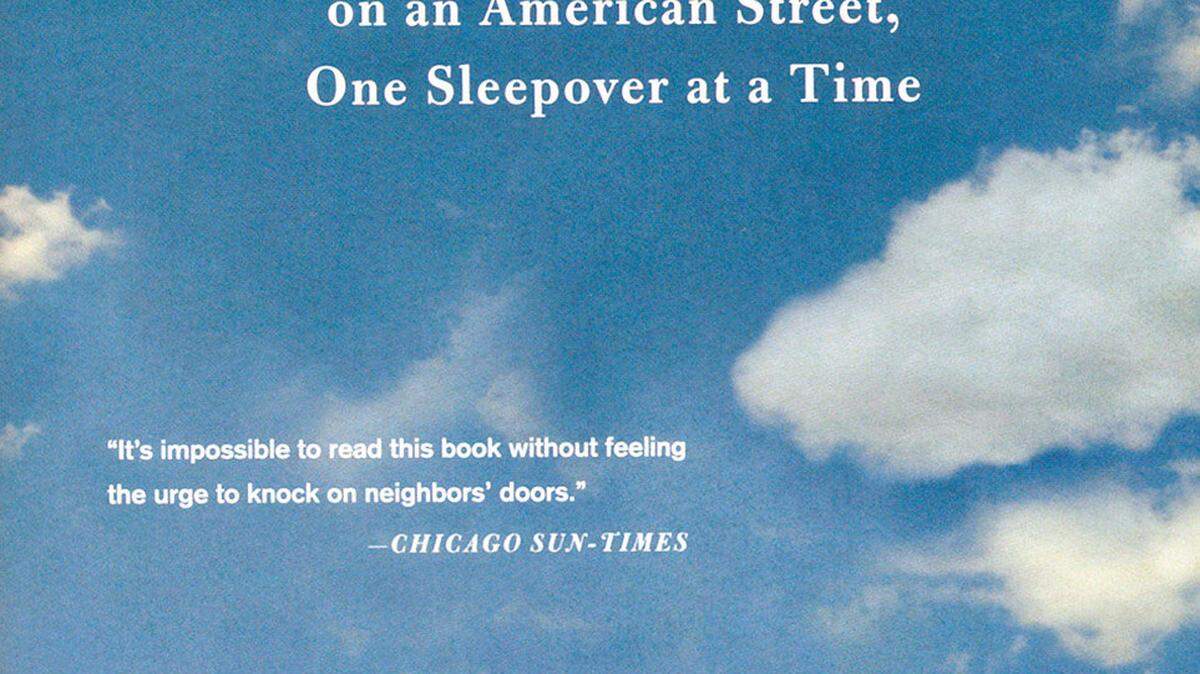
Lovenheim later wrote in his book “In the Neighborhood: The Search for Community on an American Street, One Sleepover at a Time”: “How could that be? Did I live in a community or just in a house on a street surrounded by people whose lives were entirely separate?” “Why is it that in an age of cheap long-distance rates, discount airlines, and the Internet, when we can create community anywhere, we often don’t know the people who live next door?”
Lovenheim will speak about “In the Neighborhood” on Tuesday at Cuesta College as part of the school’s Book of the Year program.
A return to the neighborhood
Lovenheim and his family moved to Sandringham Road, an upscale Brighton street with large, graceful houses and big backyards, in the summer of 1957. He spent much of his childhood there, leaving in 1971 when he graduated from high school.
Twenty-five years later, the author returned to the neighborhood with his own family and moved into his parents’ old split-level ranch home.
Lovenheim, used to a bustling urban environment, was surprised to find that residents’ interactions rarely went beyond “hello.”
“We don’t connect with neighbors the way we used to,” he explained, due in part to busier schedules and bigger homes.
Plus, he said, “There’s more fear. A stranger used to be somebody you just didn’t know yet. Now a stranger is someone we’ve been taught to fear.”
After the deaths of Bob and Renan Wills, Lovenheim resolved to get to know the strangers on his street better.
“I wanted to experience life on my street from my neighbors’ perspective,” he said, through face-toface interviews, phone conversations and the occasional sleepover.
“I remember the experience of sleeping over at a friend’s house, waking up the next morning, coming down to the breakfast table” and listening to his friends’ family members plan their day, Lovenheim recalled. “The next time I would go over and play at my friend’s house, it didn’t feel like a stranger’s house to me.”
Lovenheim first approached Lou Guzetta, a retired surgeon living alone, with the idea of spending the night at his house.
“I was a little cautious and timid,” the author recalled, but he needn’t have worried. “It worked so beautifully. ... There was a sense of intimacy about that next day.”
The two discussed Guzetta’s marriage, his children, his career, the drawbacks of growing old. When Lovenheim finally left, the 81-year-old man even told him where to find his spare key.
Buoyed by his success, Lovenheim stayed with busy professionals Deb and Dave O’Dell. He sipped coffee with elderly walking enthusiast Grace Field, discussed art with real estate agent Jamie Columbus, and tagged along with newspaper carrier Brian Kenyon as he completed his morning route.
Lovenheim forged a special connection with Patti DiNitto, a recently divorced radiologist and mother of two who had diagnosed her own breast cancer.
“If there was one person on my street who needed a community, it was her,” Lovenheim said, describing DiNitto as low on energy and short of time.
Lovenheim wondered, “Would it be possible to patch together a community behind this one neighbor?”
Craving connections
Although Lovenheim succeeded in spurring some connections in his own neighborhood, he discovered that Americans are “increasingly isolated from each other.”
“We’ve gotten to the point where we can live side-by-side, driveway-bydriveway, with other people for decades without knowing them at all,” said the author, whose previous works include the nonfiction book “Portrait of a Burger as a Young Calf” and a series of conflict resolution guides.
Lovenheim and his community-minded readers crave something more.
Since publishing his book, he’s heard from people across the country who are working to reunite their neighborhoods through potlucks, block parties and barbecues. They’ve set up lending libraries for toys and power tools, websites for sharing cars and apartments.
“People generally have a desire for a greater sense of connection,” he said. “These ideas are just in the air. My book is my way of expressing it.”
This story was originally published March 26, 2012 at 5:09 AM with the headline "Cuesta College's book of the year: 'In the Neighborhood'."