
'No Girls Allowed: The Jock and Jill Mentality of Sports Broadcasting'
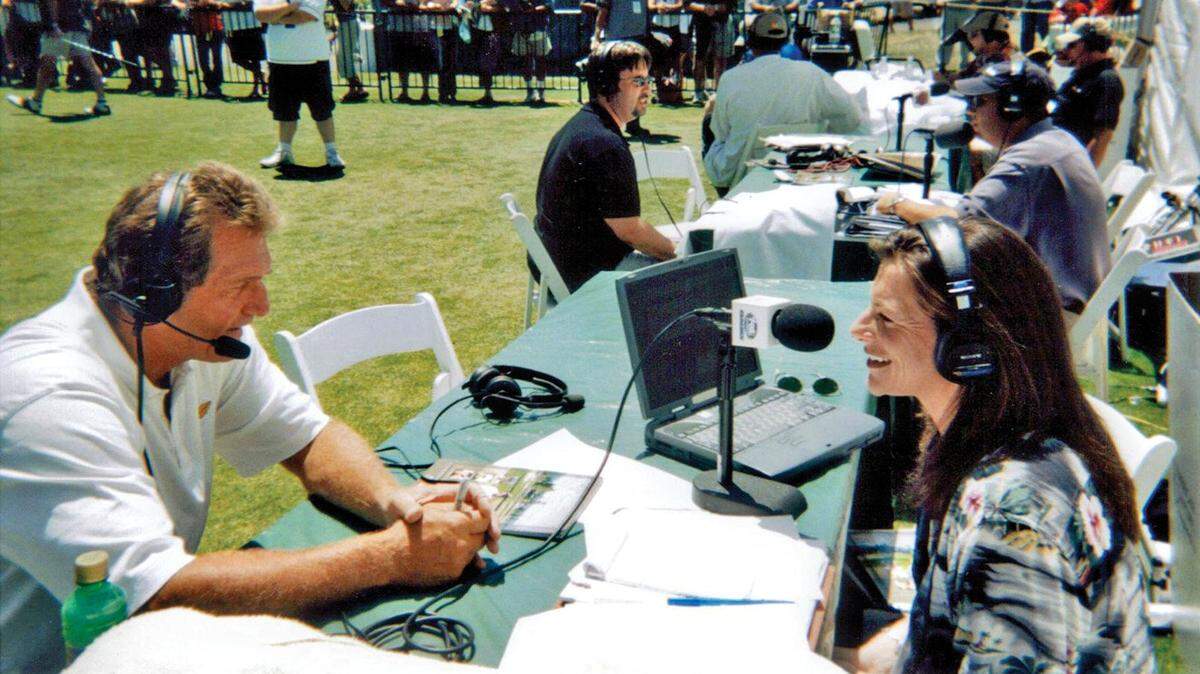
A sports nut since she was six years old, CJ Silas dreamed of a career that would allow her to talk about sports.
But sports radio — the best forum for talking sports — is a fraternal club, she said, in which women are routinely objectified, undermined and discouraged from joining.
“The only female that does national talk is Amy Lawrence — and she does it on a fill-in basis,” Silas said. “There’s not a woman with her own show. There hasn’t been, except for me, and I never did it very long.”
Not long at one station, anyway. For over 20 years, Silas talked sports in a variety of markets across the country, culminating with national gigs at ESPN Radio Network and Fox Sports Radio. Yet, her career, as she writes in her book “No Girls Allowed: The Jock and Jill Mentality of Sports Broadcasting,” (Max Q Enterprises , $28.95) was marked by struggles to be accepted — struggles she compares to Jackie Robinson’s when he broke baseball’s color barrier in the 1940’s.
“It’s a book about someone like Jackie — doing what you want to do no matter how much people don’t want you to do it,” she said.
During Silas’s career, she interviewed many larger than life sports figures, including Charles Barkley, Pete Sampras, Alonzo Mourning, Tommy Lasorda and John Wooden. And her life has featured some interesting asides — like the fact that she was on the cast of TV’s “Fame,” turned doubleplays with softball teammate Ron Goldman before covering his accused murderer’s trial, and dropped everything to volunteer to help Hurricane Katrina victims in New Orleans. But the book focuses — as the title suggests— on the challenges that confront any woman who wants to venture into sports radio.
Silas’s love of sports began when she was a child, growing up in Los Angeles.
“I felt most confident when I had a ball in my hand or a glove,” she said at a coffee shop near her Shell Beach home. “And when I was old enough to realize that I probably wasn’t going to play professional sports, I knew I liked to talk — so why not talk about sports?”
After graduating from Syracuse, she pursued that dream. But while there were a few women doing TV sports — mostly as sideline reporters — Silas couldn’t find female peers interested in making a living in sports broadcasting.
“I was constantly the only female in the room, at press conferences, on sidelines, in the press box, or courtside at basketball games,” she wrote of her time covering sports as a student at Syracuse.
Later, while working at radio stations, she wrote, coworkers frequently made sexual comments about women — both on air and off — often rating them. When she was on air, she added, male coworkers attempted to humiliate her, playing clips of tennis player Monica Seles’s grunting or the sound of crickets chirping in the background whenever she spoke. And she was frequently ignored at meetings, even when she was the host or co-host of a show.
“It wears on you when you have to battle every day to keep your emotions in check,” she wrote.
Silas’s decision to not name offenders or many of the stations where she worked takes some of the power out of her story — and makes it difficult to follow her career, which had many stops. But she says she wanted to avoid legal trouble — and that she didn’t want the book to be viewed as retaliation.
“If I put their names in it, then I’m resentful, and I’m whiny and I’m complaining,” she said. “If I don’t, I’m just telling my story.”
Silas also declined to delve into behind-the-scenes stories about celebrity athletes and their lifestyles.
“It’s not a tell-all,” Silas said, noting that she purposely avoided relationships with professional athletes. “It’s not going to be tabloid journalism. I think my stories are going to market themselves. And if they don’t, they don’t — but I didn’t want to lower myself.”
After working radio in places like Nebraska, Miami and Seattle and stints with Fox and CBS SportsLine, Silas wound up in San Luis Obispo, working as an on-air personality at Sunny Country, 102.5 FM, before pursuing a bigger opportunity at an all-sports network in Los Angeles.
Yet, it didn’t take long before she wasn’t welcome there, either.
“I went for this big opportunity, where I was making six figures, and my fourth day in, I already find out they don’t want me,” she said.
When that job fell through, she worked with local ESPN affiliate 1280 AM. Using her contacts, she interviewed guests like Dan Patrick, Steve Kerr and Mike Tarico. But while she enjoyed that job, she couldn’t resist pursuing an opportunity as a fill-in host at the ESPN Radio Network — another move that offered false promise.
By 2008, she was out of radio, working full-time with Red Cross — until she was laid off, with other co-workers, last spring.
Today, she’s focusing on marketing her book, sending copies to newspapers, TV shows and radio stations. In an ideal world, Silas acknowledges, she’d love for someone to hear her promote her book on a radio show and offer her another gig. But she wrote the book, she said, to teach others about the profession from a woman’s point of view.
“I would love this to bring me back,” she said. “But I didn’t do it to get back on radio.”
This story was originally published November 21, 2011 at 5:35 AM with the headline "'No Girls Allowed: The Jock and Jill Mentality of Sports Broadcasting'."