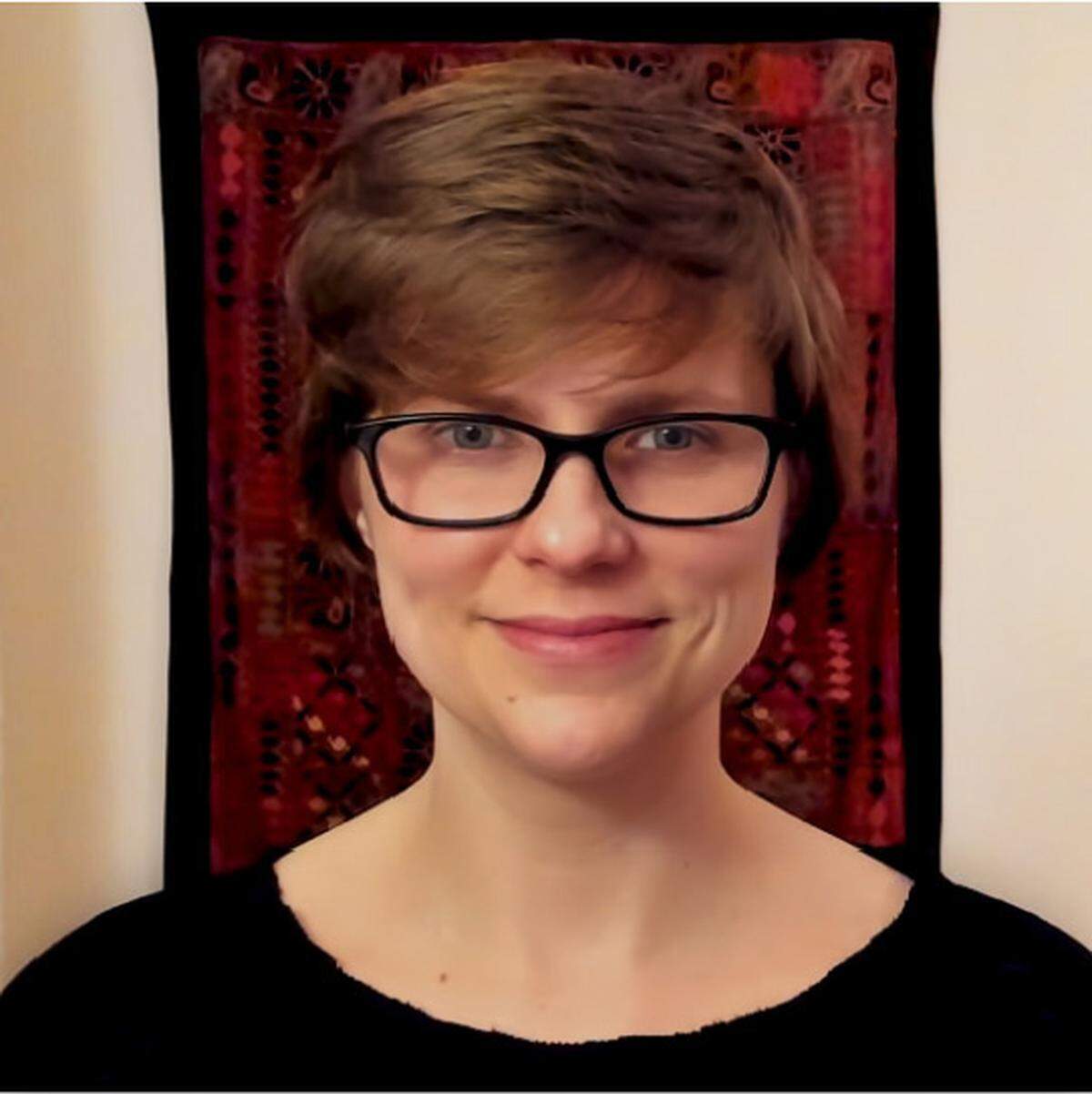
Cal Poly soil scientist doesn’t just teach about dirt — she paints with it, too
Yamina Pressler has made dirt her life’s work.
The Cal Poly soil ecologist studies tiny organisms that live in the soil. But she doesn’t limit her passion to her research or the classroom. She also creates watercolor paintings using her research subject as a medium.
Pressler’s mission is to educate the world about soils not only through her research and teaching, but also through her art.
“I just kept sort of following my curiosity. I didn’t really know where it was going to go, and I ended up in a career that I could have never imagined at the onset,” she said.
Artist discovered soil as Cal Poly student
Art has always been a part of Pressler’s life, even though she didn’t realize it at first.
Her mother, an abstract painter, filled their home with color — even painting one hallway lime green.
Although her mother encouraged her to do art, Pressler said her feeling that she could never create anything comparable stopped her.
While an undergraduate student at Cal Poly, Pressler took an introductory course in soils as a requirement for her environmental management major.
“It completely blew my mind,” she says.
Before that class, she said she had thought of soil as “a pile of brown stuff where plants grow.”
At Cal Poly, she learned about the incredible diversity in soil color. “That was one of the things that hooked me,” said Pressler, who was also attracted by the complexity of soils.
She eventually joined Cal Poly’s soil judging team and competed in the National Collegiate Soils Contest in Wisconsin in 2013.
Pressler, who graduated from Cal Poly in 2013, credits faculty at the San Luis Obispo university for encouraging her to pursue a graduate degree in soil science. She earned her doctorate degree at Colorado State University.
After serving as a postdoctoral researcher at Texas A&M University, she returned to Cal Poly in 2019 as an assistant professor.
Now, Pressler teaches the very class that got her interested in soils as an undergrad. She says she feels a responsibility to celebrate her science with students that may never meet another soil scientist.
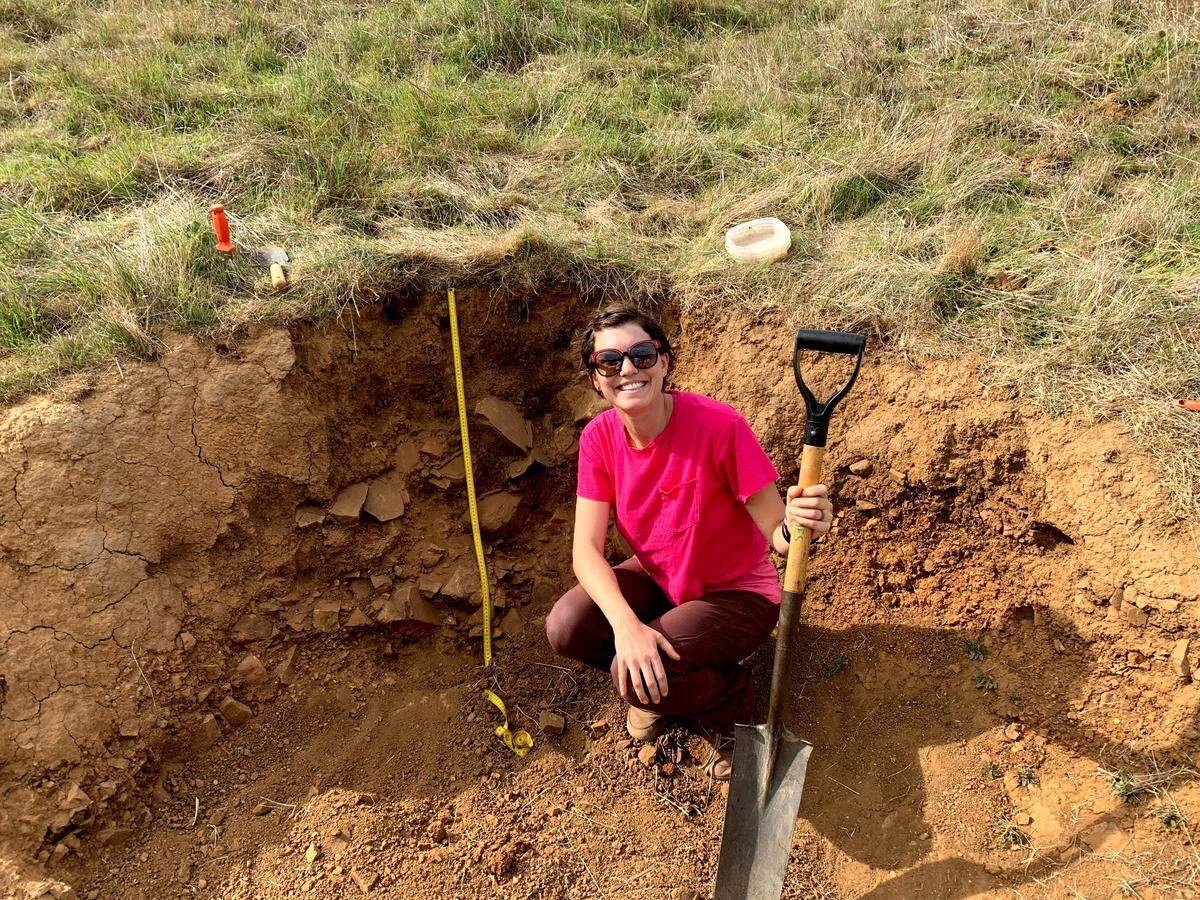
In her research, Pressler studies microscopic organisms that live in soil.
In one aspect of her work, she looks at how wildfires affect the food chain within the soil. The intricate web of what-eats-what in this soil ecosystem can be altered during a fire, thereby affecting how nutrients such as carbon and nitrogen move throughout the soil.
For instance, she’ll grab a lump of dirt, identify the tiny organisms in it, count them and examine their forms.
Painting helps calm nerves
In 2019, Pressler was traveling a lot to attend academic conferences and meetings around the country.
However, she said, she was having a lot of “plane anxiety.”
So she looked online for ways to calm her nerves during turbulent flights and found a site that suggested she distract herself by painting. She decided to give it a try.
On a two-hour flight, Pressler painted on a notepad with a miniature watercolor set.
When the plane landed, the Cal Poly professor realized that she had hardly looked up from her paper the entire flight.
“I got down (on the ground) and was like ‘Wait, what just happened?’ It worked,” she said, noting that her paintings were of soil.
“That was the thing that really started (me) on this creative exploration,” she said.
Artist uses watercolors made with soil pigments
Pressler kept painting after that flight.
“Once I had a subject that I felt like I knew really well ... I was able to appreciate my own artistic ability and creativity in a new way that I hadn’t been able to see before,” the soil scientist said.
She spent a lot of time experimenting, trying different brushes and paper. “It became something that I would do in the evenings, very much for fun,” she said.
Initially, Pressler shared her paintings only with family and friends. Then former Cal Poly professor Karen Vaughn — Pressler’s undergraduate adviser, friend and mentor — encouraged her to start sharing her art more widely.
Vaughn, who is also a soil scientist and artist, now teaches at the University of Wyoming.
The pair formed a partnership that led them to explore a medium with which they are both intimately familiar.
First, Vaughn extracts pigments from soils she collects throughout the U.S. to create earth-toned watercolor paints. The colors often come from the naturally occurring elements in the soil. Reds and yellows can come from iron, for example. To make some colors, Vaughn adds minerals or other synthetic pigments.
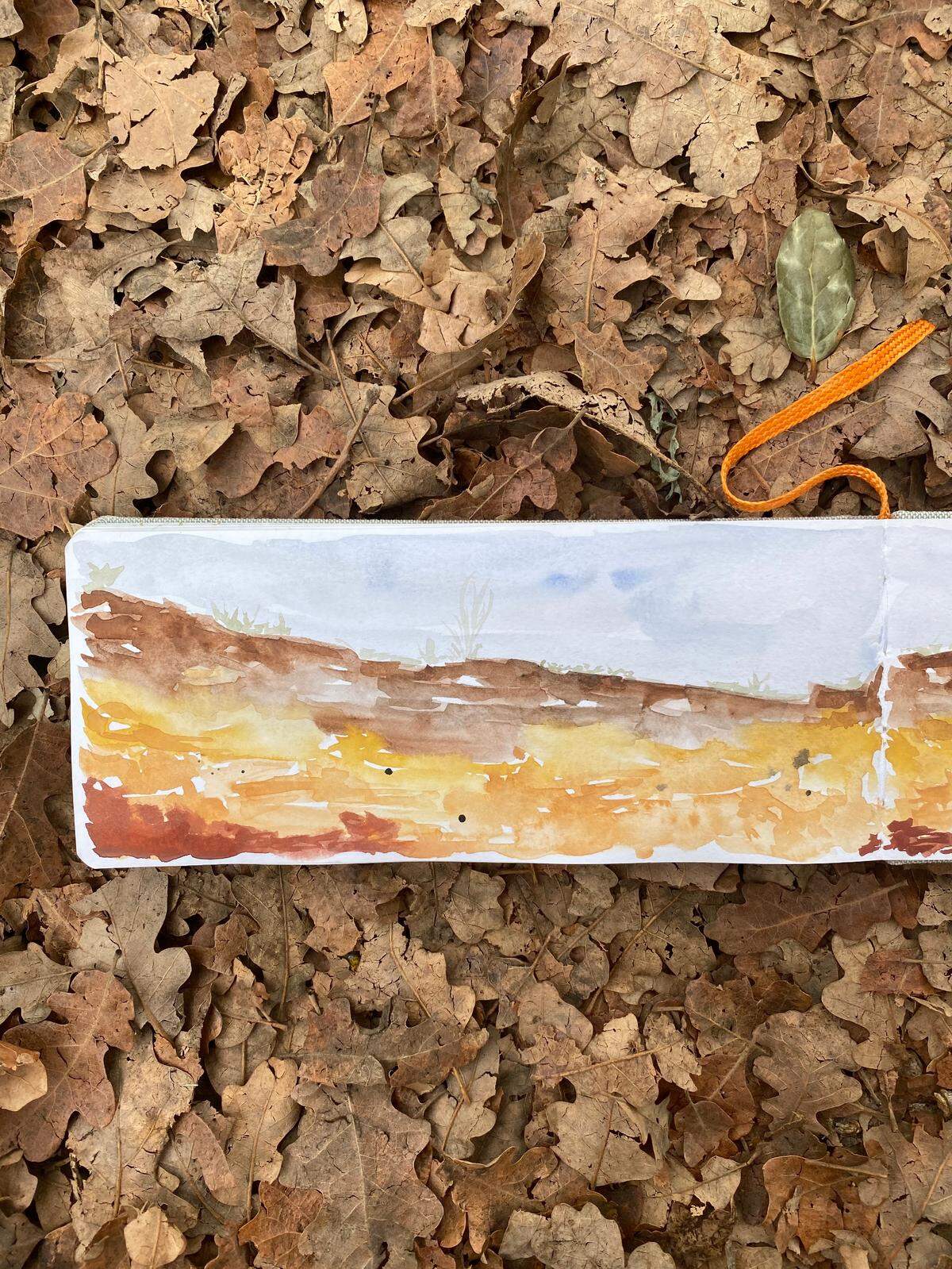
Pressler uses those watercolors to create paintings of plants and soil profiles — cross-sections that reveal different layers of dirt.
Her pieces often highlight the diversity in soil color seen in nature.
One of Pressler’s hand-sized paintings features a rainbow of colorful layers, with thin lines threading through the upper sections like roots.
Ecologist compares soil art to science
For Pressler, the process of creating her artwork is a lot like doing scientific research.
Both art and science are about experimentation, she said.
“What if I glue a little piece of soil onto the page? What if I play with this color?” she asked.
In the lab, she might ask: “What if I tried this experiment? What if I go after this site?”
“That kind of curiosity-driven work is something I’m really drawn to,” she said.
Lately, Pressler has also been sketching creatures she finds in the Global Soil Biodiversity Atlas, which she described as a beautiful encyclopedia of soil organisms.
She occasionally sketches live on Instagram.
Pressler said her sketches, art and live doodling are all done in the service of raising awareness about the role soils play in the health of the planet.
Why soils are so critical
According to Pressler, soils need protection.
“Soils are foundational to life on this planet,” Pressler said. “(They) do so much for us in the background.”
Soil ecosystems decompose waste, store carbon and purify water, among other things.
“Soils are everywhere,” but their ubiquity means they are often overlooked, Pressler said.
Pressler sees her art as one way to make soil more visible to the world.
“Soils are at the nexus of so many of the grand environmental challenges that we’re facing,” she said, adding that making soils more visible to the world is one way to protect them.
“If we want to stop treating soils like dirt, then we first have to develop the eyes to be able to see them,” she said.