
Book banners are at it again, targeting a SLO County school district | Opinion
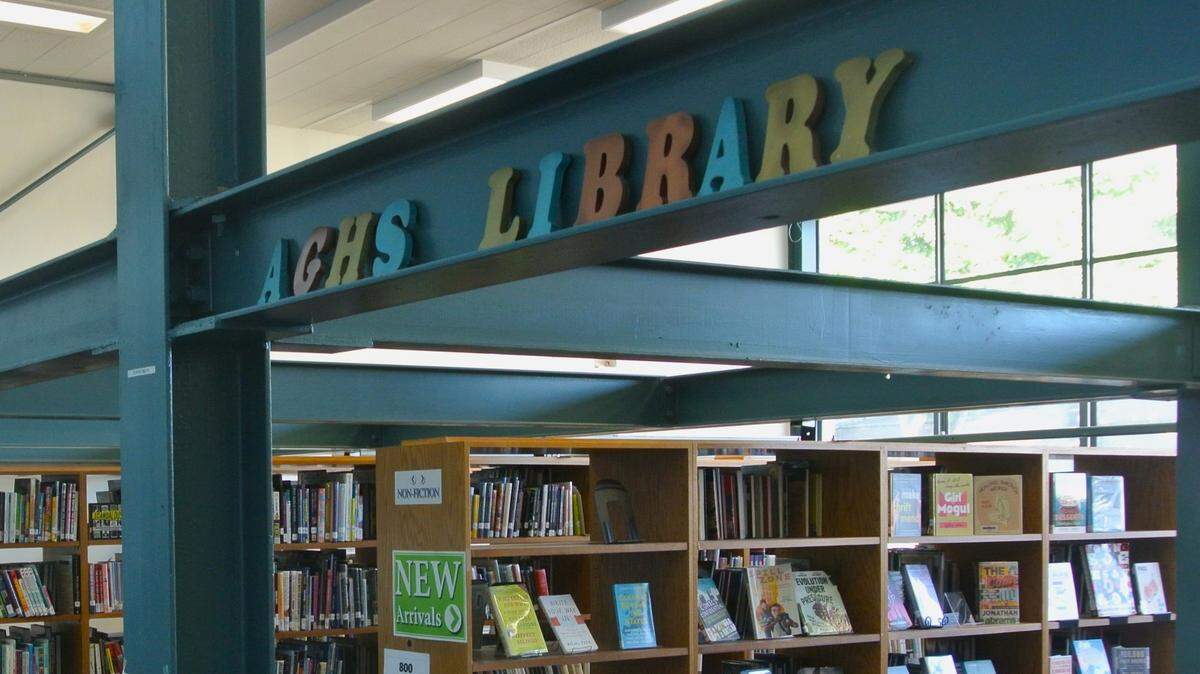
Another battle in the culture war is expected at tonight’s meeting of the Lucia Mar Unified School District Board of Trustees. This time, two members of the community are pushing for two books to be banned from the Arroyo Grande High School Library.
One is “Push,” a 1996 novel about an obese 16-year-old Black girl who is sexually, physically and emotionally abused by her parents.. It has been described as “a merciless indictment of a society that abandons its most vulnerable citizens” and was the basis for the award-winning film “Precious.”
The other book is “Gender Queer,” a graphic memoir dealing with the sexual identity of the author, who is nonbinary. It was the most banned book of 2021 and 2022.
Both are being challenged as pornographic.
“This book, ‘Push,’ is in our schools and graphically describes sexual acts with vulgar slang,” a flier advertising the school board meeting warns.
Objections to “Gender Queer” focus on “obscene drawings and text.” References to sex toys, erotic fiction and Tinder, which is described as a dating website “often used for ‘hook-ups’ for sex,” get the red circle treatment in another flier.
“Please get the process started to omit this type of child-abusing material from the shelves of libraries ASAP,” appellant Paul Masters wrote.
Gary Adams, who filed the appeal on “Push,” found the sexual content unsuitable for minors and objected to the use of “non-standard grammar and spelling ... supporting a finding that the book is educationally unsuitable.”
A school district committee that includes staff members and parents has already reviewed the books and opted to keep them in the Arroyo Grande High School library.
That was not good enough for Masters and Adams, who will take their case to tonight’s board meeting in Arroyo Grande. It’s expected to draw a large crowd; in addition to those who support banning the books, a group opposed to censorship is expected to attend — and is also circulating notices asking others to join.
“Our students deserve access to a full, diverse range of books. Removing books because of political or religious pressure is censorship, not education,” their flier says.
Another case of pious posturing?
The public has the right to challenge books in school libraries, but to what end?
Are they truly concerned about the welfare of young people — teenagers, in this case — or are they trying to impose their moral values on students?
Given that this liberal-leaning board is unlikely to reverse the committee’s decision, this seems to be yet another case of pious posturing for the cameras — once again shifting the focus from education to an overarching political battle, leaving local schools caught in the middle.
When it comes down to it, this really isn’t about these two particular books, especially since records show they’ve rarely been checked out of the library. It’s about power.
Consider:
- These are library books. They are not required reading.
- If students want to read these — or any other books that some deem objectionable due to sexual content — there are plenty of other places students can find them. Public libraries. Bookstores. Amazon.
- Efforts to censor reading material can backfire. One university study showed banned books actually gain popularity. “The primary goal of book bans is to restrict access to books, but conversations about the bans often garner attention on a wider scale,” said Ananya Sen, assistant professor of information systems and economics at Carnegie Mellon University.
- The state of California has taken a stand against book bans. AB 1078, passed in 2023, requires schools to provide materials that “accurately portray the contributions of people of all genders and the role and contributions of Latino Americans, LGBTQ+ Americans, and other ethnic, cultural, religious, and socioeconomic status groups.” If such materials are not available, the public can challenge a school district.
What books might be next on the hit list?
Here’s what Gov. Gavin Newsom had to say when he signed the law: “From Temecula to Tallahassee, fringe ideologues across the country are attempting to whitewash history and ban books from schools. With this new law, we’re cementing California’s role as the true freedom state: a place where families — not political fanatics — have the freedom to decide what’s right for them.”
We agree.
This latest attempt to ban books is a misguided effort to shield students from experiences and traumas that are part of real life, merely by branding it “pornography” while ignoring the redeeming value that has been widely recognized. It also prevents them from learning empathy for others whose circumstances may be far different from their own.
If these books are banned, what’s next?
“To Kill a Mockingbird”? “The Kite Runner”? “The Handmaid’s Tale”?
Enough. Do not turn our school libraries into battlegrounds.
If a review committee determined that these books meet the district’s standards, keep them right where they belong: on library shelves.