
SLO City Council approves 280-unit condo project. Here’s what it looks like
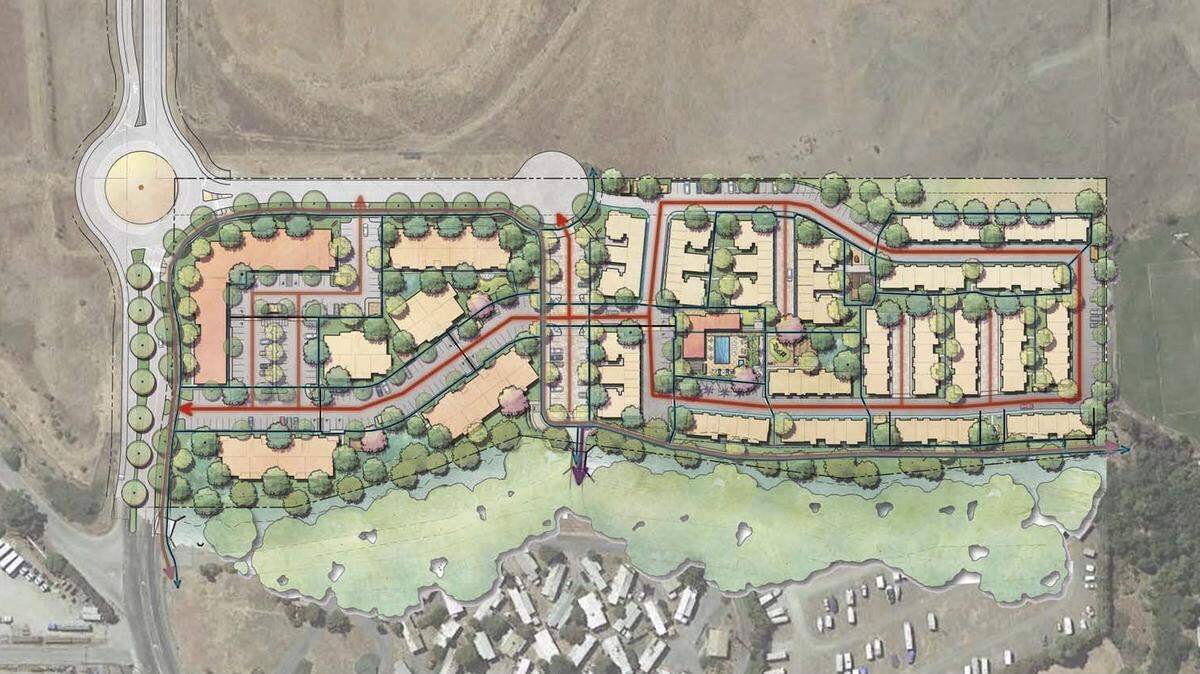
A project that will bring 280 condominiums to an 11-acre site on Tank Farm Road got the go-ahead from the San Luis Obispo City Council on Tuesday — becoming the latest of several developments approved or under construction in the city.
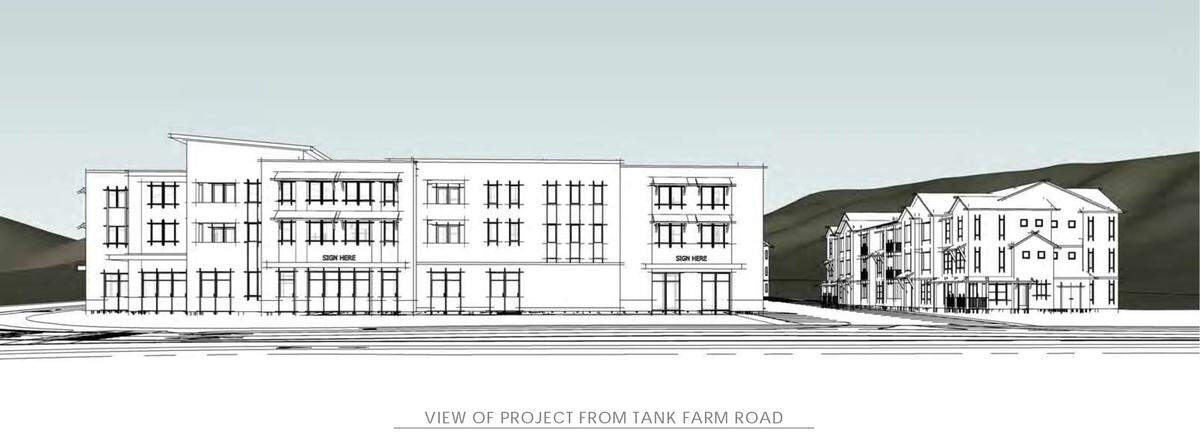
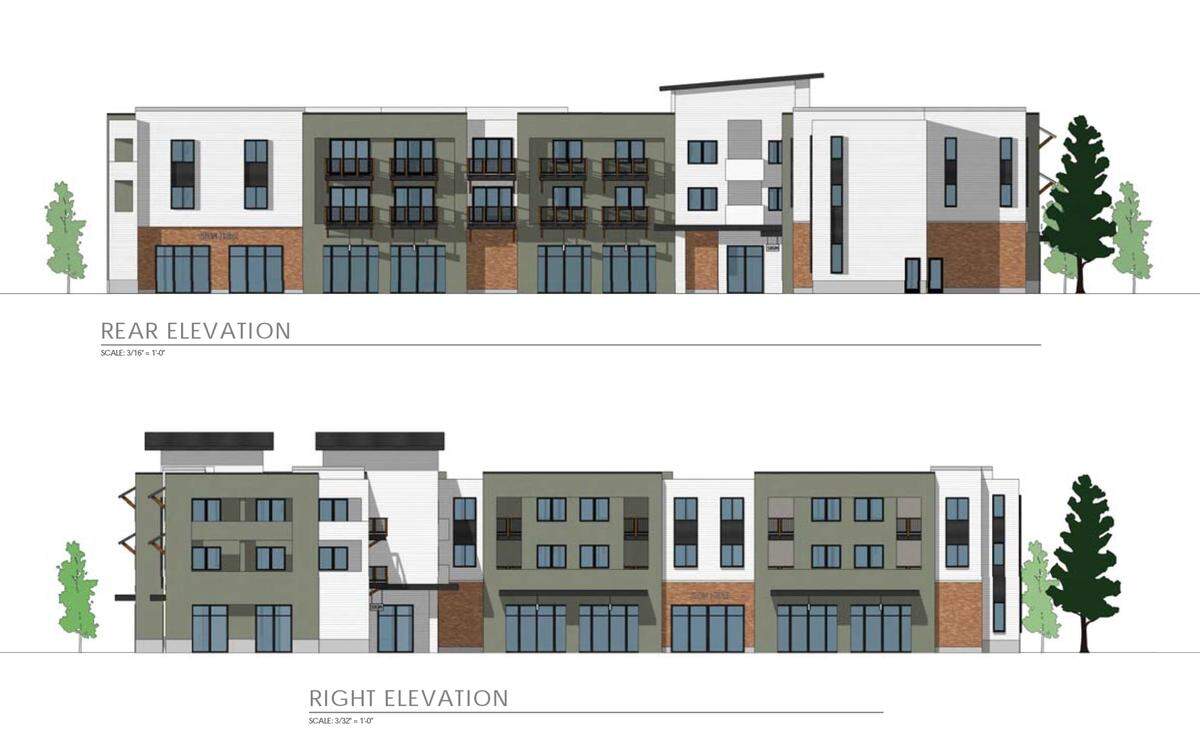
The mixed-used project at 600 Tank Farm Road will include up to 12,500 square feet of commercial and office space within the city’s Airport Area Specific Plan area.
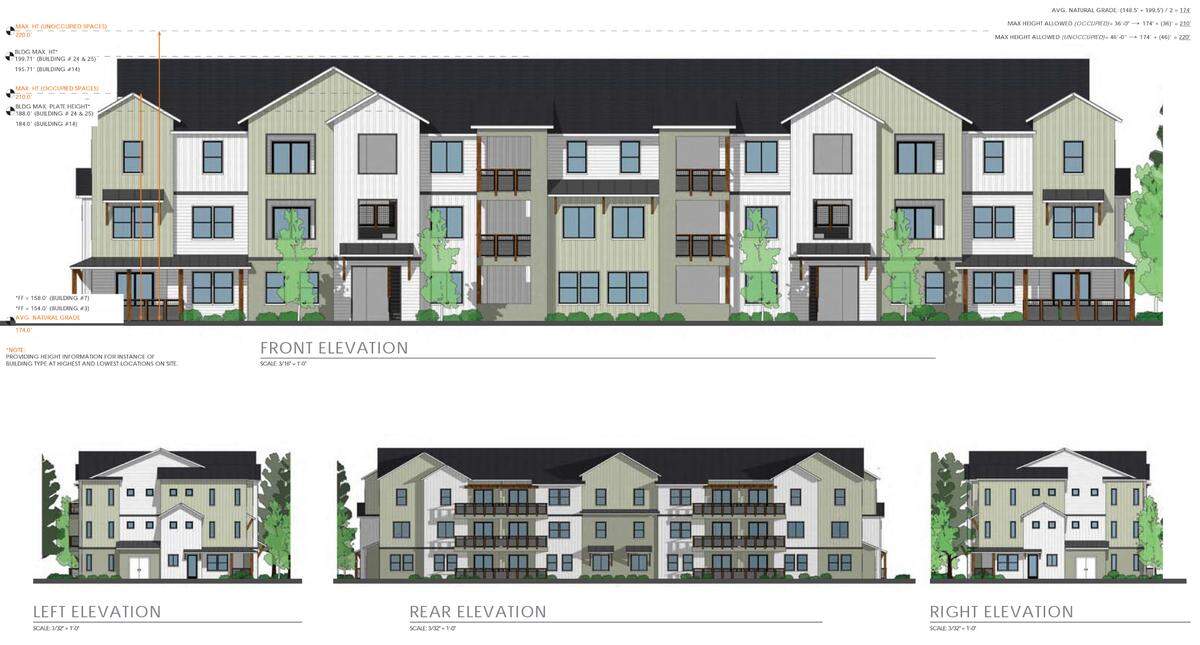
The units will range from 450-square-foot studios to 1,550-square-foot three-bedroom homes. All will be for sale.
The condominium project calls for 24 three-story buildings that would feature flats and multi-story townhomes.
While pricing is yet to be determined, the developer said the price point will allow many first-time homebuyers to get into the market.
Prices will depend on market fluctuations, but if they were available at today’s rates, the homes would range from $350,000 to $600,000, said Damien Mavis, of Covelop, the project developer.
“Those prices are based on market studies,” Mavis said. “But obviously, we won’t be selling units for one-and-a-half to two years, and depending on what market conditions are, that will dictate what final pricing is.”
Eleven homes will be designated for deed-restricted, inclusionary housing, exceeding the requirement for three affordable homes based on project planning calculations under the city’s affordable housing guidelines, according to city planners.
The affordable homes will be priced in the moderate-income level range. Under 2021 affordable housing guidelines, that means pricing would be restricted to accommodate families of four who make less than $117,350.
Of the 11 affordable units, three will be studios, seven will be one-bedroom homes, and one will a two-bedroom unit.
Under the city’s 2021 affordability standards, those homes would be priced between $287,525 (studios) and $369,600 (two-bedroom). Affordable guidelines are reviewed each year and can be adjusted.
A local preference program will give first dibs on the homes to those who work within about a mile-and-a-half radius of the property, which would help promote use of alternative modes of transportation to and from work, Mavis said.
“We’re still working on the details, but it’s within a radius, not extended to the whole city,” Mavis said. “We’re focusing on people who are working right there, east of the airport and kind of by the Higuera and Tank Farm intersection, with all those businesses on either side of that.”
Bike path coming to Tank Farm
The project will contribute to some key pieces of infrastructure that are part of the city’s planning for the Tank Farm corridor.
Those include fair share funding allocations for a planned new roundabout at Santa Fe and Tank Rarm Road; a Santa Fe Road extension through the Tank Farm property to a planned Prado Road extension and Damon Garcia sports fields; and bike connections between Damon Garcia and Santa Fe.
The developer also will design a bike path on Tank Farm that extends from the project area to Farm Supply, a long-anticipated improvement for cyclist and pedestrian safety.
“I think (the project’s role in a future Tank Farm bike path) will become a great enduring piece and legacy of this project,” Mavis said. “Obviously, the bike lane situation is inadequate. It has been a target for the city to build bike infrastructure on that stretch of roadway. The designs will become future capital projects for the city, and it gives the city something to process and include in future budget cycles.”
Through participation in the Citywide Transportation Impact Fee Program, the project will contribute financially toward future widening of Tank Farm Road west of Santa Fe Road (to provide two lanes in each direction, a landscaped median and shared-use pedestrian/bicycle paths), according to a city staff report.
Additionally, it would contribute to the Prado Road interchange and extension (between Higuera and Broad streets).
City Councilwoman Carlyn Christianson said, “This is a really crucial keystone project for this part of town” for its transportation infrastructure and key connections to Prado Road.
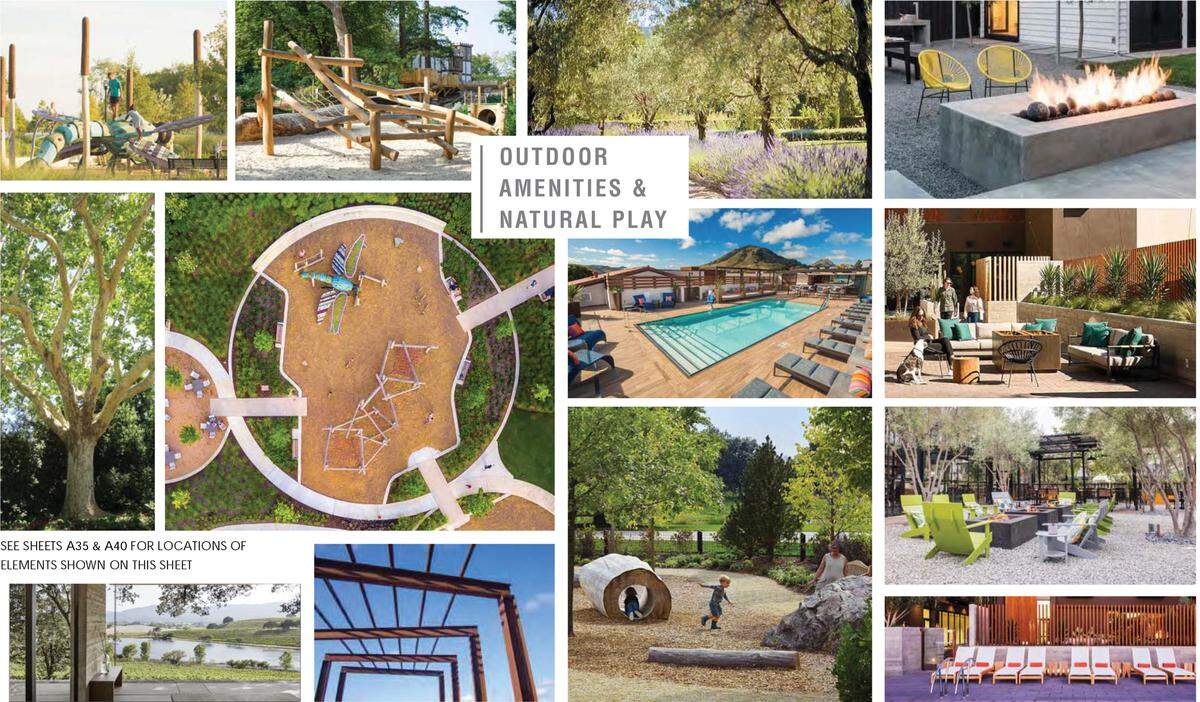
Amenities include a pool and play areas
On-site amenities will include a 2,250-square-foot clubhouse, pool, play areas, tot lots, a public art location and landscaped parkways.
About 18 percent of the site would be open space.
Bike and walking areas would be supported by connections to the 650 Tank Farm Road property and to Damon Garcia.
“I like the project’s proximity to businesses,” Mayor Erica Stewart said. “I like the idea of reducing vehicles and miles traveled using cars. I’m very supportive of the project. I wish there were more low- and very-low-income (affordable housing) versus moderate-income housing.”
Andy Pease, while supporting the projected, recommended more outdoor, long-term bike parking. The project does include some secure indoor bike parking in units that have garages.
City has plenty of water for project
With more than 3,000 of the city’s 4,400 new housing units planned for buildout by 2035 (and a projected city population of 56,686 people) and ongoing drought conditions that have impacted water supplies statewide in recent years, some residents have questioned whether SLO will have enough water to accommodate the new housing.
But officials say the city’s water availability is sufficient to handle the growth.
“The large developments that are underway in the city have been on the radar for many years and are part of the city’s General Plan,” said Mychal Boerman, the city’s utilities deputy director of water. “... Because there are limitations to our ability to predict water demand into the future, we take very conservative estimates of community water use and actually forecast for more water demand than is likely to occur.”
Boerman said the city makes projections based on future water supply to serve its buildout and is required to have water set aside to act as a buffer in case of unforeseen, long-term impacts.
“Because of several generations of focus on water supply planning, the city actually has surplus water available above and beyond both its primary water supply and its reliability reserve. This water is often referred to as the ‘secondary supply,’” Boerman said in an email. “Without getting too technical, these three buckets of water ensure that water is available for future community growth, and that a buffer is built in to account for climate change, risk of the temporary loss of access to a reservoir, etc.”
The city has four primary water supply sources: Whale Rock Reservoir, Salinas Reservoir, Nacimiento Reservoir and recycled water (for irrigation).
The city’s total potable water use is lower than it was back in the 1970s through 1990s, now averaging 4,700 to 5,100 acre-feet of water per year compared to 6,000 to 7,000 acre-feet in years past.
“All of this being said, we understand that water is a big concern for our community, and it is a big concern for us as well,” Boerman said. “As a result, we’re constantly focusing on reducing our water use within the community, securing new water supplies, and building greater resiliency into our treatment plant and distribution system.
This story was originally published February 2, 2022 at 1:54 PM with the headline "SLO City Council approves 280-unit condo project. Here’s what it looks like."
%20Cropped.jpg)