
Could SLO County set a new record for driest rain season? Rainfall is ‘well below average’
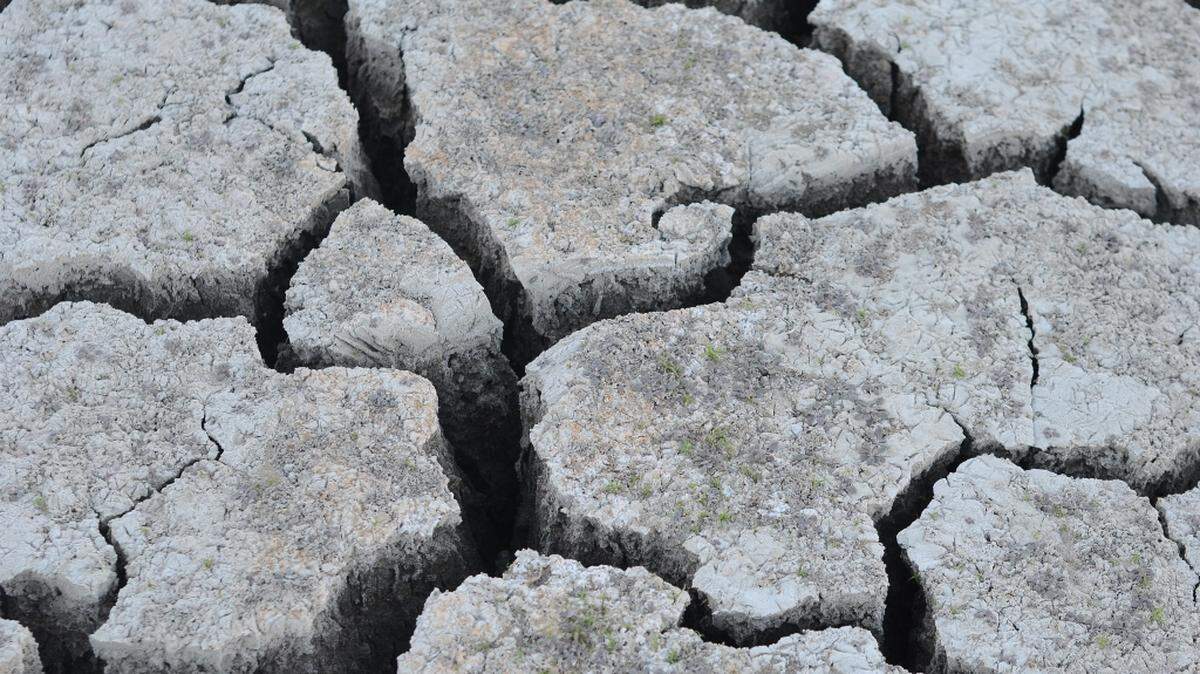
Back in December 2020, Jim from Avila Beach asked, “Do you know what the record is for the driest rain season that we have experienced? I have a feeling we may challenge it this year.”
Jim’s intuition is correct.
This rain season — running July 1, 2020, through June 30, 2021 — rainfall amounts are well below average.
It may not be the driest rain season on record; Cal Poly only saw 7.20 inches in 1897. But this year could be one of the most parched.
Historically, the four months with the highest rainfall amounts are December, January, February and March, with the greatest chance of rain peaking on Feb. 20 at 24%.
Unfortunately, the driest back-to-back Februarys in 152 years of rainfall records at Cal Poly’s Irrigation Training & Research Center — 2020 and 2021 — pushed most of San Luis Obispo, Santa Barbara, and Ventura counties from D0 (Abnormally Dry) to D1 (Moderate Drought) levels last week. That’s except for North Coast and Big Sur, which were the areas most impacted by the atmospheric river at the end of January according to the U.S. Drought Monitor Map.
The map is updated weekly and is a joint effort by the National Drought Mitigation Center (NDMC) at the University of Nebraska-Lincoln, the National Oceanic and Atmospheric Administration (NOAA), and the U.S. Department of Agriculture (USDA).
So far, the Paso Robles Municipal Airport has recorded only 6 inches of rain. By now, it should be at 10.5 inches.
This rain season, San Luis Obispo County Regional Airport is at 8 inches. On average, San Luis Obispo should have received about 19 inches of the wet stuff at this point.
Farther south, the Santa Maria Airport has reported about 6 inches of rain, but much like Paso Robles, it should be at 11 inches by now.
The Santa Ynez Airport has 7.3 inches but should be at 11 inches by March.
Overall, Santa Barbara County is at 54% of normal precipitation to date.
Along with the low rainfall amounts, our local lake and reservoir totals are well below average.
Near the border of Monterey and San Luis Obispo counties, Nacimiento Lake is at 41% of capacity, while Lake San Antonio reported 20% of capacity. Lopez Lake is at 40% of capacity, Salinas Reservoir near Santa Margarita is at 73%, and Whale Rock Reservoir near Cayucos is at 79%.
In Santa Barbara County, Cachuma Reservoir is at 63% of capacity, and Gibraltar Reservoir is 14%.
Looking into the future, the 0.75 to 1.50 inches of rain forecasted this Tuesday and Wednesday will help, but the rest of March is looking dry.
Overall, the chance of a so-called “March Miracle” or even a “Mini March Miracle” is fading. The current La Nina condition, combined with the cool phase of the basin-wide Pacific Decadal Oscillation (PDO), points to below-average rainfall through the end of the month.
The Climate Prediction Center is advertising neutral condition — the infamous El Nothing or El Nada developing this spring and continuing through summer.
It is interesting to note that several of the numerical model runs are indicating a moderate El Niño developing next winter while others are showing a La Nina condition.
At this time of the year, these predictions often change. Here is why: We’re in front of the so-called “spring predictability barrier.”
In spring, the El Niño Southern Oscillation (ENSO) is often in transition from one phase to another.
For example, a La Niña phase could be decaying and passing through neutral condition to a El Niño condition, or vice versa. Of course, as you get closer to winter, the models become more accurate because there is less time for inaccurate oceanographic and atmospheric data to be amplified at model initialization.
At this time of the year many climate scientists think the most reliable strategy is “WAS” — wait and see.
PG&E offers tree planting tips
PG&E is kicking off California Arbor Week — March 7 through 14 — by unveiling its new comprehensive web resource for its customers and communities that includes rules, tips and guides for planting trees safely near electric and gas lines.
The Right Tree, Right Place web resource can be found at pge.com/righttreerightplace and includes free downloadable brochures on how to plant with fire safety in mind and creating defensible space.
This story was originally published March 9, 2021 at 5:05 AM with the headline "Could SLO County set a new record for driest rain season? Rainfall is ‘well below average’."