Cantankerous SLO County judge was known for his future predictions. What he said
It’s an almost irresistible human impulse this time of year for people to take stock of the year gone by and try to predict the future.
There are whole industries based on our inability to predict the future.
Gambling, the stock market and traffic lights are all systems built on our failure to see what’s coming down the road.
Publications have pages to fill and often this time of year is slow on news so future predicting is a way to fill the space.
Today it is common to find women in leadership roles, judges, police chiefs, mayors, supervisors — but back when these were written it was more of a boy’s club.
For example, the syndicated column by humorist Will Rogers published these one-liners on Jan. 4, 1933. (Q&A added for clarity.)
Q: Do you read prominent men’s predictions?
A: “No, I never read fiction.”
Q: Do you think the world leaders can get us out of this?
A: “They might, ignorance got us in.”
Q: “What do you think of technocracy?
A: “Nothing you can’t spell will ever work.”
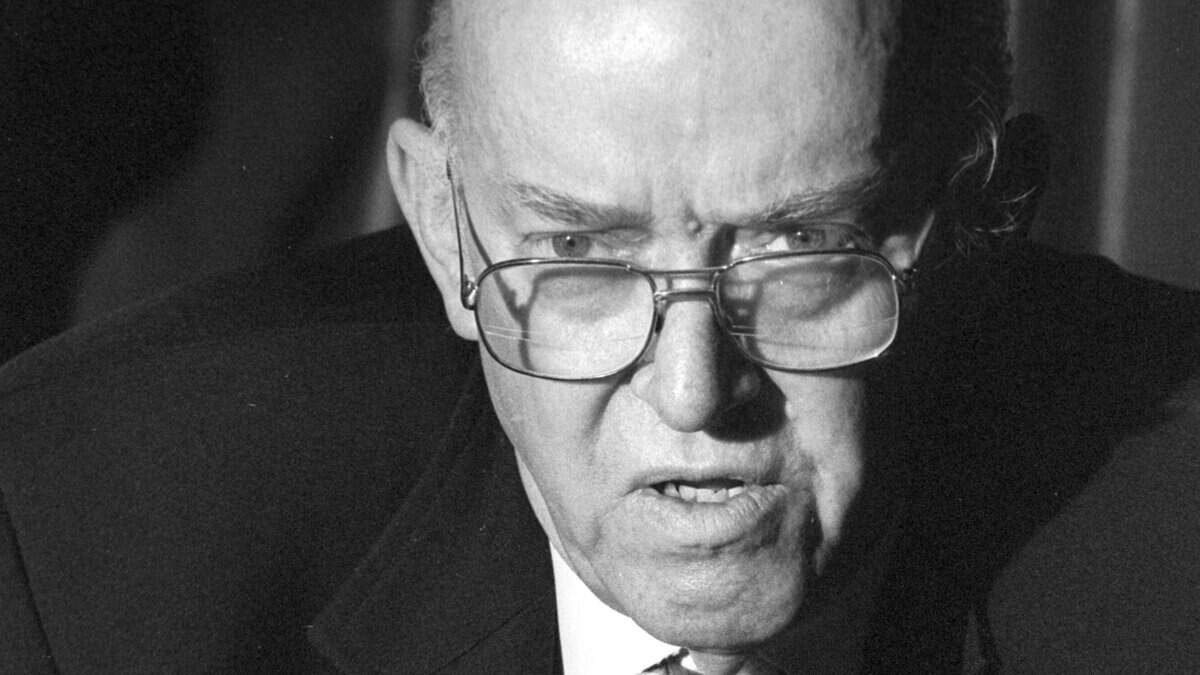
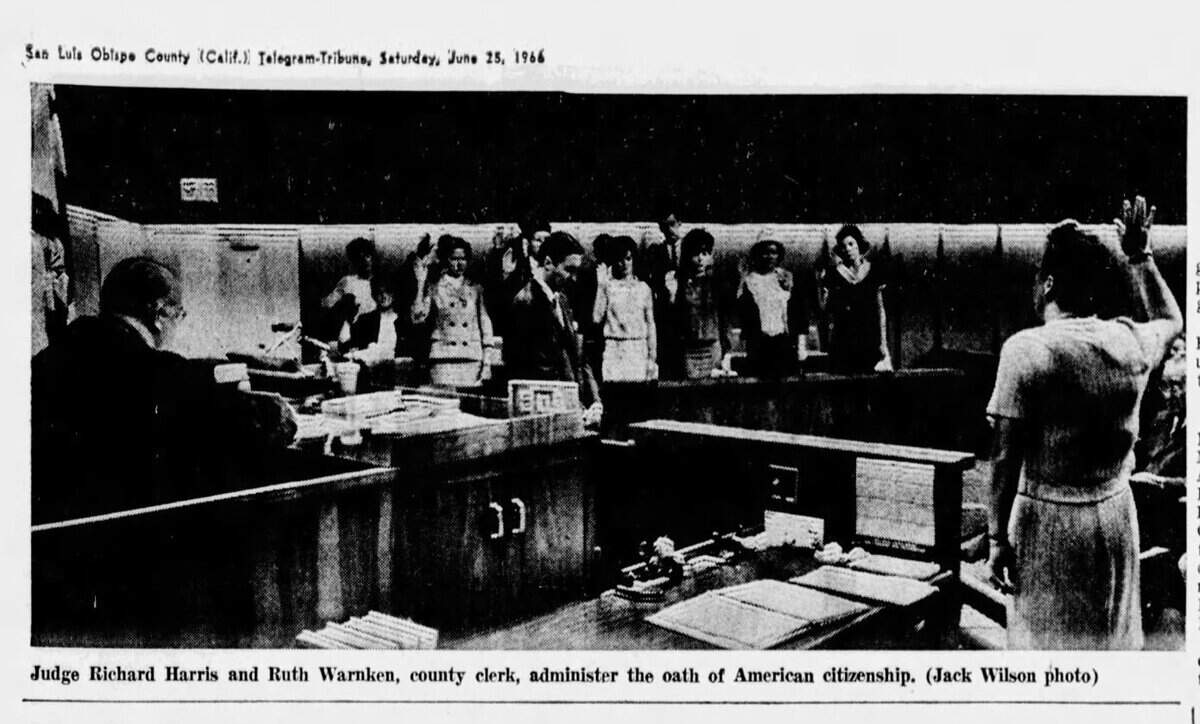
Locally, for a period of over four decades Judge Richard Harris relished the role of peerless prognosticator.
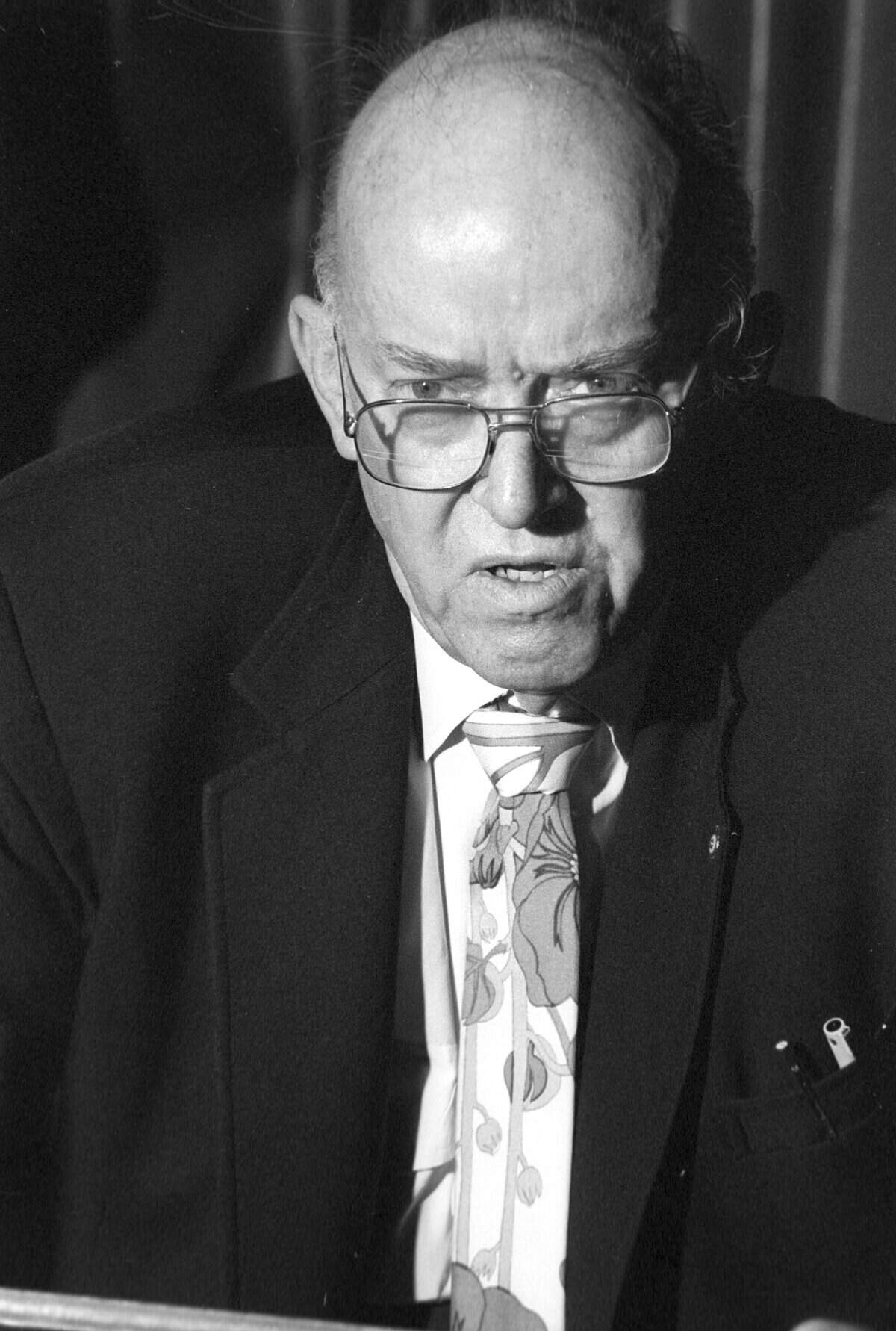
His memory of detail in cases and the law was well known in the courts. Woe to an unprepared novice attorney who found themselves at the pointy end of his sharp wit. Those that worked closely with the judge said a tough exterior masked a kind heart. Harris had a reputation for being cantankerous.
When the San Luis Obispo County Board of Supervisors wanted to recognize the retired superior court judge for a lifetime of civic service, he refused to show up for the meeting.
When four judges and one of the supervisors tricked him by appearing at his long-standing Rotary luncheon to present him with the commendation he said, “I have nothing to say.”
But when it came to the future he had plenty of opinions.
He began his soothsaying career in the 1940s as a young, well-read, attorney at meetings of the San Luis Obispo Rotary Club.
He would be sworn in as judge in 1963, and though he retired in 1972, he still filled in on the bench, including the complex San Simeon 16 case. The 1979 marijuana case never went to trial because the Sheriff’s Department used illegal electronic surveillance and a flawed search warrant.
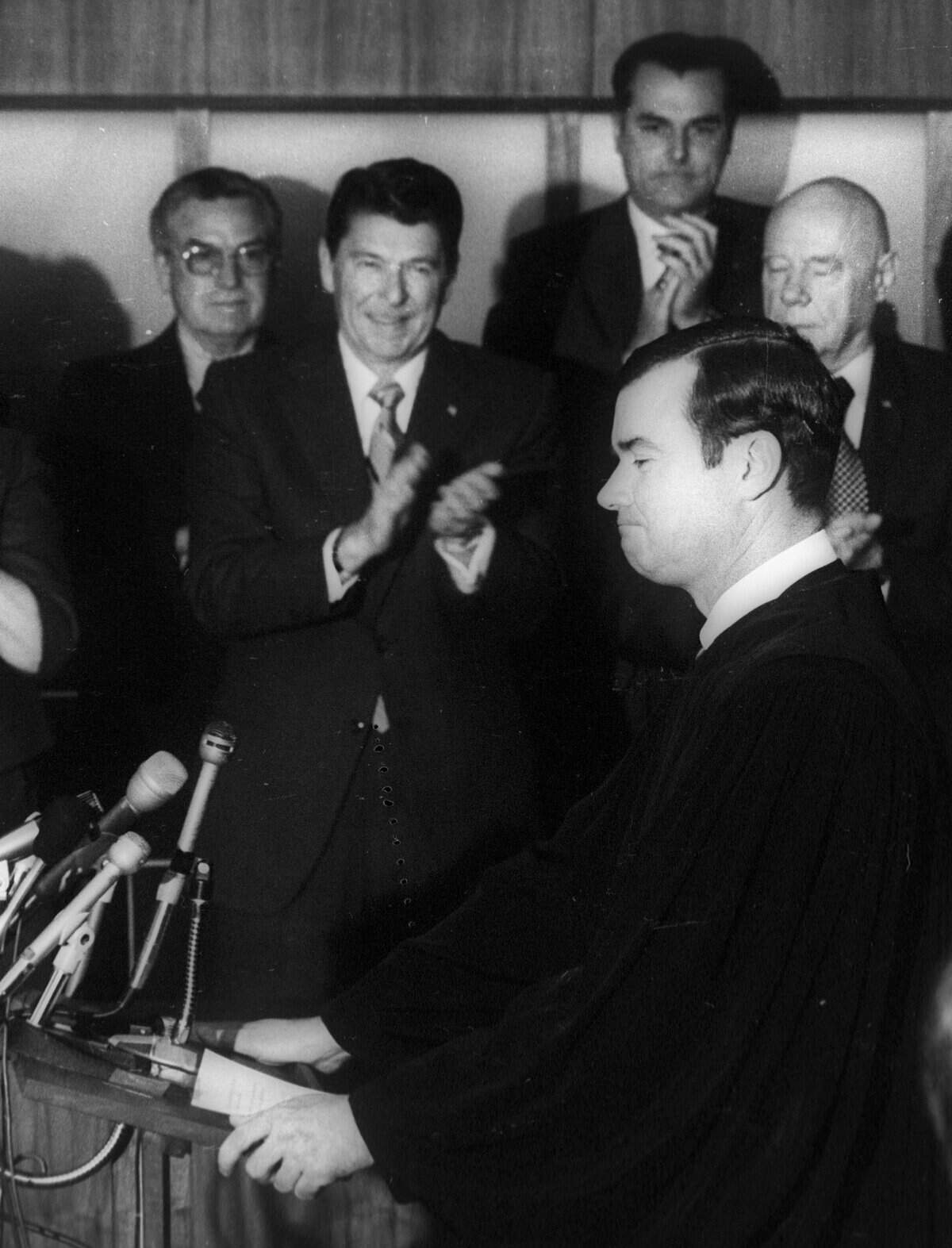
He also presided over the case of LSD guru Timothy Leary after his escape from CMC and recapture.
Harris was a resident of San Luis Obispo since he was a month old, attended Emerson school and in perhaps a bit of destiny, Court school. He was a San Luis Obispo High School graduate.
After passing the bar exam in 1933, he returned to San Luis Obispo with no job lined up, one of 19 attorneys in the county.
After that modest beginning he rose to become the dean of the county bench.
Though he was slowed by an arthritic condition that gave him a stooped appearance, he was still representing a client in court the week he died of heart attack at the age of 81 in August 1990.
Why was he often the source for future predictions?
The following sassy column by court reporter Gilbert Moore explains, published next to the judge’s long column of predictions. If you want to look that one up, they both published Jan. 21, 1967, on page two of The Telegram-Tribune.
And here’s how Dick does it
Rumor reached me this week that over in the courthouse was the county’s answer to the Book of Revelations.
Superior Court Judge Richard Harris greeted me in that effusive manner he reserves for quack lawyers and ne’er-do-well newspapermen.
“Hello, fat boy,” he said.
“Am I keeping you from important work?” I asked, eyeing the gigantic stack of official documents on his desk.
“I hope so,” His Honor said, fixing a hard, cynical eye on me.
“What’s this about your predictions?” I ventured. He fired off his schedule of appearances.
So the next noon, I showed up at Cal Poly, with two sheets of paper. These predictors, I knew, usually work up 20 or 30, just to have enough to get a few right.
But Harris had that many prognostications out before he took his first breath. He spews them faster than the “Puff the Magic Dragon” gun spews bullets. And that’s 6,000 rounds a minute.
After a while I was writing on my cuff. So Harris offered his Xerox copy of the talk. Back in his office again:
How does he do it? “No tea leaves, or fortune telling,” he claimed. “And I’m not a CIA agent. I just do a lot of reading.”
That’s an understatement. Harris takes more magazines than the New York Public Library. Every mass circulation journal you can think of.
Plus National Review, New Republic, Science News, Kiplinger, Science Digest, Weekly Digest, Economist, Punch and Atlas, a summary of items from the foreign press. Plus many more.
As opposed to most of my friends, Harris actually reads them.
“I think you have to know something about the subject,” Harris said. “You need to look at a lot of different sources of information.”
Formerly one of the Central Coast’s leading lawyers, Harris got into the prediction business during the World War II. For 17 or 18 years, his area talks in January have been a tradition.
He jots notes all year, then sifts, sorts and thinks when January rolls around. In the past 10 years there have been some astounding successes, and also some real eggs.
The latter category includes his Brown-over Reagan call (for California Governor), his predictions that China would get into the U. N., that Orville Freeman would resign and that Franco would permit the monarchy to be restored.
In the iffy category, he said early in 1964 Khrushchev would step down (he did) to devote himself to party affairs (he got booted).
But look at the successful calls from 1966 alone:
Boeing would get the SST contract. Russia would have the anti-missile missile. Sheppard would get a re-trial. Rhodesia would survive sanctions. The Orioles would take the pennant. Philadelphia and the Lakers would win division titles.
Other Harris calls in recent years:
Hoffa conviction; first Super Bowl in 1967 (long before merger was talked); (President Lyndon) Johnson wins easily; Pope to visit U. S., Erhard out; missile bases in Cuba; Castro to be successful, and Castro a Communist, when Batista still ruled; Tomy Lee to win the derby; Peron ouster; Russia wins Olympics in 1956.
So read Harris’ predictions (in) the other columns.
Maybe he knows something you don’t.