
Los Osos residents may be eligible for financial aid for sewer costs
Low-income residents and seniors in Los Osos can get financial assistance in the form of grants, loans and property tax deferrals to help cover their costs related to the community’s new sewage system, San Luis Obispo County officials said this week.
Officials held two public forums on Wednesday — attended by about 600 people — letting residents know they could be eligible for financial aid to help pay their costs to hook up to the new system, their monthly service fees and assessments for the system’s construction costs.
“We’re trying to do all we can to keep costs down as much as possible for residents,” county Supervisor Bruce Gibson said. “We know this is a financial burden.”
The county will hold application and eligibility workshops this summer to address the financing options.
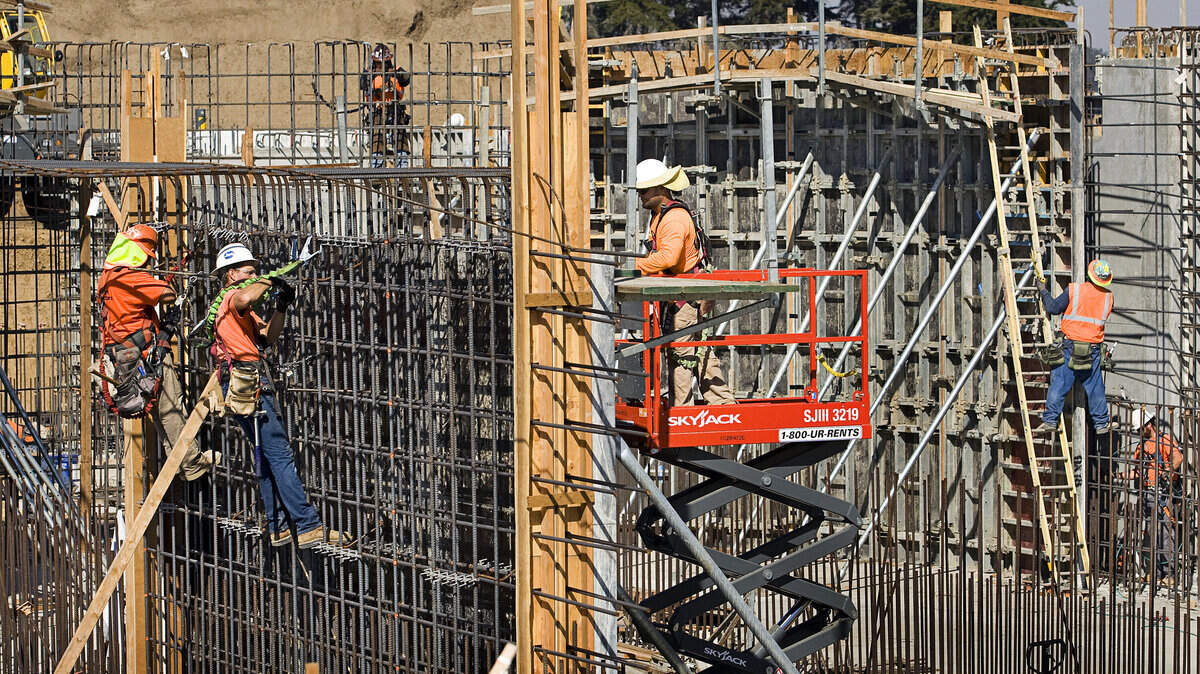
The sewage treatment plant now under construction is due to be finished in 2017. At that point, the county will begin to assess residents monthly fees to repay loans used to build the system, including land costs, design and construction of the treatment plant, as well as installing 49 miles of pipelines.
The assessment will make up about $90 of an anticipated $165 per month fee for single-family residences. The other $75 of that monthly fee pays for operations and maintenance.
Very low-income residents and seniors age 62 or older can take advantage of a U.S. Department of Agriculture 504 program that offers grants and loans to cover homeowner costs to install lateral piping connecting their home to the main line on the street, said John Waddell, the county’s Los Osos wastewater project manager.
Those hookups are expected to cost between $2,000 and $10,000, though $3,000 is likely to be the median.
The maximum USDA loan is $20,000, which can be repaid over 20 years at a 1 percent fixed interest rate. The maximum grant is $7,500. The program applies to homeowners with a maximum income of $26,400 in a household of one and $37,700 in a household of four for both the loans and grants.
Some residents also can take advantage of a 20 percent reduction on service charges that relate to operations and maintenance. The discount amounts to $15 off the $165 monthly fee. The income range threshold is still being determined to qualify for the discount.
Another financing option for blind or disabled residents, or those who are low income and at least 62 years old, is a state property tax deferral program. The program applies to all property taxes appearing on the county tax bill and all sewer-related fees.
The total household income for that tax deferral must be $35,500 or less and owners have at least 40 percent equity in their property.
The rate of interest on the deferral option will be 7 percent per year and becomes due under conditions that include when the claimant moves, sells, dies, changes title or refinances.
The county will provide a list of approved contractors who can install the lateral connections. That work is expected to take place in three phases, beginning in March 2016 and ending in March 2017.
The presentations on Wednesday also provided information on how residents might reuse their septic tanks to recharge the ground water supply and reduce storm water runoff.
Options for reuse include collecting storm water from rooftops and channeling it into the septic tanks, perforating the bottom of the tanks so the water would seep into the ground to recharge the aquifer.
Another option is to convert the underground tank into a cistern for rainwater to be collected and pumped for irrigation. An additional reuse includes tank storage for indoor, nonpotable uses such as toilet flushes.
“The simplest option is to decommission your septic by filling tanks with sand or slurry and leaving it where it is,” Waddell said.
This story was originally published February 26, 2015 at 7:14 PM with the headline "Los Osos residents may be eligible for financial aid for sewer costs."